Scottish Terrier
By James C. • Updated
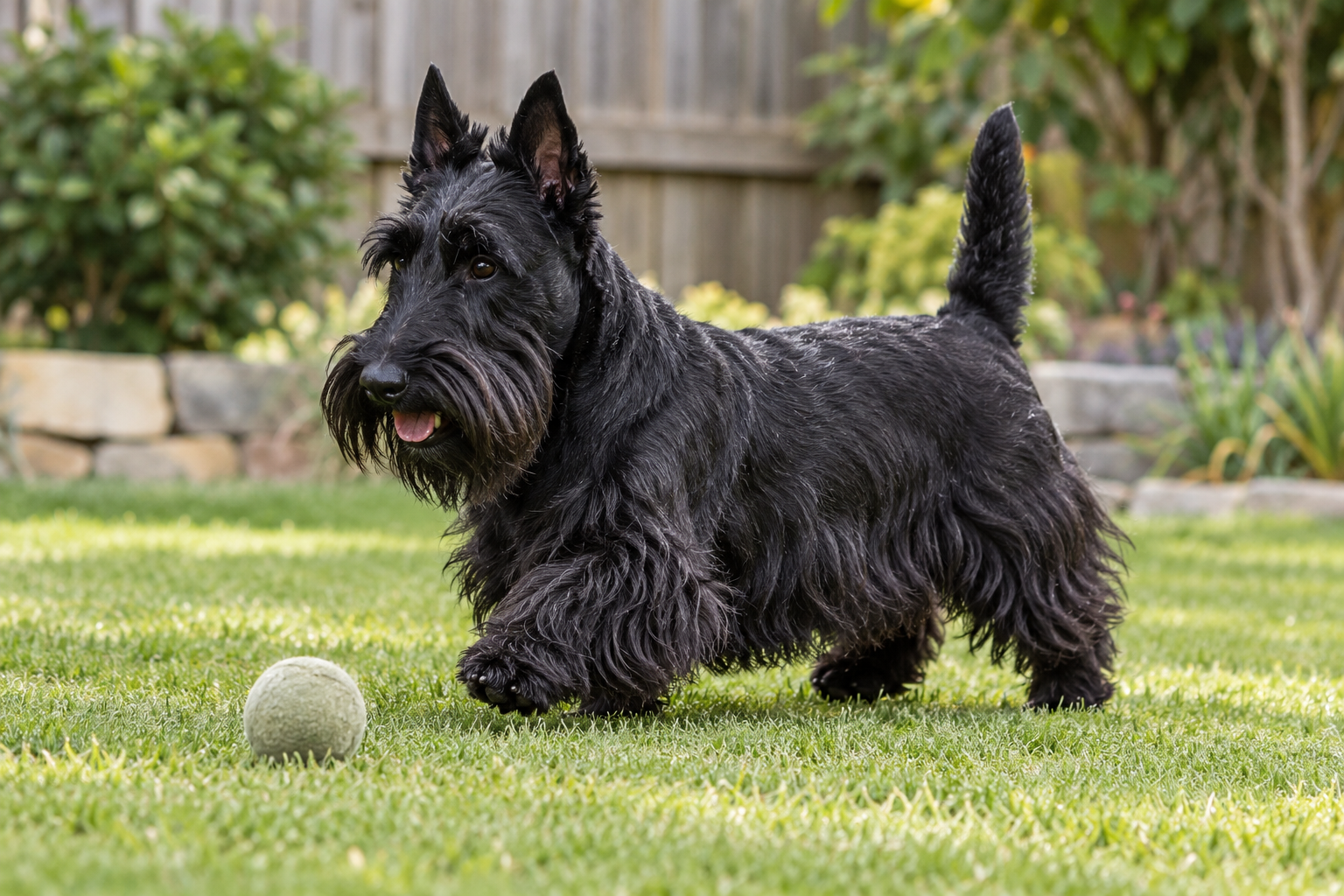
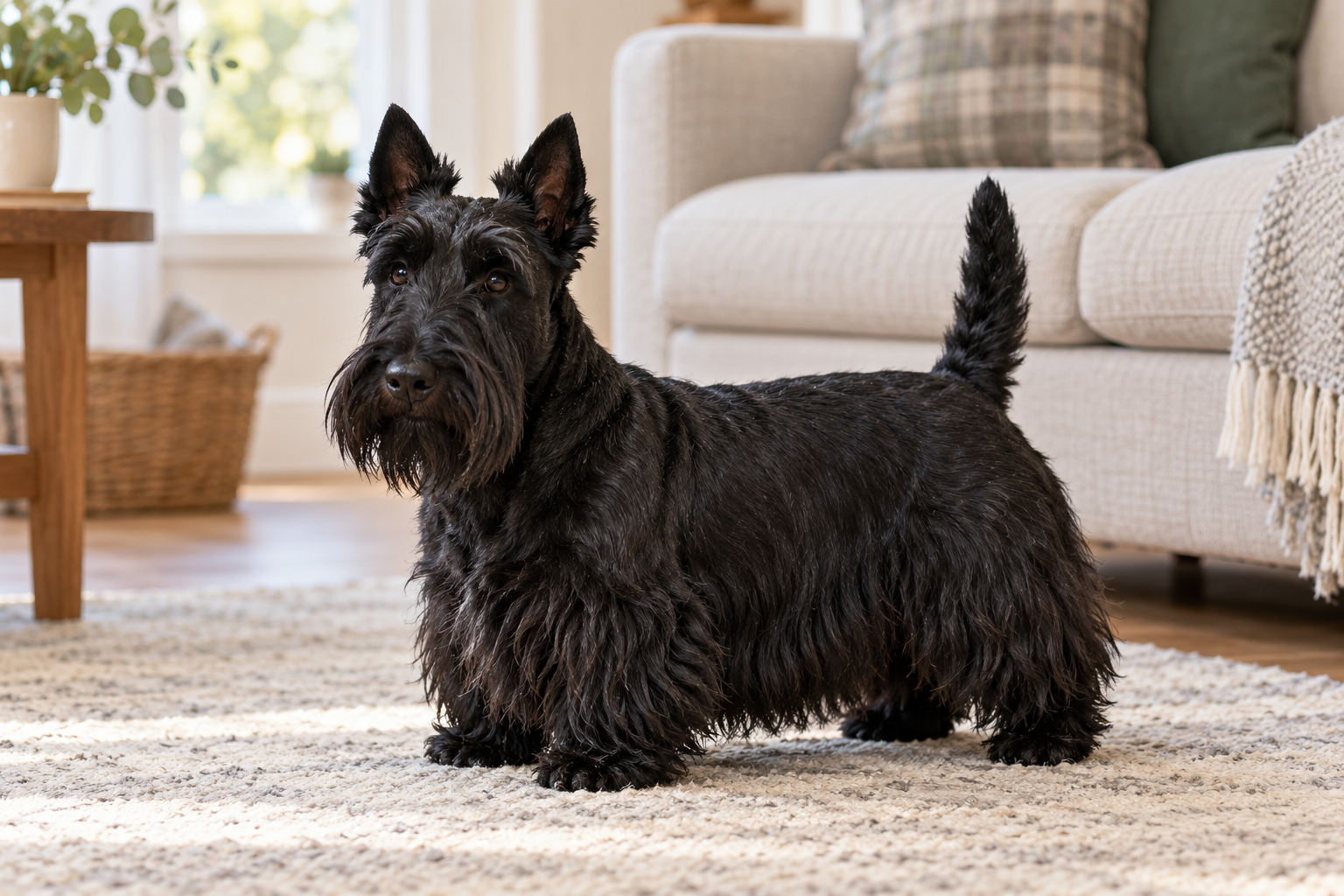
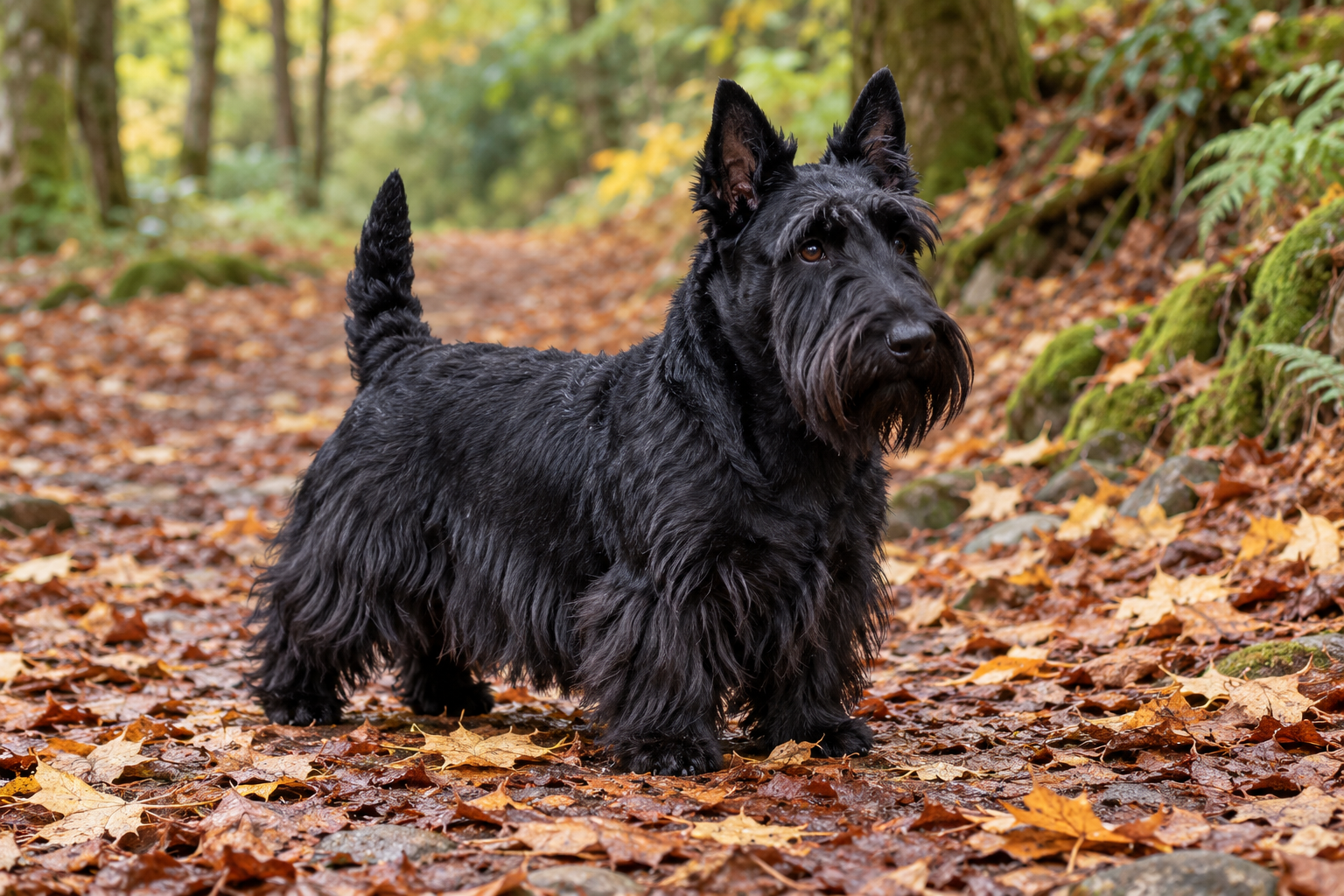
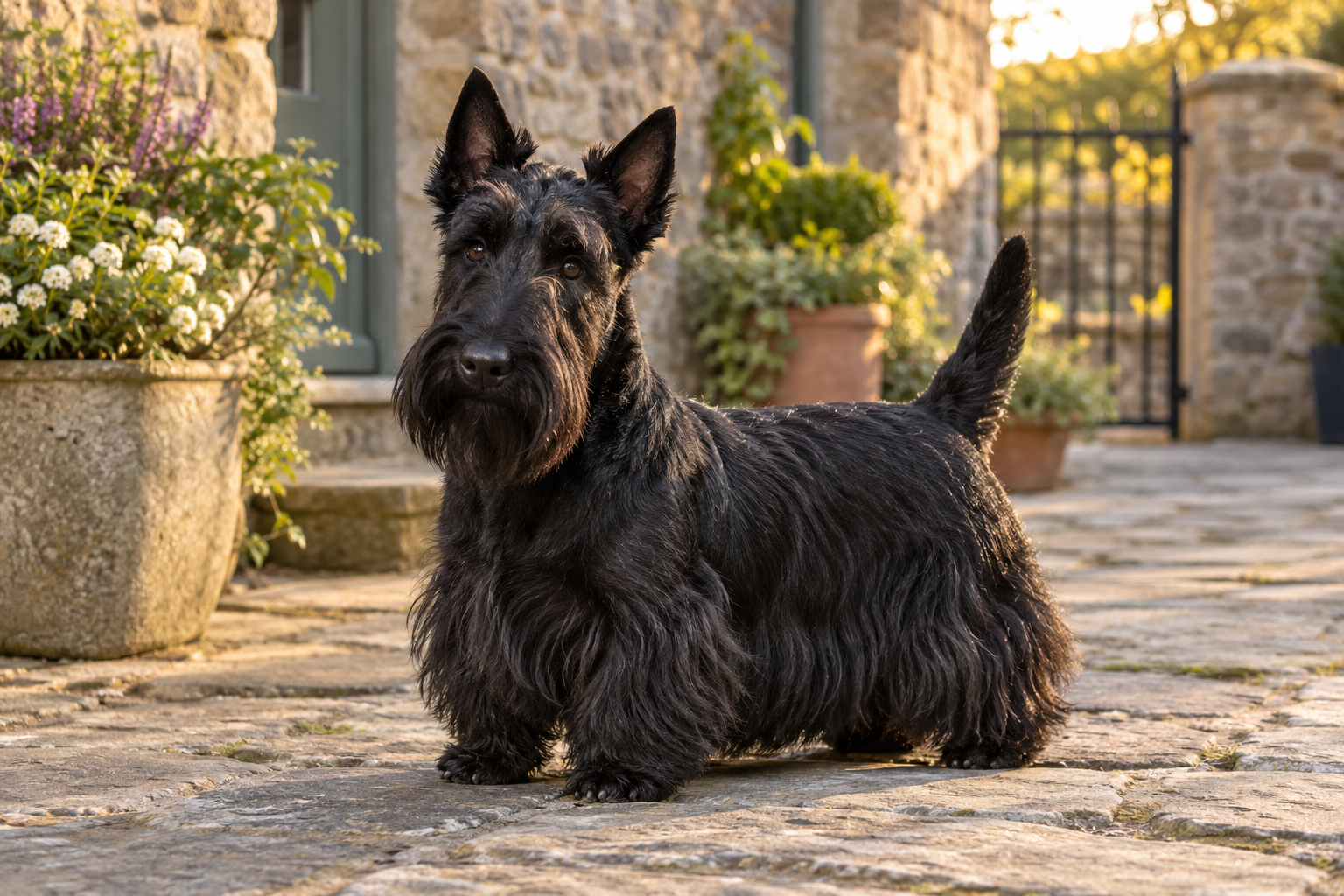
The Scottish Terrier is a short-legged, sturdy terrier from the Scottish Highlands, bred to go to ground after foxes, badgers and vermin. It is dignified, independent and loyal, usually devoted to its own people and reserved with strangers. Most stand 25 to 28 cm at the withers and weigh 8.5 to 10.5 kg, with a harsh, wiry double coat in black, wheaten or brindle. Owners should be aware of a markedly higher risk of bladder cancer than in most breeds, along with Scottie cramp and von Willebrand's disease. In Australia it is a small, registered breed with a limited number of breeders and puppies typically advertised at $4,500 to $6,000.
Breed Overview
Life Span
11 - 13 years
Average Price
AUD 4500 - AUD 6000
Weight
Male: 8.5 - 10.5 kg Female: 8.5 - 10.5 kg
Height
Male: 25 - 28 cm Female: 25 - 28 cm
Life Expectancy
Male/Female: 11 - 13 years
Breed Group
Terriers (Group 2)
Nicknames
Scottie, Aberdeen Terrier, Diehard
Breed Information
The Scottish Terrier is a small, sturdy Highland terrier with a big personality: dignified, independent and deeply loyal to its own people. It stands only 25 to 28 cm tall, yet carries itself like a much larger dog, and owners often describe it as more cat-like in temperament than most terriers. It is affectionate on its own terms and usually reserved with people it does not know.
It is also widely confused with two other bearded dogs. Many people searching for a white Scottish Terrier are actually looking for the West Highland White Terrier, since the Scottie standard allows only black, wheaten or brindle. The Schnauzer, often mistaken for a Scottie because of its beard and eyebrows, is a German breed with longer legs and a very different background.
In Australia the Scottie is recognised by Dogs Australia in Group 2, Terriers, and comes from a small network of registered breeders. Puppies are not plentiful, prices are high, and there are some genuine health risks, including bladder cancer, that every buyer should understand before committing.
Characteristics of the Scottish Terrier
The Scottish Terrier rates highly for loyalty, intelligence and adaptability to smaller homes, and lower for trainability and grooming ease, which is the trade-off most owners should expect.
| Trait | Rating | Star Rating | Meaning |
|---|---|---|---|
| Size | Small | ★★ | 25 to 28 cm and 8.5 to 10.5 kg, compact but solid. |
| Adaptability | Good | ★★★★ | Copes well with smaller homes, less well with heat. |
| Exercise Needs | Moderate | ★★★ | Around an hour a day of walks and play. |
| Easy to Train | Low to Moderate | ★★ | Clever but independent, and decides for itself whether to comply. |
| Amount of Shedding | Low | ★★ | The wiry coat sheds little when kept groomed. |
| Grooming Needs | High | ★★★★ | Regular brushing plus clipping or hand stripping every few months. |
| Good With Children | Moderate | ★★★ | Best with older, respectful children rather than toddlers. |
| Health | Fair | ★★★ | Several breed-linked conditions, including a high bladder cancer risk. |
| Cost to Keep | Moderate | ★★★ | Small food bill, but grooming adds a real ongoing cost. |
| Tolerates Being Alone | Moderate | ★★★ | More independent than many small dogs, but still needs company. |
| Intelligence | Good | ★★★★ | Quick to learn and quick to find loopholes. |
History of the Scottish Terrier: From Highland Vermin Dog to Diehard Companion
The Scottish Terrier comes from the Highlands, where small, tough terriers were kept to go to ground after foxes, badgers and rats on farms and estates. These dogs were judged on courage and hardiness rather than looks, and for centuries several Scottish terrier types were lumped together under general names. The short legs and harsh coat were working features, allowing the dog to follow quarry into dens and stay protected from wet Highland weather.
The modern breed took shape in the second half of the nineteenth century. In the 1870s, dogs shown successfully by exhibitors in Aberdeen gave rise to the name Aberdeen Terrier, which stayed in use for some time. The first written standard appeared in 1880, and the Scottish Terrier Club was founded in England in 1881, followed by a club in Scotland in 1888. The nickname Diehard is traditionally credited to George Douglas, Earl of Dumbarton, in recognition of the breed's toughness.
In the twentieth century the Scottie became one of the best known terriers in the world, helped by famous owners and its appearance as a Monopoly token. Black became the fashionable colour during this period, although early standards described grey, grizzle and brindle dogs. Today the breed is a companion and show dog first, but the working terrier underneath is still very much intact.
Appearance of the Scottish Terrier: Short-Legged, Bearded, and Built to Dig
Size and Build
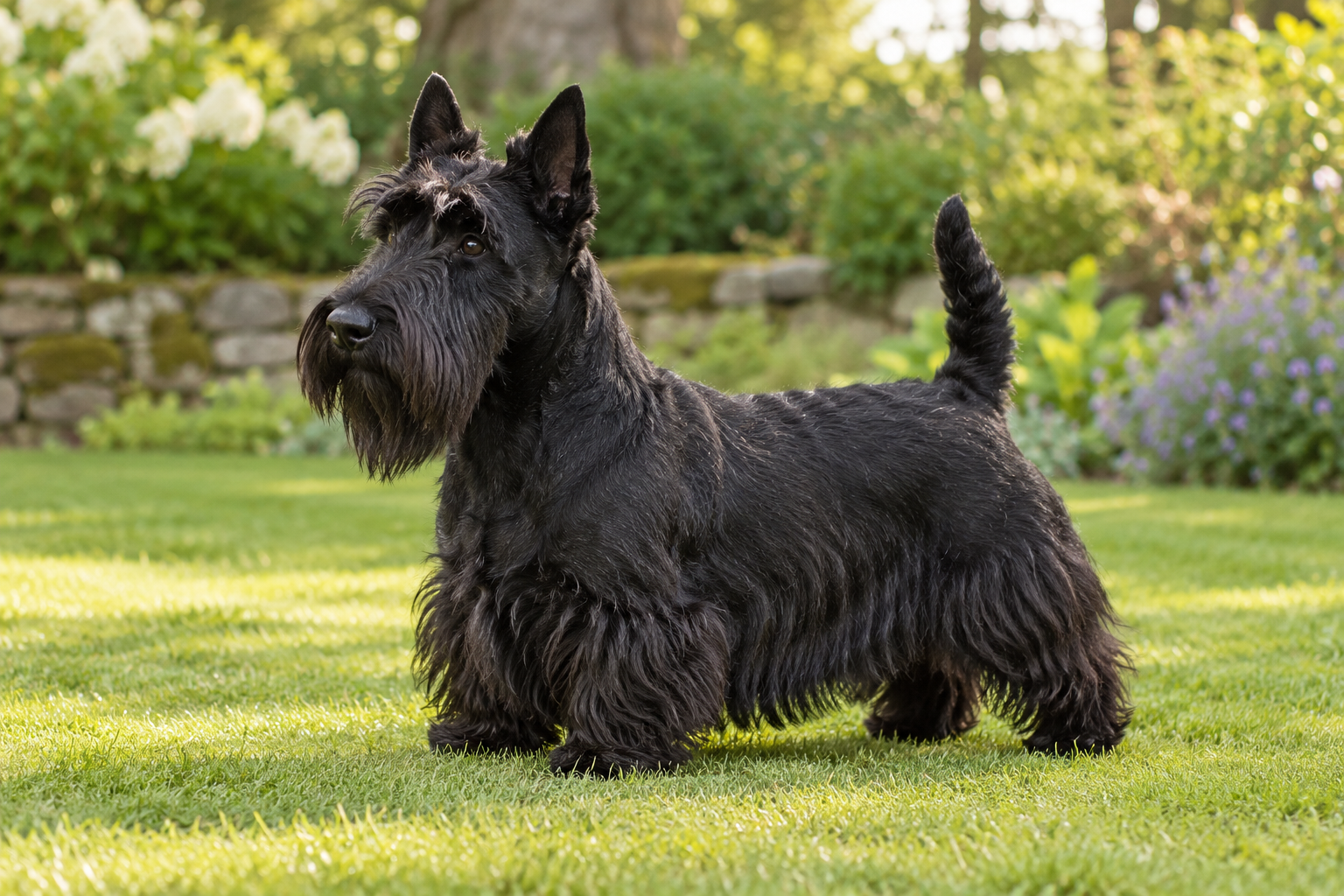
The Kennel Club standard, which Dogs Australia follows, gives a height of 25 to 28 cm at the withers and a weight of 8.5 to 10.5 kg. The body is short and deep, with a deep chest, strong hindquarters and heavy bone for the dog's size. The overall impression is of a powerful dog in a small frame, low to the ground and built for digging rather than speed.
Coat and Colours
The coat is double, with a short, dense, soft undercoat beneath a harsh, wiry outer coat that forms a weather-resistant jacket. According to the Kennel Club breed standard, the only accepted colours are black, wheaten or brindle of any shade. White is not a recognised Scottish Terrier colour, and wheaten dogs, which range from pale straw to deeper gold, are the colour most often mistaken for white in photographs.
Distinctive Features
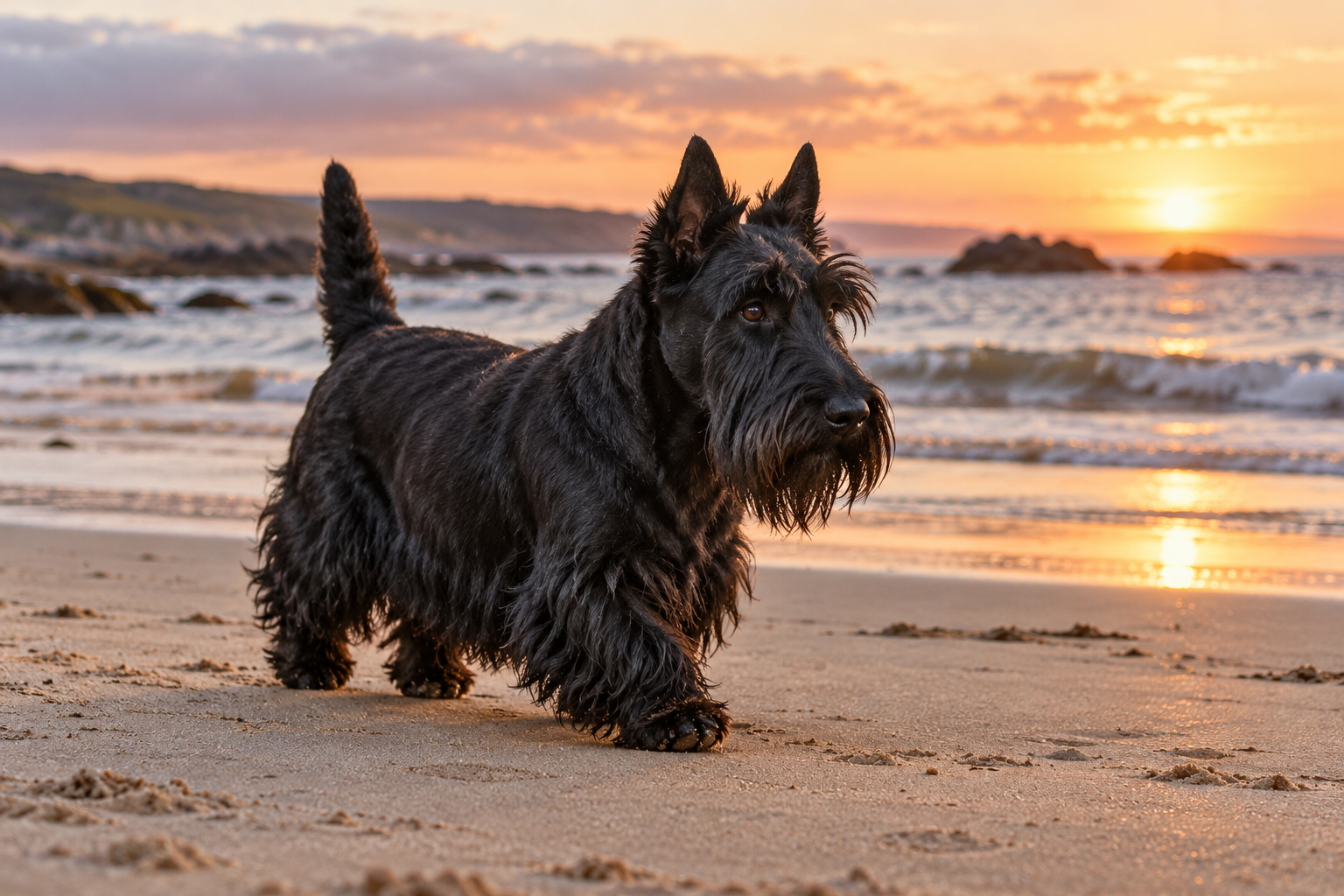
The long head with a full beard and eyebrows, small almond eyes, pricked ears and an upright, carrot-shaped tail make the Scottie one of the most recognisable silhouettes in the dog world. The coat on the legs and underside is usually left longer to form a skirt, which exaggerates the short-legged outline. The quick comparison below helps separate the Scottie from the two breeds it is most often confused with.
| Feature | Scottish Terrier | West Highland White Terrier | Miniature Schnauzer |
|---|---|---|---|
| Origin | Scottish Highlands | Western Highlands of Scotland | Germany |
| Colours | Black, wheaten or brindle | White only | Salt and pepper, black and silver, or black |
| Build | Long head, short legs, heavy body | Rounder head, shorter body | Square, longer legged |
| Temperament | Reserved, dignified, independent | Outgoing and friendly | Alert, sociable, more biddable |
Gender Differences
The Kennel Club standard does not set separate sizes for males and females, although males often look slightly heavier through the head and chest. The American standard gives a modest weight difference, with males around 8.6 to 10 kg and females a little lighter. In practice, individual variation matters more than sex, and temperament differences between males and females are small.
Temperament of the Scottish Terrier: Loyal, Independent, and Reserved
Core Personality Traits
Scotties are loyal, confident and dignified, with a strong independent streak. They are usually deeply attached to one or two people in the household and show affection in a quieter way than many small breeds. The answer to whether Scottish Terriers like to cuddle is that many do, but on their own terms, and a Scottie will often choose to sit near you rather than on you.
Social Behaviour
With strangers the breed tends to be aloof rather than friendly, which some owners find charming and others find standoffish. They make alert watchdogs and will announce visitors. With other dogs, Scotties can be bold and occasionally scrappy, particularly with dogs of the same sex, so early, positive socialisation with calm dogs is worthwhile.
Working Instincts
The Scottie is a true earth dog, with strong prey drive and a powerful urge to dig. Small pets such as rabbits, guinea pigs and birds are at genuine risk, and cats are only safe where the dog has been raised with them. Many Scotties will dig under fences or into garden beds in pursuit of a smell, which matters in Australian backyards where lizards, rats and possums provide constant temptation.
Common Behavioural Challenges
Stubbornness, digging and barking at noises are the usual complaints. Scotties are not constant barkers, but they do bark to alert and can become noisy when bored or left alone with a view of the street. Some can be possessive of food or toys, so it helps to teach a reliable swap from puppyhood. Consistent routines and plenty of mental work are the best prevention.
Intelligence and Trainability of the Scottish Terrier: Clever but Strong-Willed
Intelligence and Learning Ability
The Scottish Terrier is an intelligent dog that learns quickly, though it does not always choose to show it. Scotties were bred to make decisions underground without human direction, and that independence shows in everyday life. They tend to work out household routines fast and will test whether a rule applies every time.
Training Approach
Short, varied, reward-based sessions work best. Food rewards and play are effective, while harsh corrections tend to make a Scottie dig its heels in. Keep repetitions low, end on success, and be patient and consistent. A Scottie trained with fairness is a pleasant, well-mannered companion even if it never becomes an obedience star.
Early Socialisation
Broad early exposure to people, children, other dogs and everyday noises helps take the edge off the breed's natural reserve. Puppy school, calm visitors and short outings to busy places all help. The aim is a dog that is relaxed and polite around strangers, even if it never becomes outgoing.
Potential Training Challenges
Recall is the most common weakness, since a Scottie on a scent can switch off completely. Off-lead exercise belongs in securely fenced areas. Lead pulling, digging and alert barking also need early work. Owners who expect a highly biddable dog can find the breed frustrating, so it suits people who enjoy a dog with opinions.
Scottish Terrier Family Life: Living with Children, Pets, and Households
Living with Children
Scotties can be devoted family dogs, but they are generally best with older, respectful children. They have limited tolerance for rough handling, tail pulling or being chased, and may object if pushed too far. Teach children to let the dog approach, and always supervise younger children around any dog.
Living with Other Pets
A Scottie raised with a household cat often accepts that cat, but may still chase unfamiliar cats outside. Small caged pets are generally incompatible with the breed's prey drive. With other dogs, a Scottie usually does best with a calm companion of the opposite sex, and introductions should be gradual.
Household Environment
The breed adapts well to apartments, townhouses and suburban homes, provided it gets daily walks. Fencing needs to go below ground as well as up, because a determined Scottie can dig under a standard fence. Indoors, they are usually settled and quiet once exercised.
Lifestyle Compatibility
Scotties suit adults, couples, retirees and families with older children who want a small, sturdy dog with character. They suit owners who are home for reasonable parts of the day and who enjoy grooming. They are a poorer fit for households wanting a highly social, eager-to-please dog or one that will happily run off lead.
Health of the Scottish Terrier: Bladder Cancer, Scottie Cramp, and Lifespan
Lifespan and Healthy Living
A large 2024 UK study of companion dog lifespans estimated Scottish Terrier life expectancy at 12.7 years, and most Scotties live around 11 to 13 years. A lean body, regular exercise and early attention to any change in urination or movement all support a longer, healthier life.
Common Health Conditions
Owners should be aware of several conditions that can be associated with the breed. It is best to discuss any concerns with a veterinarian.
- Bladder cancer (transitional cell carcinoma). Purdue University researchers have reported that Scotties develop bladder cancer about 20 times more often than other breeds, and linked exposure to lawns treated with certain herbicides to a further rise in risk.
- Scottie cramp. An inherited condition in which stress or excitement triggers episodes of stiff, awkward movement. It is not painful and usually does not shorten life, and there is no DNA test for it.
- Von Willebrand's disease. An inherited bleeding disorder that can cause excessive bleeding after injury or surgery. DNA testing has made it far less common in well-bred lines.
- Craniomandibular osteopathy. Abnormal bone growth in the jaw of young puppies, often between three and six months, which can make eating painful.
- Cushing's disease and skin allergies. Both are listed among breed concerns by the PDSA veterinary charity, alongside deafness, luxating patellas and some eye conditions.
Blood in the urine, straining or frequent urination in a Scottie should always be checked by a veterinarian promptly. These signs are often caused by infections or stones, but in this breed they deserve early investigation. Some vets suggest periodic urine checks for older Scotties, and this is worth discussing at annual visits.
Genetic Health Testing
Responsible Australian breeders DNA test breeding dogs for von Willebrand's disease and craniomandibular osteopathy, and buyers should ask to see the results for both parents. Because Scottie cramp has no DNA test, ask directly whether it has appeared in the parents, grandparents or previous litters. A breeder who answers openly about cramp, cancer and allergies in their lines is a good sign.
Preventative Health Care
Keep vaccinations current and use year-round parasite prevention, including paralysis tick cover on the eastern seaboard, where ticks can hide in a dense, dark coat. Annual health checks should include weight, skin and, from middle age, a discussion about urine testing. A Purdue study of Scotties fed vegetables found that dogs given green leafy or yellow-orange vegetables at least three times a week had a lower bladder cancer risk, which is an easy habit to discuss with your vet.
Caring for the Scottish Terrier: Daily Care and Living Environment
Daily Care Routine
A good day for a Scottie includes two walks, some play or sniffing time, a short training session and a quick brush or check of the coat. Feed measured meals rather than leaving food out, since the breed gains weight easily. Check the beard after meals, as food and water collect there.
Living Environment Requirements
Scotties are comfortable in small homes, but they need a secure yard with fencing that is dug in or reinforced at the base. Supervise time in the garden if you have soft beds the dog may dig into. Inside, a quiet resting spot away from the front window can reduce alert barking.
Climate Sensitivity
A short-legged dog with a dark double coat sits close to hot ground and absorbs heat quickly. In Australian summers, walk early in the morning or late in the evening and test the pavement with your hand before setting out. Keeping an eye on the temperatures that are unsafe for walking dogs matters for this breed, and in humid regions such as Queensland and northern New South Wales many owners keep a shorter pet clip through summer.
Caring for Senior Scottish Terriers
From around eight years, keep walks regular but gentler, maintain a lean weight and book six-monthly health checks. Watch closely for changes in urination, thirst or appetite, which can signal bladder problems or Cushing's disease. Soft bedding and non-slip flooring help older joints.
Grooming of the Scottish Terrier: Clipping, Stripping, and Coat Care
Coat Maintenance
Brush two or three times a week with a slicker brush and comb, paying attention to the beard, eyebrows, skirt and legs where tangles form. Regular brushing keeps loose undercoat from matting and keeps shedding low around the house. Following a grooming routine built for wiry coats makes the work quicker and keeps the texture right.
Clipping Versus Hand Stripping
Show Scotties are hand stripped, which means dead outer hair is plucked out by hand to keep the harsh texture and rich colour. Most pet Scotties are clipped instead, which is quicker and cheaper but gradually softens the coat and can lighten black coats. Dogs Australia notes that pet dogs are typically clipped about four times a year, while show dogs are stripped two or three times a year. Either approach is fine for a companion dog.
Ear, Nail, and Dental Care
Check ears weekly and trim nails every three to four weeks, since a small dog walking mainly on grass may not wear them down. Brush teeth several times a week, as small breeds are prone to dental disease. Wipe the beard after meals to keep it clean and odour free.
Bathing and Professional Grooming
Bathe every four to six weeks or when dirty, using a gentle dog shampoo to avoid drying the skin. Book professional grooming every two to three months for a clip and tidy, or find a groomer experienced in hand stripping if you want to keep the traditional coat. Grooming is a real ongoing cost for this breed, covered in the price section below.
Exercise Needs of the Scottish Terrier: Moderate Activity with Heat Precautions
Daily Exercise Requirements
Plan on around an hour of exercise a day, split across two walks with some play or sniffing time. Scotties have more stamina than their legs suggest and enjoy a steady, purposeful walk. Too little exercise tends to show up as digging, barking or weight gain.
Activities Scottish Terriers Enjoy
Sniff walks, scent games, tug, puzzle toys and earthdog-style digging games all suit the breed. Many Scotties enjoy short bursts of chasing a toy but lose interest in repetitive fetch. A sandpit or designated digging area in the yard can redirect digging away from garden beds.
Exercise by Life Stage
Puppies need short, frequent play sessions rather than long walks while their joints develop. Adolescents benefit from structured walks and training to channel energy. Healthy adults can manage longer walks in cool weather, while seniors need shorter, gentler outings and more rest.
Importance of Mental Stimulation
A Scottie that is physically tired but mentally bored can still be a nuisance. Scent work, food puzzles, short training sessions and new walking routes give the brain a job. In tick regions, check the coat after bush or grass walks, especially around the head, ears and legs.
Feeding the Scottish Terrier: Nutrition and Diet Needs
Nutritional Requirements
A complete, balanced diet formulated for small or medium breeds suits most Scotties. Choose a food appropriate for life stage and activity, and introduce changes gradually. Dogs with skin allergies may do better on a diet chosen with veterinary guidance.
Feeding by Life Stage
Feed puppies three to four small meals a day until around four months, then three meals until six months, and two meals a day for adults. Seniors may need fewer calories and, in some cases, a diet chosen with your vet to support kidney or joint health. Weigh your dog monthly to track changes.
Portion Control and Weight Management
Obesity is one of the most common problems in the breed, and the Scottie's short legs and deep body make weight gain easy to miss. You should be able to feel the ribs easily under the coat. Measure meals, count treats as part of the daily ration, and feel through the coat rather than relying on appearance.
Foods to Avoid
Grapes, sultanas, chocolate, onion, garlic, macadamia nuts and anything containing xylitol are toxic to dogs. Avoid cooked bones and fatty scraps. Small portions of plain cooked vegetables such as green beans and carrots can be a useful low-calorie treat, which also fits with the Purdue vegetable findings.
Scottish Terrier Price in Australia: Purchase Cost and Ongoing Expenses
Puppy Purchase Price
Registered Scottish Terrier puppies in Australia are typically advertised at $4,500 to $6,000. On 17 October 2026, Dogz Online listed three Scottish Terrier litters or dogs from a pool of 31 breeders, and the one listing with a stated price was $5,000 for a 9-month-old pet male. Earlier registered listings on the same site ranged from $4,500 for a wheaten male to $6,000 for females.
Lower prices do appear on general classifieds, including one unregistered litter advertised at $2,000 on the same date. A lower price usually means no registration papers, no visible DNA testing and no breeder support, so buyers should weigh what they are giving up. Pet puppies from registered breeders are normally sold on the limited register, which means they cannot be shown or bred from.
Initial Setup Costs
According to RSPCA NSW cost guidance, budget around $60 to $80 for microchipping if not already done, $280 to $420 for a puppy vaccination course, $350 to $650 for desexing, $40 to $100 for a collar, lead or harness, $100 to $200 for bedding and around $170 for puppy school. Add a grooming kit with a slicker brush, comb and nail clippers, and consider reinforcing fence lines if your dog shows signs of digging.
Ongoing Monthly Costs
| Cost | Typical figure (AUD) | Source |
|---|---|---|
| Food | Below the $91 monthly average, given a body weight under 11 kg | Animal Medicines Australia, Pets in Australia 2025 |
| Professional grooming | $70 to $150 per visit, four to six visits a year | RSPCA NSW |
| Parasite prevention | $200 to $250 a year for flea and worming, plus up to $250 for heartworm | RSPCA NSW |
| Pet insurance | Around $1,580 a year for a small dog, accident and illness | Canstar, 2026 |
| Annual vet check and booster | From $140 a year | RSPCA NSW |
Grooming is the cost that surprises most new Scottie owners, adding roughly $280 to $900 a year depending on how often the dog is clipped. Canstar's 2026 small dog insurance average is a useful benchmark, and given the breed's cancer and allergy risks it is worth arranging cover while the puppy is young and before any condition is recorded as pre-existing.
Long-Term Financial Commitment
Moneysmart, using Animal Medicines Australia data, says owners should expect to pay up to $2,520 a year for a dog after the first year. Across an 11 to 13 year life that is roughly $28,000 to $33,000, before grooming at the upper end or any major treatment. Cancer care, allergy management and dental work are the costs most likely to push the total higher.
Buying Advice for a Scottish Terrier: Choosing a Healthy Puppy
Choosing a Responsible Breeder
Look for a breeder registered with Dogs Australia through their state body, who DNA tests breeding dogs, raises puppies in the home and is happy for you to meet the mother. Expect to join a waiting list, since only a small number of Scottie litters are born each year in Australia. Good breeders ask you questions too and offer lifelong support.
Health Checks Before Purchase
Ask to see vWD and CMO DNA results for both parents, a vet check for the puppy and written vaccination, worming and microchip records. Watch the puppy move and play, and look for clear eyes, clean ears, healthy skin and a confident but not frantic temperament. Confirm the microchip number matches the paperwork.
Questions to Ask the Breeder
Going in with a clear list of breeder questions makes it easier to compare litters. For a Scottie, include these:
- Can I see vWD and CMO DNA results for both parents?
- Has Scottie cramp appeared in either parent, the grandparents or earlier litters?
- Have any dogs in your lines had bladder cancer, and at what age?
- How long have the grandparents and great-grandparents lived?
- Are the puppies sold on the limited or main register?
- What is your breeder or supply number, and which state issued it?
- How have the puppies been socialised with children, other dogs and household noise?
- Will you take the dog back at any stage if I cannot keep it?
Considering Adoption
Adult Scotties occasionally come up for rehoming through breed clubs, breeders and rescue groups. An adult dog lets you see its temperament, coat and health history before you commit. Older dogs especially can make calm, loyal companions for adult households.
Is the Scottish Terrier Right for You? A Loyal Terrier with Strong Opinions
Lifestyle Compatibility
The Scottie suits adults, couples, retirees and families with older children. It fits apartments and suburban homes well. It is less suited to homes with toddlers or small pets.
Time and Care Commitment
Expect around an hour of exercise a day and regular brushing. Add professional grooming every few months. The commitment runs for 11 to 13 years.
Grooming and Health Awareness
Budget for grooming as a fixed cost. Know the signs of bladder trouble and act on them early. Take out insurance while your Scottie is young.
Ideal Owner Profile
The ideal owner is patient and consistent and enjoys a dog with personality. They want loyalty more than constant cuddles. They are happy to train with rewards and to keep walks on lead.
Find Scottish Terrier Puppies for Sale
If the Scottie fits your household, you can browse puppies for sale on Pups4Sale and contact breeders directly. Ask every seller for DNA results and health history before you pay a deposit.
Frequently Asked Questions
Related Breeds
Other terrier breeds on Pups4Sale.
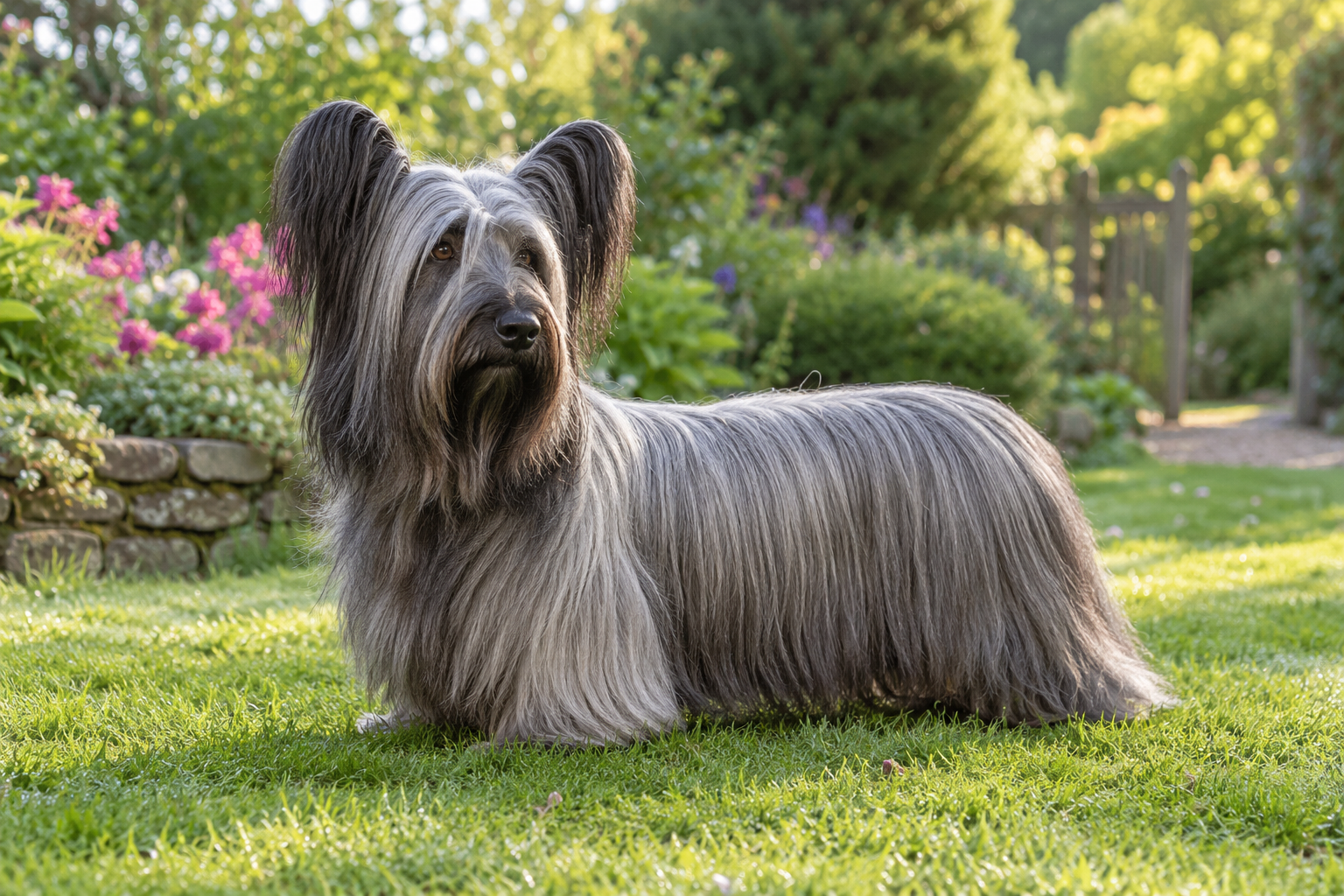 Skye TerrierMedium • Terriers (Group 2)
 Staffordshire Bull TerrierMedium • Terrier (Group 2)
 Welsh TerrierMedium • Terriers (Group 2)
 Airedale TerrierSmall • Terrier
 American Staffordshire TerrierMedium • Terrier (Group 2)
 Australian TerrierSmall • Terrier