Staffordshire Bull Terrier
By James C. • Updated
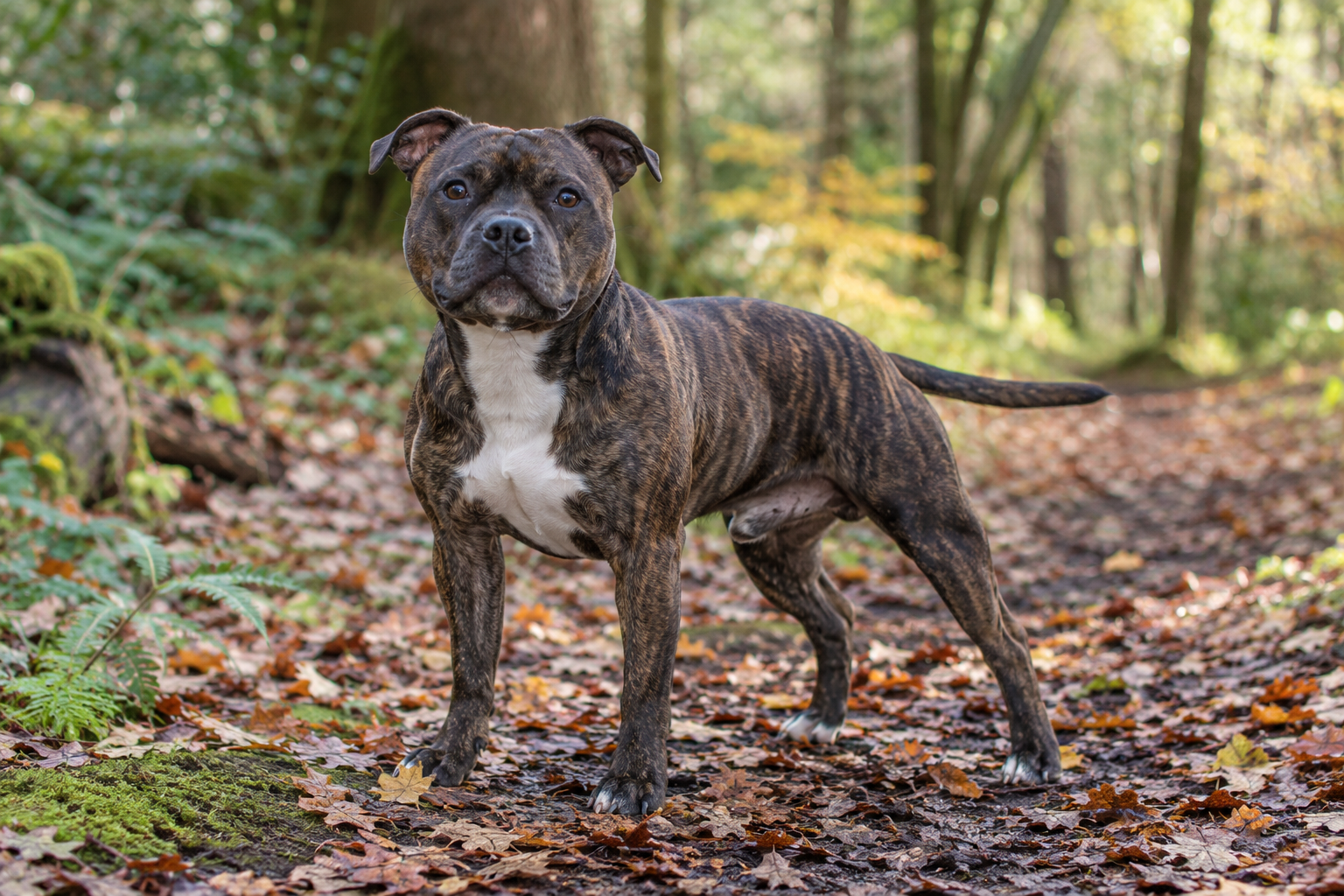
The Staffordshire Bull Terrier, known in Australia as the Staffy or English Staffy, is a compact, muscular terrier developed in nineteenth-century Staffordshire, England, from Bulldog and terrier crosses. It is recognised by Dogs Australia in Group 2 (Terriers) and is a separate breed from the larger American Staffordshire Terrier. Staffies stand 36 to 41 cm and weigh 11 to 17 kg, with a lifespan commonly given as 12 to 14 years. They are famously affectionate with people and children, but can be intolerant of other dogs and need early socialisation and secure handling. Responsible breeders DNA test for hereditary cataract and L-2-hydroxyglutaric aciduria.
Breed Overview
Life Span
12 - 14 years
Average Price
AUD 2000 - AUD 5000
Weight
Male: 13 - 17 kg Female: 11 - 15.4 kg
Height
Male: 36 - 41 cm Female: 36 - 41 cm
Life Expectancy
Male/Female: 12 - 14 years
Breed Group
Terrier (Group 2)
Nicknames
Staffy, Staffie, Stafford, English Staffy
Breed Information
The Staffordshire Bull Terrier, almost always called the Staffy in Australia, is a compact, muscular and intensely people-loving terrier recognised by Dogs Australia in the Terrier group. The Dogs Australia breed standard describes a dog of great strength for its size, standing just 36 to 41 cm, and a temperament that is bold, fearless and reliable with people.
It is worth clearing up the naming confusion straight away. The Staffordshire Bull Terrier, often called the English Staffy, is a different breed from the American Staffordshire Terrier, or American Staffy, which is taller and heavier and has its own breed standard. Neither is the same as the American Pit Bull Terrier, which is a restricted breed in Australia. The Staffy is not restricted in any state.
Staffies are also among the most common parents of Australian crossbreeds, with the Kelpie cross Staffy and Labrador cross Staffy both popular. Those crosses can make excellent dogs, but they are not Staffordshire Bull Terriers, and their size, drive and health vary with the other parent. Everything below covers the purebred Staffy.
Characteristics of the Staffordshire Bull Terrier
The Staffy rates highly for affection, adaptability and low grooming, and lower for tolerance of other dogs and time alone, which is where most ownership problems begin.
| Trait | Rating | Star Rating | Meaning |
|---|---|---|---|
| Size | Medium | ★★★ | Short but heavy for its height, 11 to 17 kg of muscle. |
| Adaptability | High | ★★★★ | Copes with a house and yard or a well-managed townhouse. |
| Exercise Needs | Moderate to High | ★★★★ | Around an hour a day, plus play and training. |
| Easy to Train | Moderate | ★★★ | Eager to please and food motivated, but stubborn at times. |
| Amount of Shedding | Low to Moderate | ★★ | Short single coat that sheds lightly all year. |
| Grooming Needs | Very Low | ★ | A weekly rub down and an occasional bath. |
| Good With Children | Very Good | ★★★★★ | Known for patience with children, though strong and boisterous. |
| Health | Good | ★★★★ | Generally robust, with skin allergies the most common complaint. |
| Cost to Keep | Moderate | ★★★ | Low grooming costs, but skin care and insurance add up. |
| Tolerates Being Alone | Low | ★★ | Bonds closely and can become destructive when left for long hours. |
| Intelligence | Good | ★★★★ | Quick to learn, especially when training feels like a game. |
History of the Staffordshire Bull Terrier: From Black Country Fighting Dog to Family Companion
The Staffy was created in the early 1800s in Staffordshire and the surrounding industrial Black Country of England. According to the Dogs Victoria breed history, breeders crossed the Bulldog of the day with the now extinct Old English Terrier, and miners and ironworkers shaped the dog's gameness, intelligence and loyalty.
The history needs to be told honestly because it explains behaviour seen today. These bull and terrier dogs were bred for bull baiting and, after baiting was banned in 1835, for illegal dog fighting. Breeders selected for courage and tenacity against other dogs, but also for a dog that could be handled safely by people in the middle of that chaos. The result was a dog that was gentle with humans and could be intolerant of other dogs, a combination the breed still carries.
As blood sports disappeared, enthusiasts turned the Staffy into a show and companion dog, and the English Kennel Club recognised the breed in 1935. It arrived in Australia in the twentieth century and quickly became one of the country's best-known family dogs. In the United States, a heavier line of the same ancestry developed separately and became the American Staffordshire Terrier.
Appearance of the Staffordshire Bull Terrier: Compact, Muscular, and Smooth Coated
Size and Build
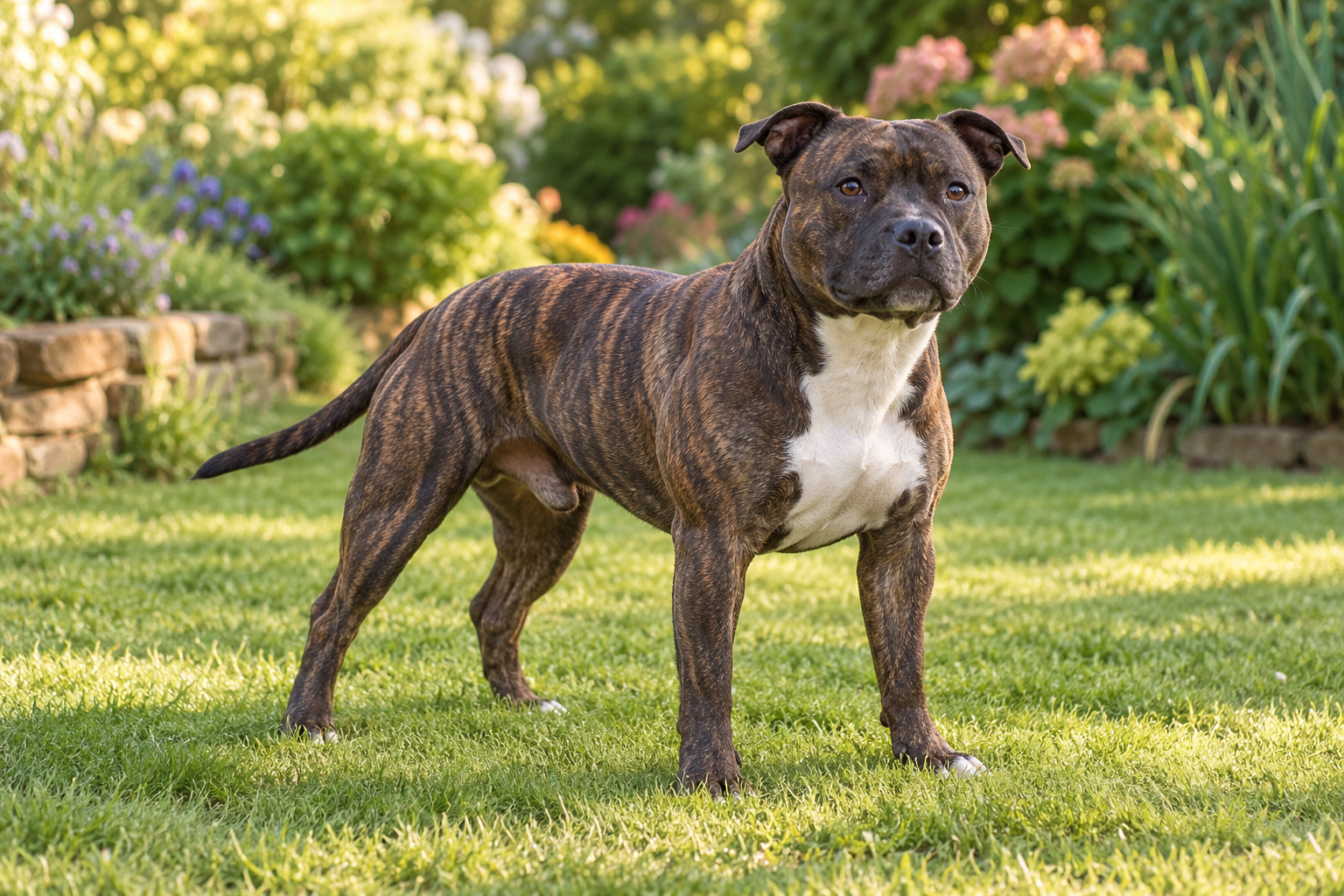
The Staffy is a short, stocky dog with a deep brisket, wide front and level topline. The Dogs Australia standard sets a desirable height of 36 to 41 cm at the withers, with weights of 13 to 17 kg for dogs and 11 to 15.4 kg for bitches, and says height and weight should be related. A well-bred Staffy looks powerful but athletic, never bulky or overweight.
Coat and Colours
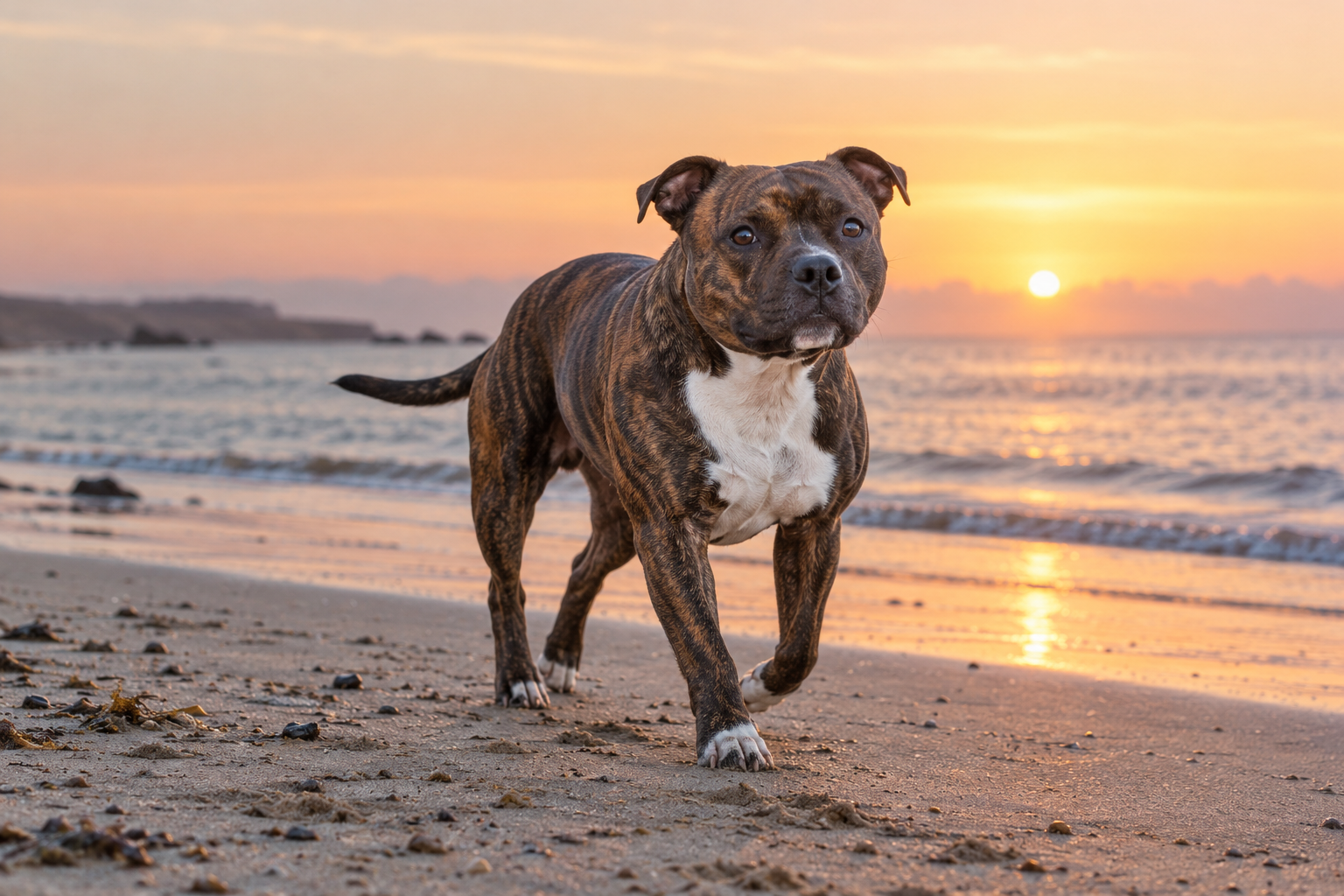
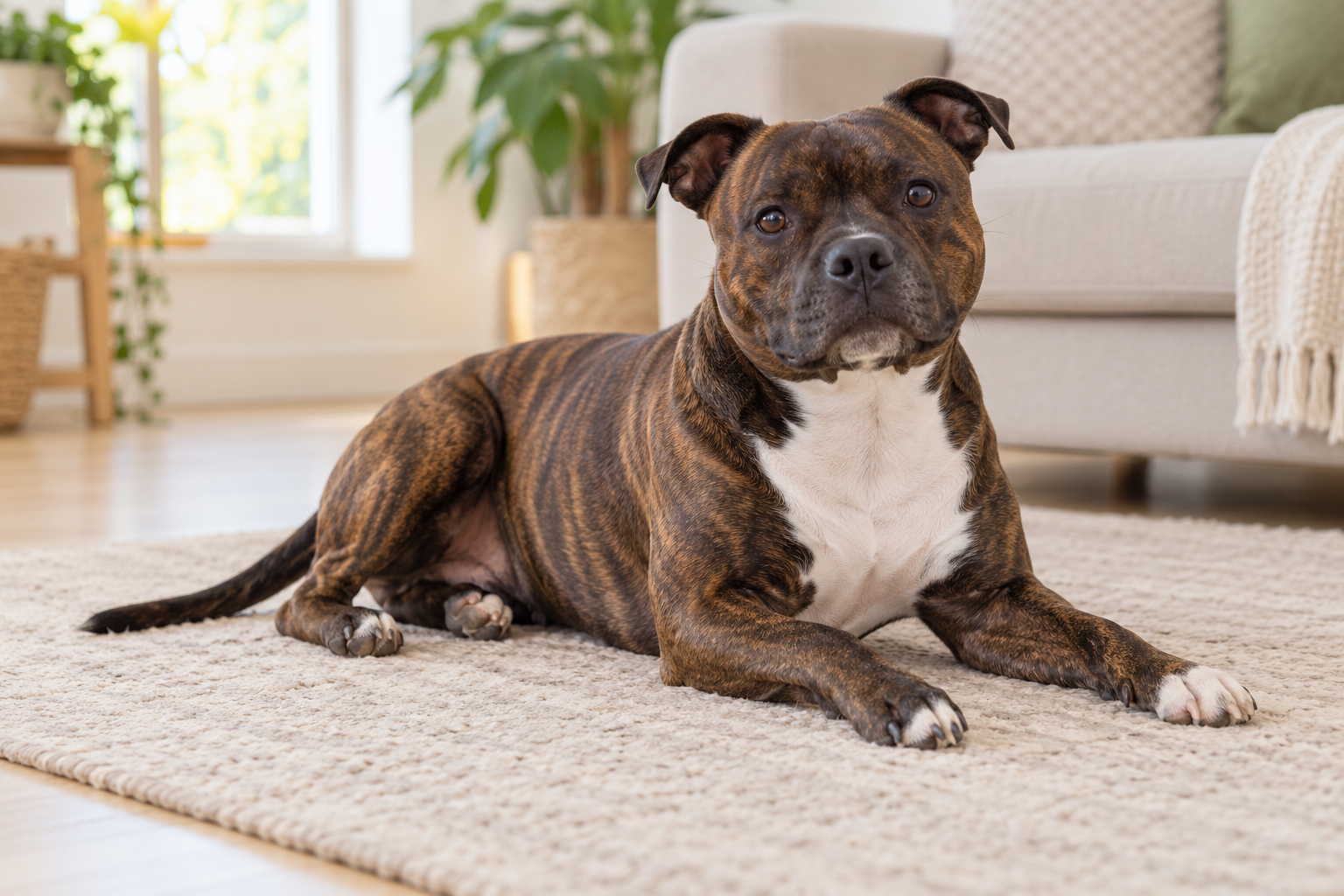
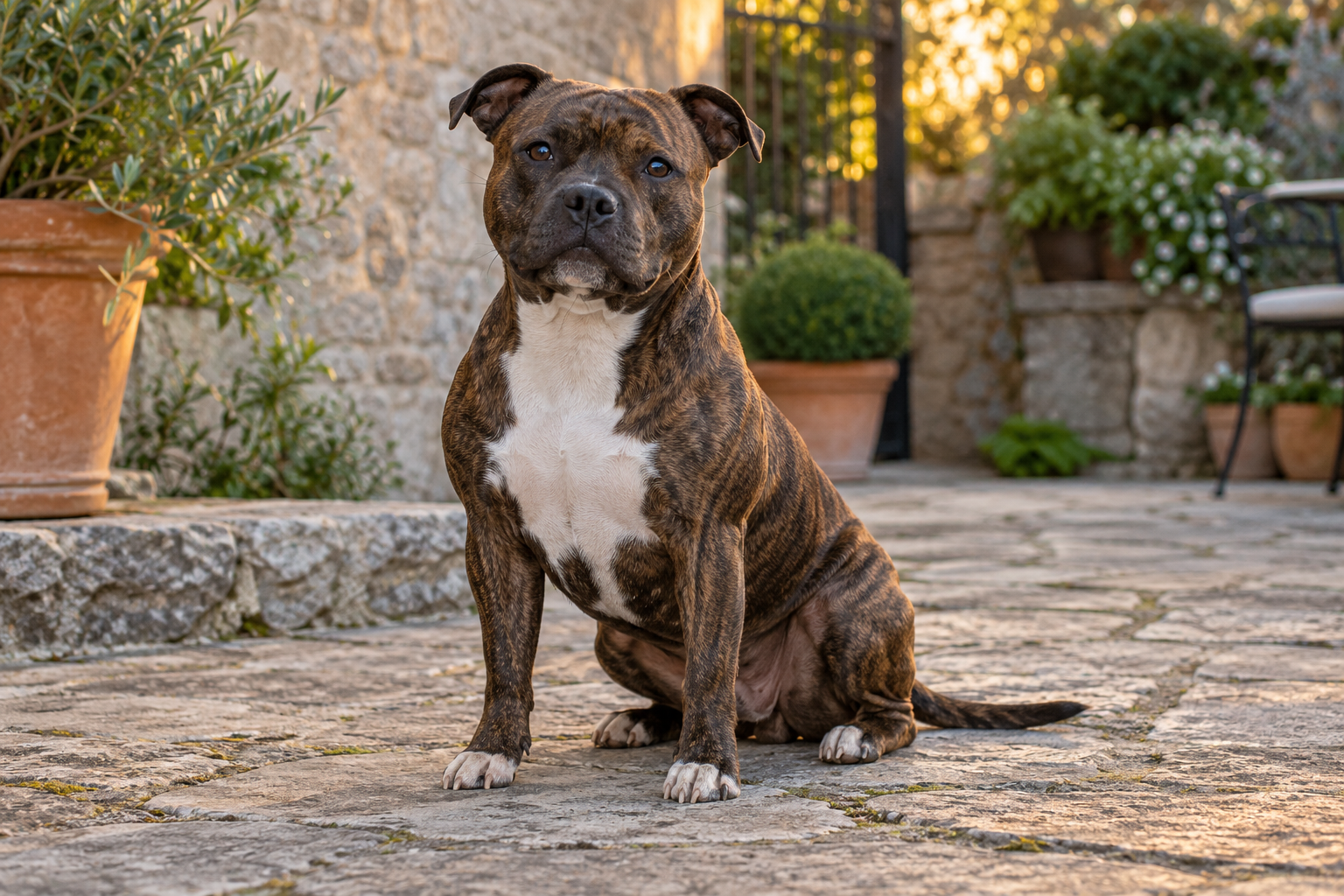
The coat is smooth, short and close. Accepted colours are red, fawn, white, black or blue, any of these with white, and any shade of brindle or brindle with white. Black and tan and liver are highly undesirable in the standard. Blue, black, red and brindle are all ordinary standard colours, and none is rarer, healthier or more valuable than another. A breeder charging extra for a "rare blue" puppy is marketing a colour, not quality.
Distinctive Features
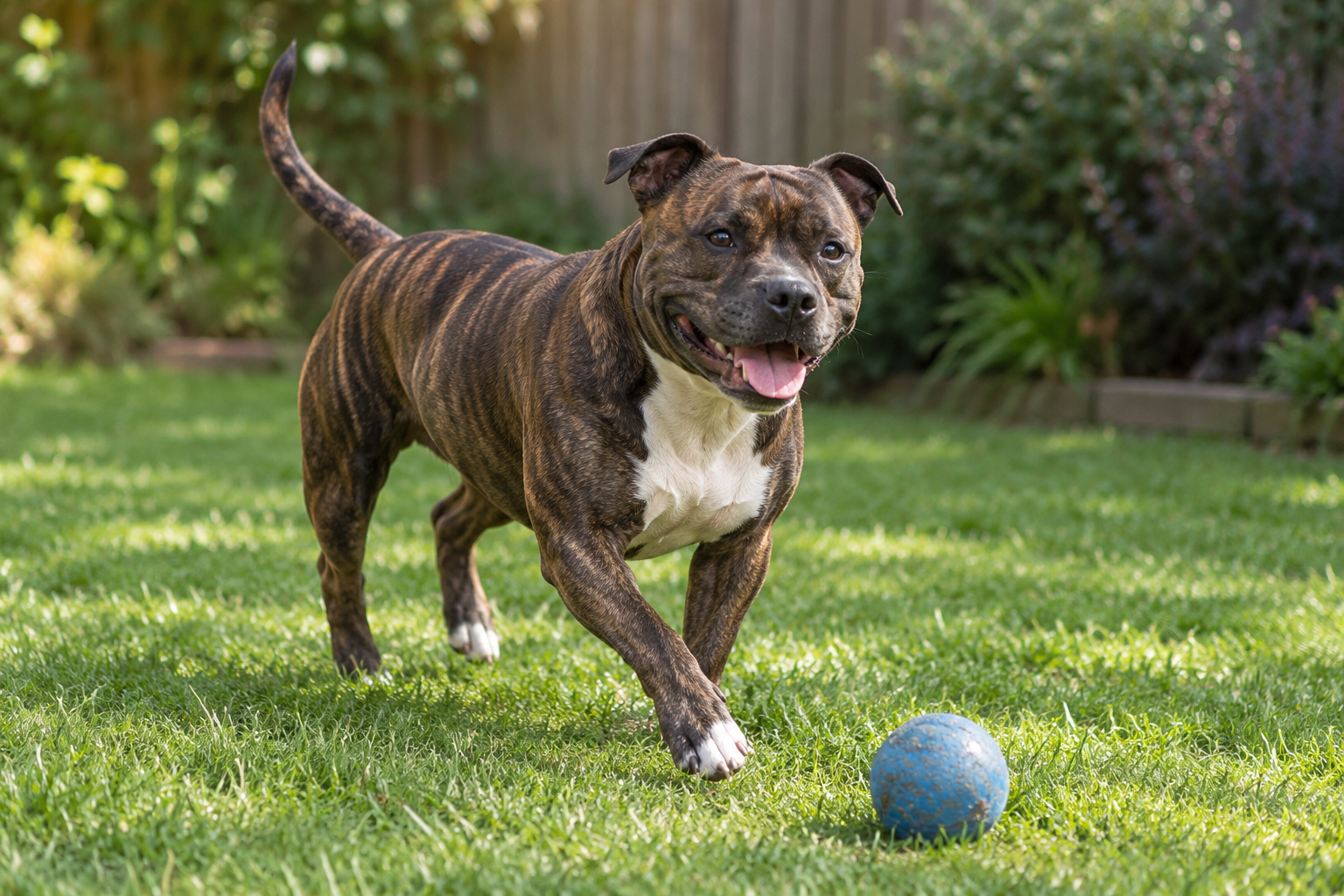
The head is short and deep with a broad skull, very pronounced cheek muscles, a distinct stop and a short foreface. Ears are rose or half pricked, and the tail is medium length, low set and carried like an old-fashioned pump handle. The famous wide Staffy grin comes from that broad head and strong jaw.
Gender Differences
Males are usually heavier and broader through the head and chest, and the standard allows them up to 17 kg against 15.4 kg for bitches. Males can be stronger to handle on lead and more likely to show intolerance of other male dogs. Females are often a little lighter and sometimes easier for first-time owners, though individual temperament matters more than sex.
Temperament of the Staffordshire Bull Terrier: Affectionate, Bold, and Tenacious
Core Personality Traits
Staffies are affectionate, playful and devoted to their people. The breed standard itself calls them highly intelligent and affectionate especially with children, and owners describe a dog that wants to be part of everything the family does. They are also bold, determined and physically tough, which makes them great fun and occasionally hard work.
Social Behaviour
With people, most Staffies are friendly to the point of being poor guard dogs. They greet visitors with enthusiasm rather than suspicion. With other dogs the picture is more mixed. Dogs Victoria notes that Staffies can be intolerant of other dogs and recommends walking them on a lead, and same-sex tension is the most common pattern.
Bonding and Attachment
A Staffy attaches closely to its household and prefers to be with people rather than outside on its own. That closeness is the breed's great appeal, but it also means a Staffy left alone for long working days can become anxious, noisy or destructive. Plan for company, a dog walker or doggy day care if the house is empty most of the day.
Common Behavioural Challenges
Dog-to-dog reactivity is the challenge every Staffy owner should plan for. Not every Staffy fights, and many live happily with other dogs, but a Staffy that does decide to engage is strong and persistent. Other common issues are pulling on lead, jumping up in excitement, chewing during adolescence and prey drive towards cats and small animals. Most are manageable with early training, exercise and sensible supervision.
Intelligence and Trainability of the Staffordshire Bull Terrier: Clever, Keen, and Occasionally Stubborn
Intelligence and Learning Ability
Staffies learn quickly and respond well to praise, play and food. They enjoy tricks, scent games and structured play, and many do well in obedience and agility. Their intelligence shows most when training is short, varied and rewarding, and least when it is repetitive.
Training Approach
Reward-based training suits the breed far better than harsh correction, which tends to make a tough, sensitive dog either shut down or push back. Keep sessions to five or ten minutes, end on a success, and use toys as well as food. Teach loose lead walking early, because a 16 kg Staffy that pulls hard is genuinely difficult to hold, particularly around other dogs.
Early Socialisation
Socialisation is the single most important investment a Staffy owner makes. Calm, positive exposure to people, children, traffic, vets and especially well-mannered adult dogs during the first months shapes how the adult dog copes. Much of that work can start safely at home and in controlled settings before vaccinations are complete, so the critical window is not lost.
Potential Training Challenges
Stubbornness, excitement and dog reactivity are the main hurdles. A Staffy that has decided something is more interesting than you will need patience rather than force. Off-lead play in dog parks is a frequent source of trouble for the breed, and many experienced owners prefer controlled play with known dogs instead. Recall should be practised in fenced areas before it is trusted anywhere else.
Staffordshire Bull Terrier Family Life: Living with Children, Pets, and Households
Living with Children
Is a Staffy a good family dog? For most families, yes, with supervision and a plan for other dogs. Staffies are well known for their patience and affection with children, and many families choose them for exactly that reason. They are also strong, wriggly and enthusiastic, so toddlers can be knocked over in play. Always supervise young children, teach them not to hug, grab or disturb a sleeping dog, and give the dog a quiet retreat.
Living with Other Pets
A Staffy raised with a cat often accepts that cat, though outdoor cats, rabbits and guinea pigs remain at risk from prey drive. Other dogs depend on the individuals. An opposite-sex pairing with a calm, confident dog is usually the most successful. Introduce new dogs slowly on neutral ground and never leave a new pairing unsupervised until you are confident in it.
Household Environment
Staffies adapt well to houses with yards and can manage townhouses when exercise is reliable. Secure fencing matters, since a bored Staffy can dig or climb. Indoors, they want to be on the couch with the family. They feel the cold in winter and the heat in summer, so they should live inside with the household rather than in a backyard kennel.
Lifestyle Compatibility
The breed suits active families, couples and singles who are home a fair amount and enjoy walks, play and training. It suits people who want an affectionate, low-grooming dog with plenty of personality. It suits households that rely on dog parks for exercise, or that already have a dog-reactive dog, much less well.
Health of the Staffordshire Bull Terrier: Skin Allergies, DNA Tests, and Lifespan
Lifespan and Healthy Living
Staffies typically live 12 to 14 years, the range given by Dogs Victoria. They are generally sturdy dogs, and keeping them lean, active and protected from the Australian sun goes a long way. Regular vet checks catch skin problems and lumps early, which matters for this breed.
Common Health Conditions
Owners should be aware of several conditions that can be associated with the breed. The PDSA lists hip dysplasia, skin conditions, certain cancers and some eye conditions among the problems seen in Staffies. It is best to discuss any concerns with a veterinarian.
- Skin allergies and itchy skin. Atopic dermatitis, food sensitivities and demodex mites can all cause itching, redness, paw licking and ear infections.
- Hereditary cataract (HC). An inherited form of cataract that can affect young dogs, caused by a known HSF4 gene variant.
- L-2-hydroxyglutaric aciduria (L-2-HGA). An inherited metabolic disorder that affects the nervous system, with signs such as wobbliness, tremors or seizures.
- Mast cell tumours. A UK study of primary care records found the Staffy among the breeds with greater odds of a mast cell tumour diagnosis than crossbred dogs.
- Hip dysplasia. Abnormal development of the hip joint that can lead to arthritis.
- Sunburn and skin cancer. A practical risk for white and pied Staffies with pink skin on the nose, ears and belly.
If your Staffy has itchy skin, start by looking for patterns: seasonal flare-ups suggest environmental allergy, year-round itching can point to food or mites, and sudden red patches may be hot spots. Learning the early signs of skin irritation helps you act quickly. Book a vet visit rather than trying a string of shampoos and diet changes, because the right treatment depends on the cause.
Genetic Health Testing
Ask for DNA certificates for both parents for hereditary cataract and L-2-HGA. The Kennel Club lists both DNA tests among those recommended for the breed. Both conditions are recessive, so a parent can be a healthy carrier, and the goal is to avoid breeding two carriers together. Some Australian breeders also test for degenerative myelopathy, and hip scoring is a sensible extra.
A puppy from two DNA-clear parents, or from one clear parent and one carrier, will not be affected by that condition. A breeder who cannot show certificates, or says testing is unnecessary because their dogs are healthy, is skipping the simplest protection the breed has.
Preventative Health Care
Keep vaccinations current and use year-round flea, worm and heartworm prevention, adding paralysis tick protection on the eastern seaboard. Check the coat and skin weekly for lumps, since mast cell tumours can look like harmless bumps, and have any new lump checked rather than watched. Apply a dog-safe sunscreen to pink skin before time outdoors in summer.
Caring for the Staffordshire Bull Terrier: Daily Care and Living Environment
Daily Care Routine
A good Staffy day includes a long walk or two shorter ones, some play, a short training session and plenty of time with the family. Feed two measured meals rather than leaving food out. A quick daily check of skin, paws and ears suits a breed prone to allergies.
Living Environment Requirements
Provide secure fencing, a comfortable indoor bed and access to the house. Staffies chew hard, so choose durable toys and remove anything that can be swallowed. Avoid leaving a Staffy unsupervised with other dogs while you are out until you know how they get along.
Climate Sensitivity
The short coat gives little protection from heat or cold, and the muscular, relatively short-muzzled build makes Staffies prone to overheating. Walk early in the morning or in the evening during summer, provide shade and water, and check safe temperatures for walking dogs in Australian heat before heading out. In winter, a coat for cold mornings is reasonable, particularly for older dogs.
Caring for Senior Staffordshire Bull Terriers
From around nine years, many Staffies slow down and may develop arthritis. Keep walks regular but gentler, maintain a lean weight, add soft bedding and non-slip flooring, and move to six-monthly vet checks. Lumps and skin changes deserve extra attention as the dog ages.
Grooming of the Staffordshire Bull Terrier: Low Maintenance with Skin in Focus
Coat Maintenance
Do Staffordshire Bull Terriers shed? Yes, lightly and all year, though the short hair is easy to manage. A weekly brush with a rubber mitt or soft bristle brush removes loose hair and spreads natural oils. It takes only minutes each week.
Skin Care
For a Staffy, skin care matters more than coat care. During the weekly brush, look for redness, scabs, bald patches, hot spots or lumps, particularly on the belly, armpits and paws. Wipe paws after walks in grass if your dog reacts to pollens, and keep an eye on pink skin for sunburn.
Ear, Nail, and Dental Care
Check ears weekly, since allergies often show up as red, smelly or itchy ears first. Trim nails every three to four weeks if they do not wear down naturally. Brush teeth several times a week to reduce plaque and gum disease.
Bathing and Professional Grooming
Bathe every few weeks, or when dirty, using a gentle, soap-free dog shampoo. Over-bathing can dry sensitive skin, while a medicated shampoo should only be used on veterinary advice. Professional grooming is not needed.
Exercise Needs of the Staffordshire Bull Terrier: Daily Activity for a Powerful Dog
Daily Exercise Requirements
Most adult Staffies need around 60 minutes of exercise a day, split between walks and active play. They are energetic but not endurance dogs, and short bursts of high-intensity play suit them well. An under-exercised Staffy is far more likely to chew, dig or bark.
Activities Staffies Enjoy
Fetch, tug with clear rules, flirt pole games, scent work, trick training and on-lead jogging all suit the breed. Many Staffies enjoy swimming once introduced gently. Structured activities are generally a better choice than busy off-lead dog parks.
Exercise by Life Stage
Puppies need short play sessions and gentle walks rather than long runs while their joints develop. Adolescents need more exercise and more training at the same time. Adults can manage longer walks and runs in cool weather. Seniors benefit from shorter, slower walks and gentle play.
Importance of Mental Stimulation
Puzzle feeders, snuffle mats, scent games and short training sessions tire a Staffy as effectively as a walk. Mental work is especially useful on hot days, when exercise outdoors must be limited, and during recovery from injury. In tick areas, check the whole body after bushland walks, since paralysis ticks are easy to spot on a short coat.
Feeding the Staffordshire Bull Terrier: Nutrition and Diet Needs
Nutritional Requirements
What is the best diet for a Staffordshire Bull Terrier? A complete and balanced diet for medium, active dogs, fed in measured portions. There is no single best brand. Look for an Australian complete and balanced food that suits your dog's age and activity level, and talk to your vet if skin problems suggest a food sensitivity.
Feeding by Life Stage
Feed puppies three to four small meals a day until around four months, then three meals until six months, then two meals a day for life. Switch to an adult food at around 12 months. Seniors may need fewer kilojoules and more joint support.
Portion Control and Weight Management
Staffies love food and gain weight easily. You should be able to feel the ribs without pressing and see a waist from above. Weigh food rather than scooping, count training treats in the daily total, and adjust portions if your dog's shape changes.
Special Dietary Considerations
Some Staffies with itchy skin improve on a hydrolysed or novel protein diet, but a proper elimination trial takes around eight weeks and is best run with a veterinarian. Avoid toxic foods such as grapes, sultanas, chocolate, onion, garlic, macadamias and anything containing xylitol, and never feed cooked bones.
Staffordshire Bull Terrier Price in Australia: Purchase Cost and Ongoing Expenses
Puppy Purchase Price
A registered Staffordshire Bull Terrier puppy from a Dogs Australia breeder typically costs $2,000 to $5,000. That is the range in the Dogz Online Staffy cost guide. On 17 October 2026, Dogz Online listed 16 Staffy puppy ads, most priced on request, with one New South Wales litter at $4,200, and earlier October listings in South Australia and New South Wales sat between $4,000 and $5,000.
Price varies by state, by bloodline and by whether the puppy is sold on the limited register (pet) or main register (breeding and showing). Colour should not move the price. A pup advertised far below this range without papers or DNA tested parents is a risk, and a pup priced well above it because of a "rare" colour is a sales pitch.
Initial Setup Costs
RSPCA NSW puts typical first-year costs at $60 to $80 for microchipping, $280 to $420 for a puppy vaccination course, $350 to $650 for desexing, $100 to $200 for a bed, $40 to $100 for a collar, lead or harness, and around $170 for puppy school. Council registration ranges from $23 to $201 depending on desexing. Many breeders include the first vaccination and microchip in the purchase price.
Ongoing Monthly Costs
| Cost | Typical figure (AUD) | Source |
|---|---|---|
| Food and bowls | Around $600 per year, varying with quality | RSPCA NSW |
| Flea and worming treatment | $200 to $250 per year | RSPCA NSW |
| Annual vaccination and vet check | From $140 per year | RSPCA NSW |
| Pet insurance | Around $1,693 per year for a medium dog, accident and illness | Canstar, 2026 |
| Professional grooming | Nil, the breed does not need it | n/a |
Canstar's 2026 figures put accident and illness cover for a medium dog at around $1,693 a year, and breed affects the premium. Since skin allergies are common and can need lifelong treatment, it is worth comparing how much dog insurance costs by breed and taking out cover while your puppy is young, before any condition becomes pre-existing.
Long-Term Financial Commitment
Over a 12 to 14 year life, a Staffy is a moderate-cost dog. Dog-owning households spend an average of about $2,520 a year, according to the Animal Medicines Australia Pets in Australia 2025 survey, and a Staffy with no skin problems may sit close to that. The costs most likely to push it higher are chronic allergy management, lump removal and cruciate or hip surgery.
Buying Advice for a Staffordshire Bull Terrier: Choosing a Healthy Puppy
Choosing a Responsible Breeder
Look for a breeder who is a member of their state Dogs Australia body, such as Dogs NSW, Dogs Victoria or Dogs Queensland, and who can show DNA results for both parents. Good breeders ask about your home, your other pets and your experience, and they may have a waiting list. Working through questions to ask before you commit to a breeder makes it easier to compare options.
Health Checks Before Purchase
Meet the puppy with its mother, and the father if possible, and watch how they react to strangers. Look for clean skin with no redness or bald patches, clear eyes, clean ears and confident movement. Ask for vet check, vaccination, worming and microchip records, and confirm the microchip number matches the paperwork.
Questions to Ask the Breeder
- Can I see DNA certificates for hereditary cataract and L-2-HGA for both parents?
- Have the parents been hip scored, and do they have any history of skin allergies?
- Which Dogs Australia state body are you registered with, and what is your member number?
- Is the puppy sold on the limited or main register?
- How do the parents behave around other dogs?
- How have the puppies been socialised with people, noises and handling?
- Do you charge more for any colour, and why?
- Will you take the dog back at any stage if I cannot keep it?
Considering Adoption
Staffies and Staffy crosses are a common sight in Australian rescue and council pounds, often surrendered as boisterous young adults rather than for any serious problem. Adopting an adult lets you see its size, energy and attitude to other dogs before you commit, which is valuable with this breed.
Is the Staffordshire Bull Terrier Right for You? A Loyal Family Dog That Needs Thoughtful Handling
Lifestyle Compatibility
The Staffy suits families and active owners who want an affectionate, low-maintenance dog that loves people.
It is less suited to busy dog-park routines, long hours alone or homes with a dog that does not cope with others.
Time and Care Commitment
Plan on about an hour of exercise a day, short daily training and plenty of company, for 12 to 14 years.
Grooming is quick, but skin checks should be part of the weekly routine.
Grooming and Health Awareness
Choose a puppy from DNA tested parents, watch for itchy skin and new lumps, and protect pale skin from the sun.
Insurance taken out early is a sensible safety net.
Ideal Owner Profile
The ideal Staffy owner is home often, enjoys training and play, and is happy to manage introductions with other dogs carefully.
In return, they get one of the most loving companions in the dog world.
Find Staffordshire Bull Terrier Puppies for Sale
If a Staffy fits your household, you can browse puppies for sale across Australia on Pups4Sale.
Shortlist breeders who show DNA certificates, register with a Dogs Australia state body and are happy to answer your questions.
Frequently Asked Questions
Related Breeds
Other terrier breeds on Pups4Sale.
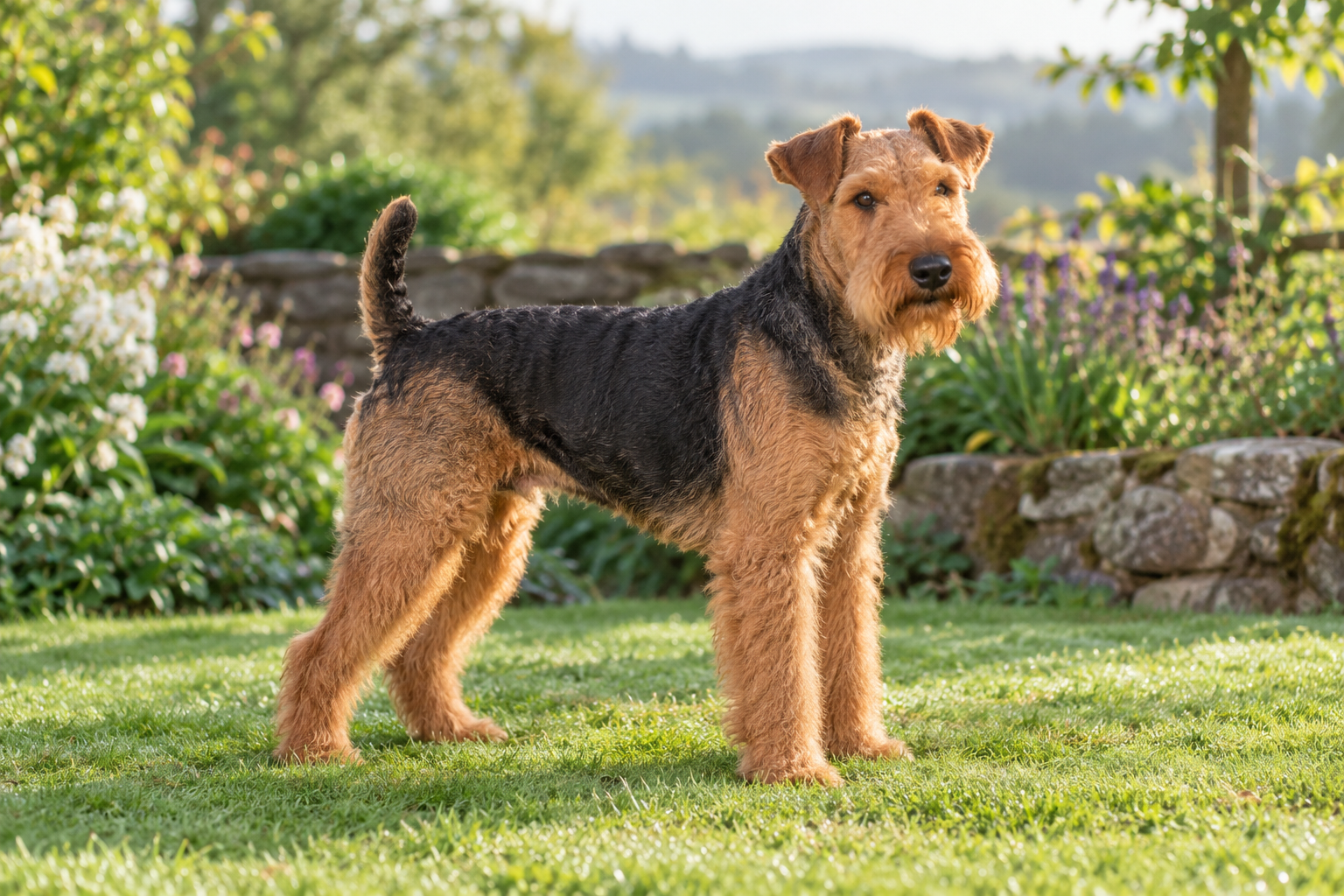 Welsh TerrierMedium • Terriers (Group 2)
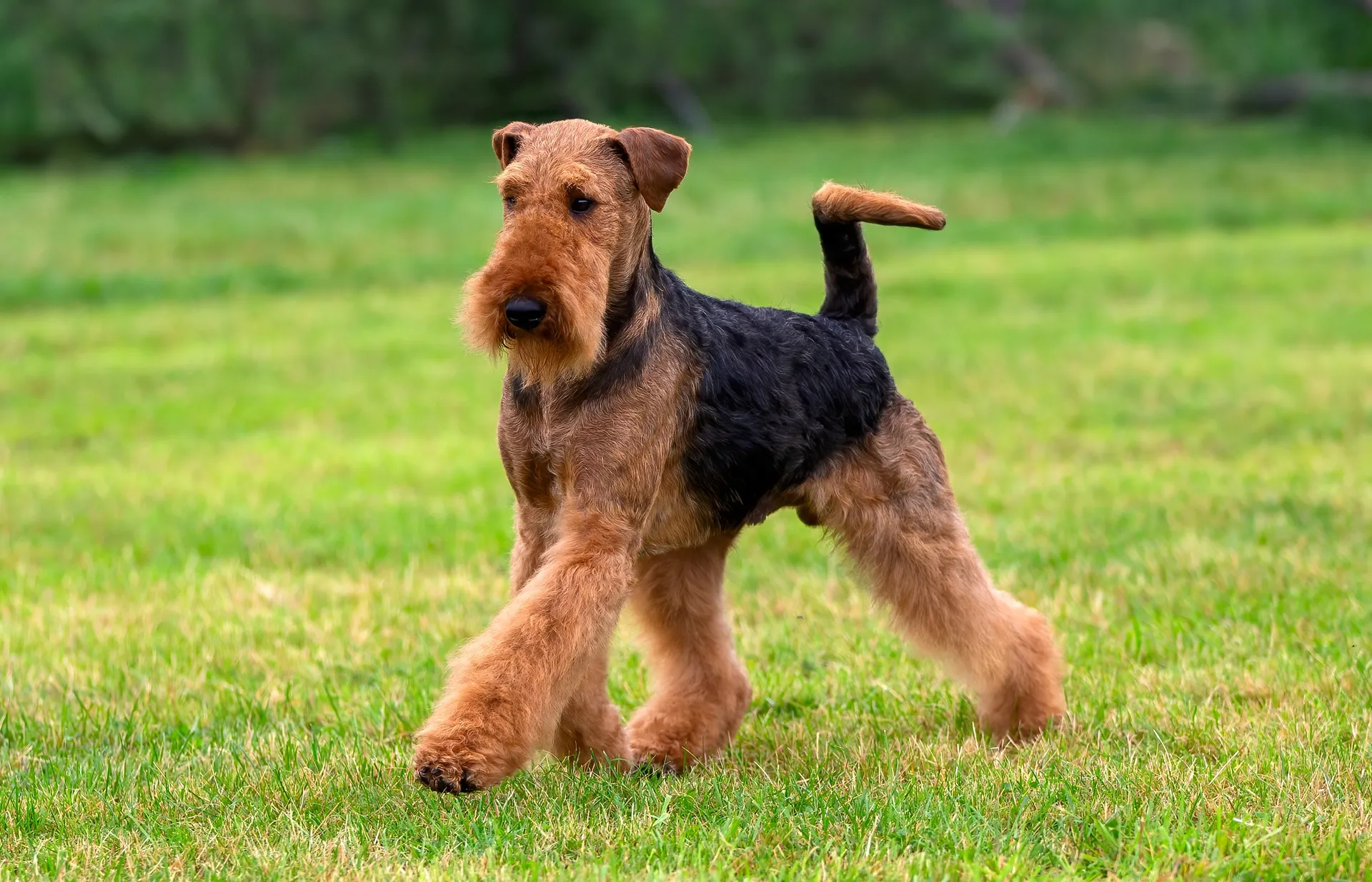 Airedale TerrierSmall • Terrier
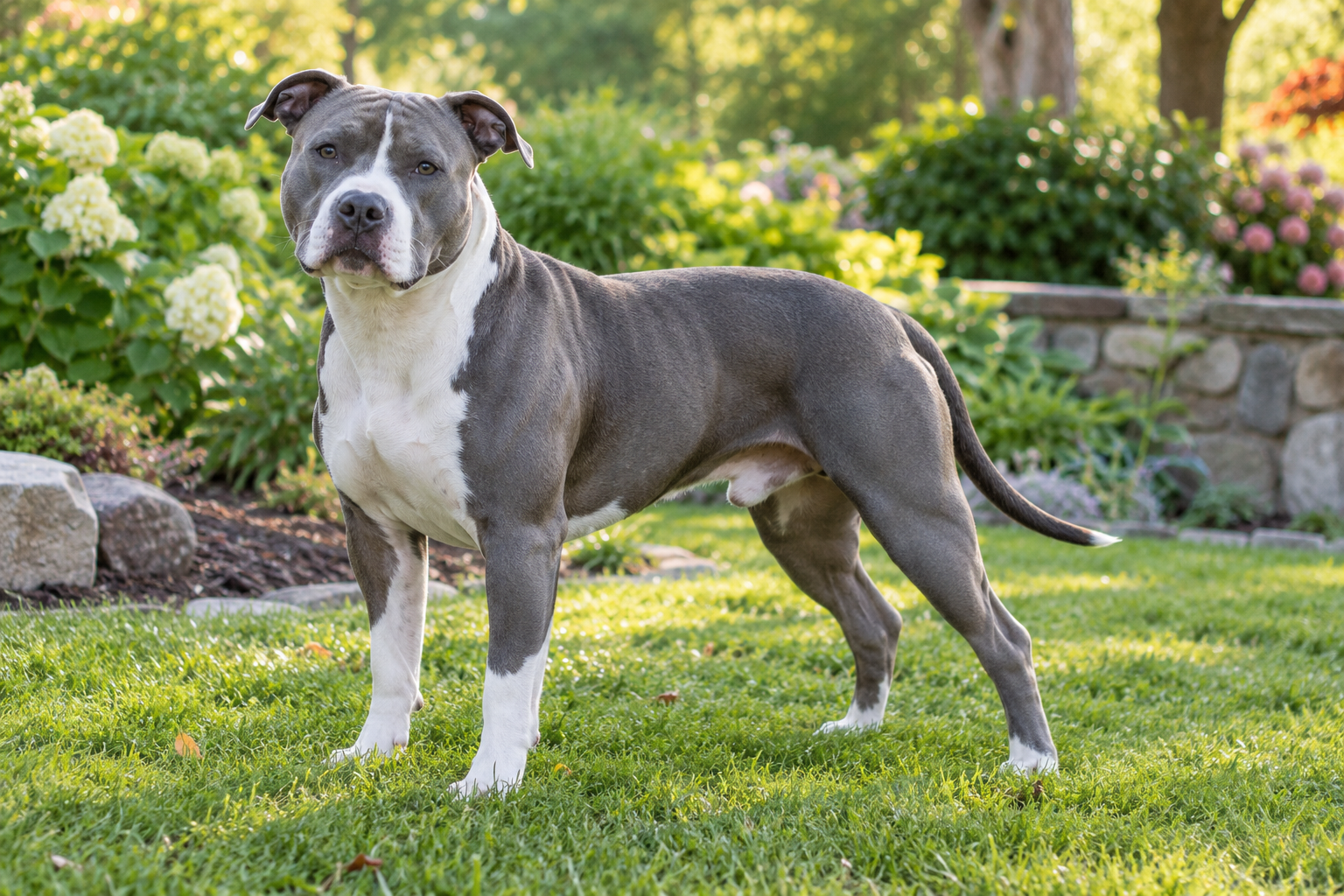 American Staffordshire TerrierMedium • Terrier (Group 2)
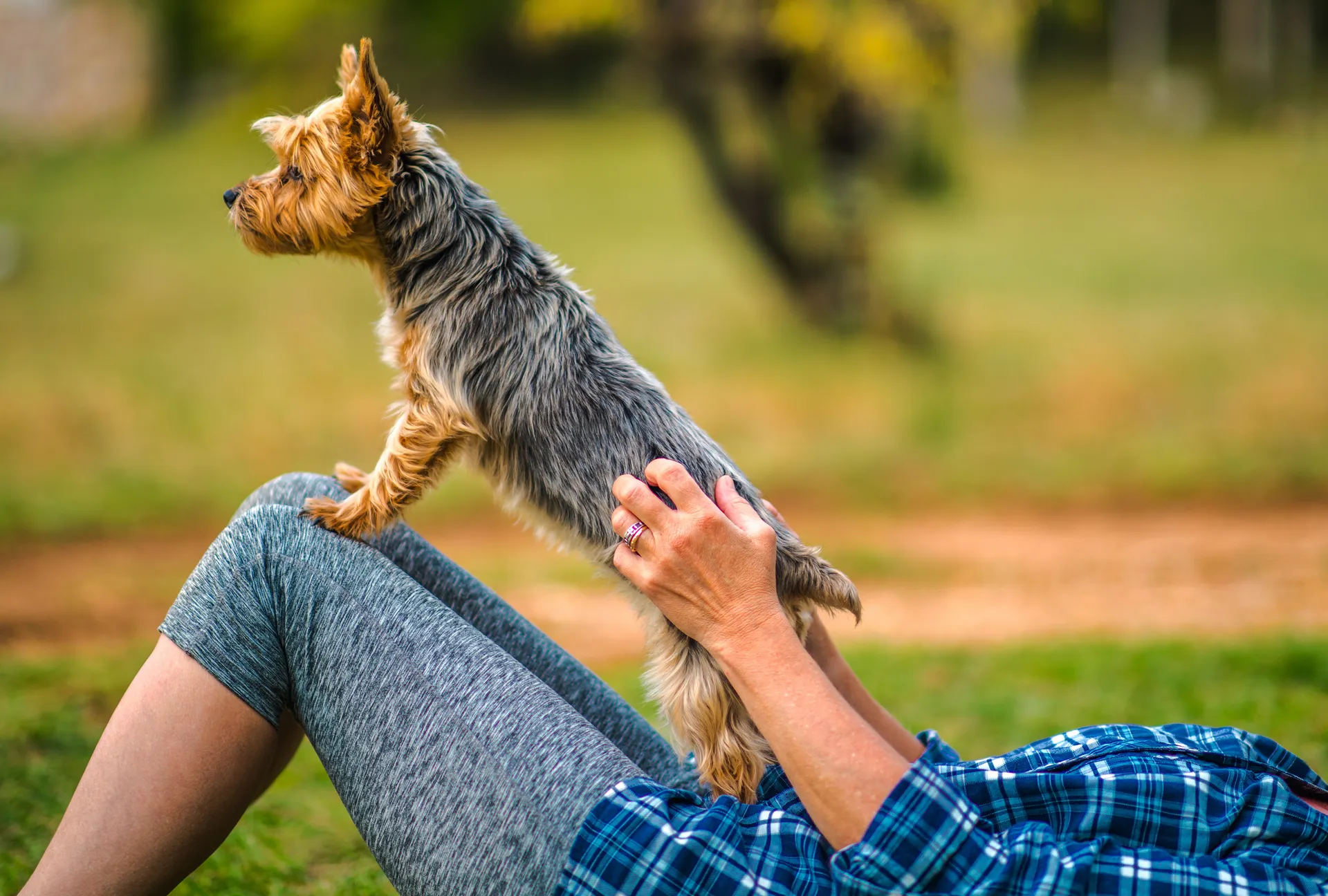 Australian TerrierSmall • Terrier
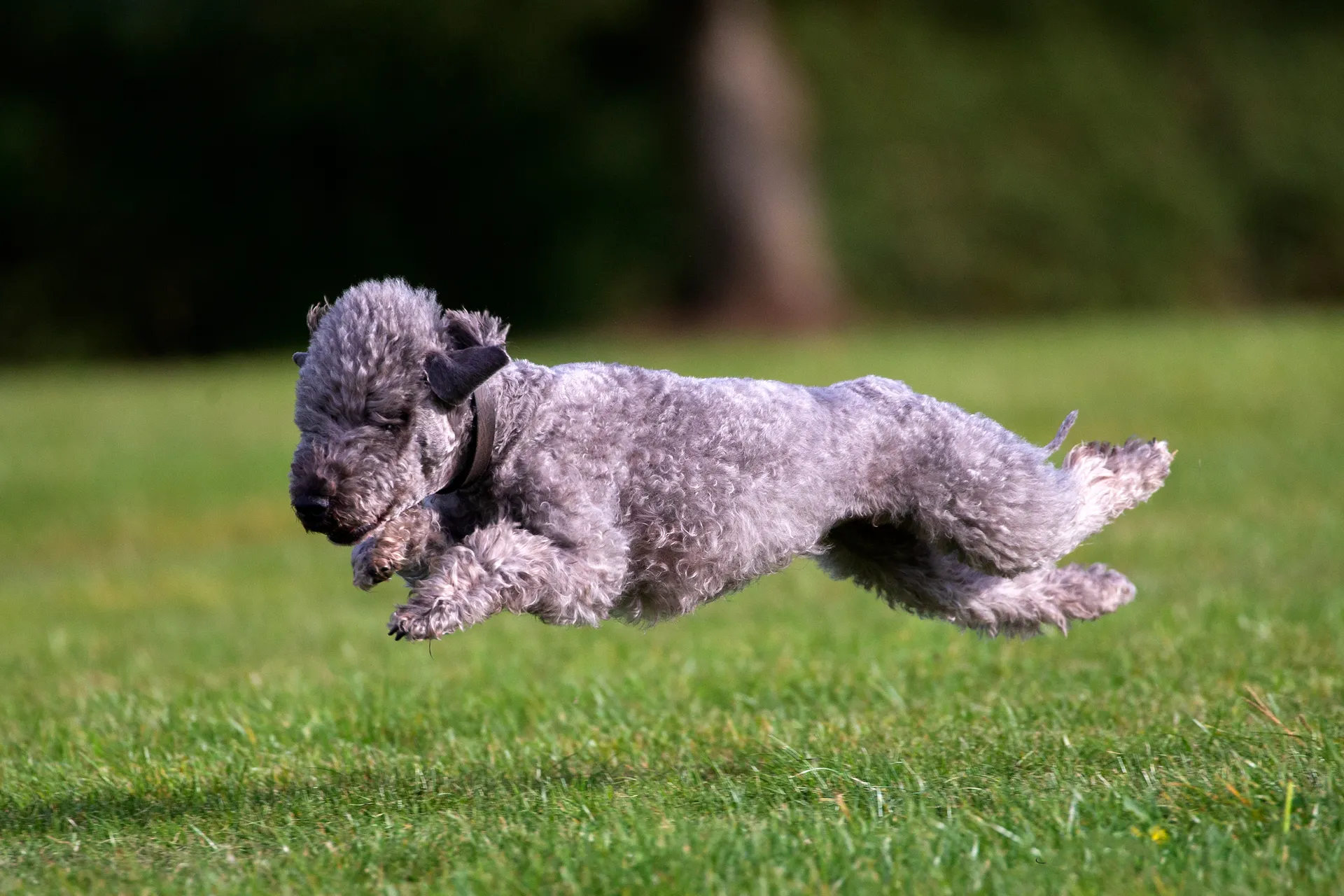 Bedlington TerrierSmall • Terrier
 Border TerrierSmall • Terrier