Welsh Springer Spaniel
By James C. • Updated
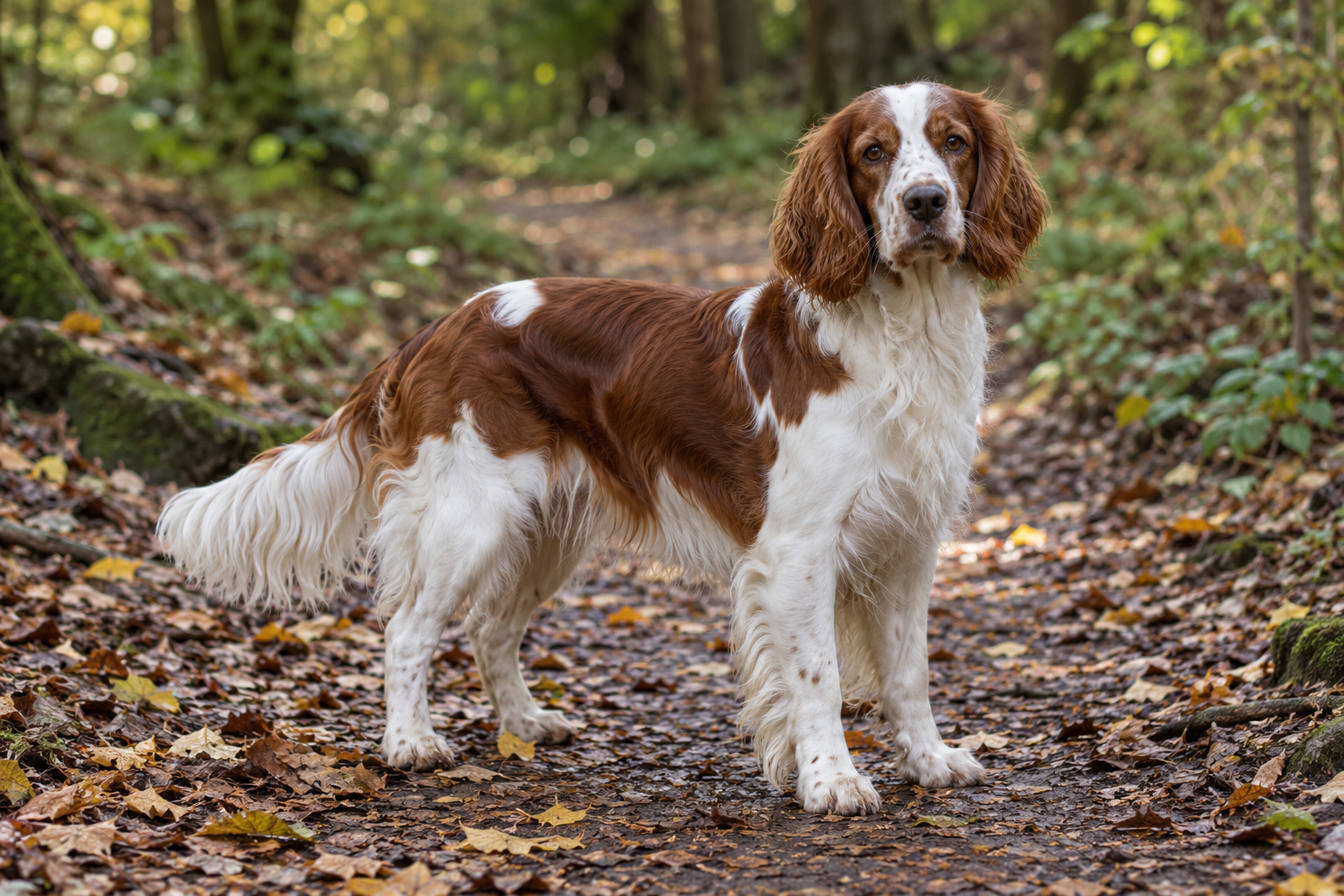
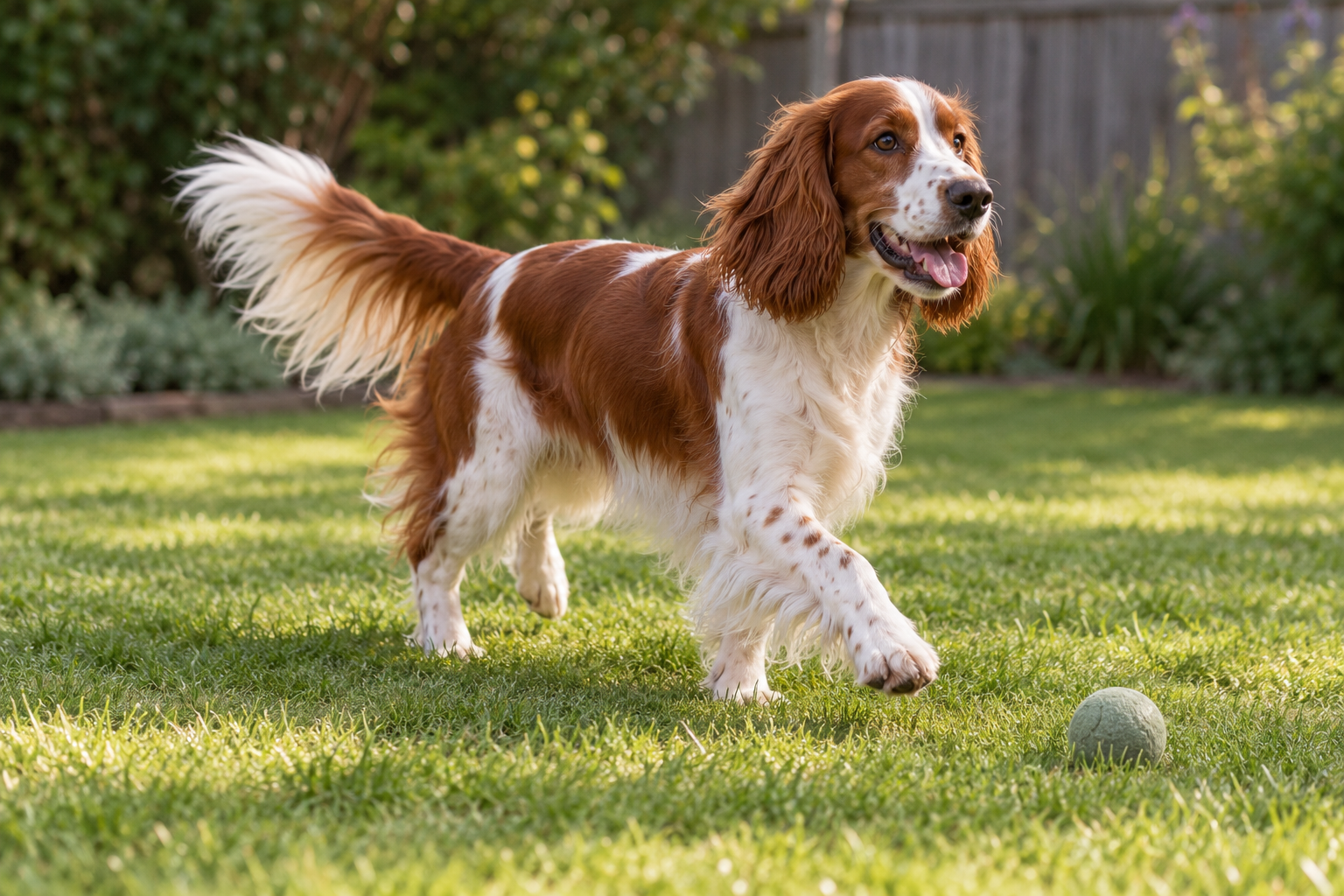
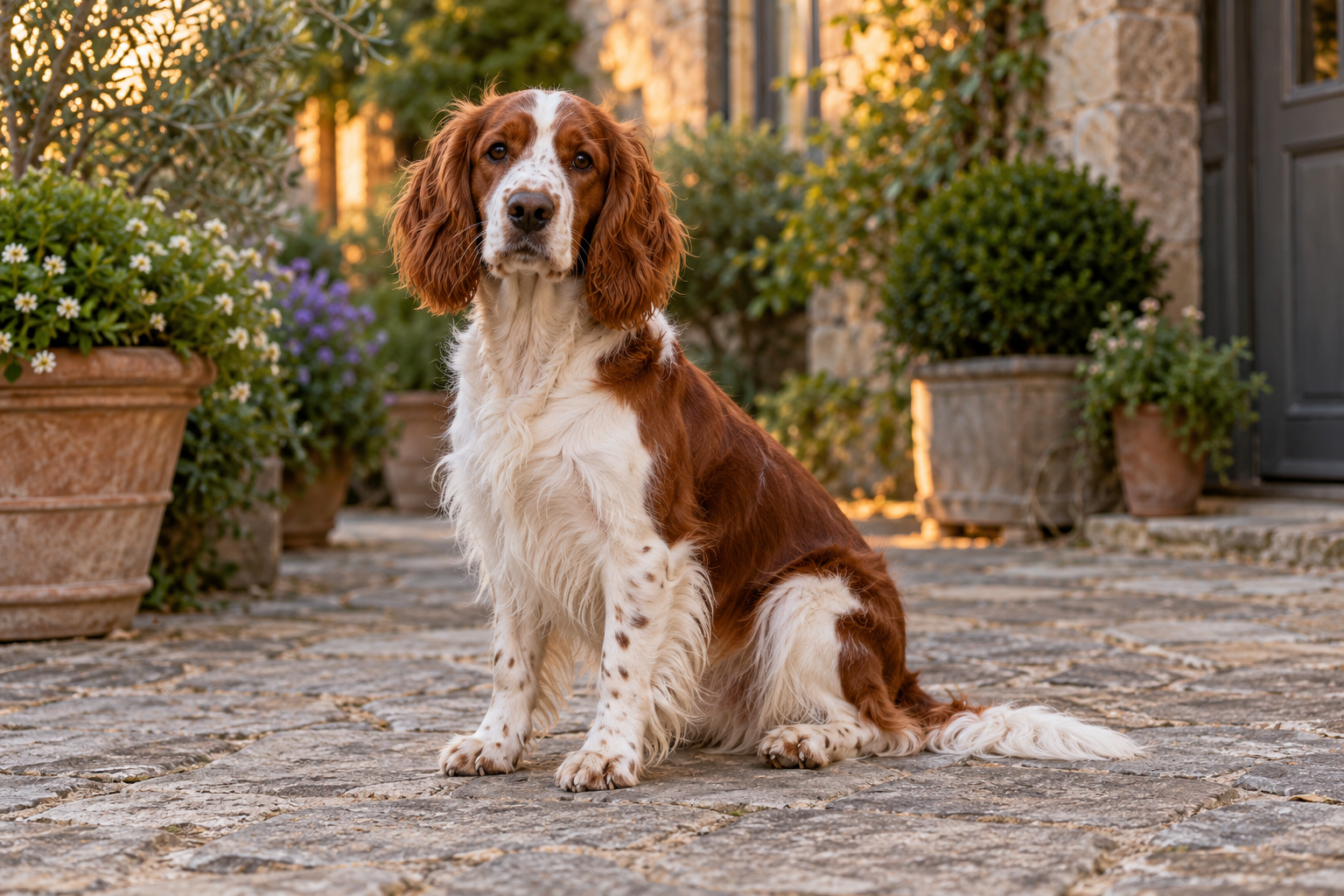
The Welsh Springer Spaniel is a medium-sized red and white flushing spaniel from Wales, bred to find and spring game for the gun and recognised by Dogs Australia in the Gundog group. It is a separate breed from the better-known English Springer Spaniel, slightly smaller, with smaller vine-leaf ears and a coat that is only ever rich red and white. Dogs stand around 48 cm and bitches around 46 cm, with a typical weight of 16 to 20 kg and a lifespan of 12 to 14 years. It is affectionate and gentle with its family, often reserved with strangers, and far more energetic than its calm manner at home suggests. The breed is uncommon in Australia, with a small network of registered breeders and few litters each year.
Breed Overview
Life Span
12 - 14 years
Average Price
AUD 1000 - AUD 2500
Weight
Male: 16 - 20 kg Female: 16 - 20 kg
Height
Male: 46 - 50 cm Female: 44 - 48 cm
Life Expectancy
Male/Female: 12 - 14 years
Breed Group
Gundogs (Group 3)
Nicknames
Welshie, Welsh Springer
Breed Information
The Welsh Springer Spaniel is a medium-sized, red and white flushing spaniel from Wales, bred to find game and spring it into the air for the gun. It is not the same dog as the English Springer Spaniel, which is what most people mean when they search for a "springer spaniel". The Welsh is a separate breed with its own Dogs Australia breed standard, a little smaller, with smaller ears and a coat that is only ever rich red and white.
At home the Welshie is gentle, affectionate and devoted to its people, and it is often quieter and more reserved than its English cousin. Out of doors it is a genuine working gundog with stamina to match. The gap between the calm dog on the sofa and the tireless dog in the field is the single most important thing for a prospective owner to understand.
It is also uncommon in Australia. At the time of writing Dogz Online listed 22 breeders and just one current litter nationally, so most buyers join a waiting list and contact breeders directly.
Characteristics of the Welsh Springer Spaniel
The Welsh Springer rates highly for affection, adaptability with families and exercise needs, and moderately for grooming, which makes it a rewarding dog for an active household and a frustrating one for a sedentary one.
| Trait | Rating | Star Rating | Meaning |
|---|---|---|---|
| Size | Medium | ★★★ | Around 46 to 48 cm and 16 to 20 kg. |
| Adaptability | Good | ★★★★ | Settles well in a family home with a yard and enough exercise. |
| Exercise Needs | High | ★★★★ | A working gundog that needs daily running, sniffing and swimming. |
| Easy to Train | Good | ★★★★ | Willing and sensitive, with an independent streak in the field. |
| Amount of Shedding | Moderate | ★★★ | Sheds steadily year round. |
| Grooming Needs | Moderate | ★★★ | Weekly brushing, ear care and regular tidying of the feathering. |
| Good With Children | Very Good | ★★★★★ | Gentle, sweet-tempered and well suited to family life. |
| Health | Good | ★★★★ | Generally healthy and long-lived, with hips and eyes to screen. |
| Cost to Keep | Moderate | ★★★ | Typical medium-dog costs with occasional grooming. |
| Tolerates Being Alone | Low | ★★ | A people-focused dog that does not cope well with long days alone. |
| Intelligence | Good | ★★★★ | A capable working mind, quick to learn and quick to find loopholes. |
History of the Welsh Springer Spaniel: An Old Welsh Gundog with a Modern Following
Red and white land spaniels have been associated with Wales for centuries, and the Welsh Springer is often described as one of the oldest of the British spaniel types. Writing in 1570, the scholar John Caius described red and white spaniels used for hunting, and Dogs NSW dates mentions of the breed type to that period. Claims that the modern breed is the oldest of all spaniels are popular but hard to prove, and are best treated as tradition rather than fact.
The modern breed took shape in the late nineteenth century in South Wales, where working spaniels of this type were bred for their nose, stamina and ability to work hard cover. According to Dogs NSW, the first registered dog, Corrin, was born in 1893, and The Kennel Club in the United Kingdom recognised the breed separately as the Welsh Springer Spaniel in 1902. That recognition settled its identity as a distinct breed rather than a colour variety of the English Springer.
Welsh Springers came to Australia in the 1930s and 1940s, mainly as working gundogs, and the first Australian litter was registered in 1974, according to Dogs NSW. The breed has stayed small here ever since. Breeders continue to import dogs and frozen semen from the UK and Scandinavia to broaden the gene pool, and the single litter listed nationally at the time of writing was sired using semen imported from Sweden.
Today most Welsh Springers in Australia are family companions, show dogs or dogs competing in field trials, retrieving tests, tracking and agility. They remain capable gundogs, and the instincts that made them useful in the field are fully present in pet lines.
Appearance of the Welsh Springer Spaniel: Compact, Feathered, and Always Red and White
Size and Build
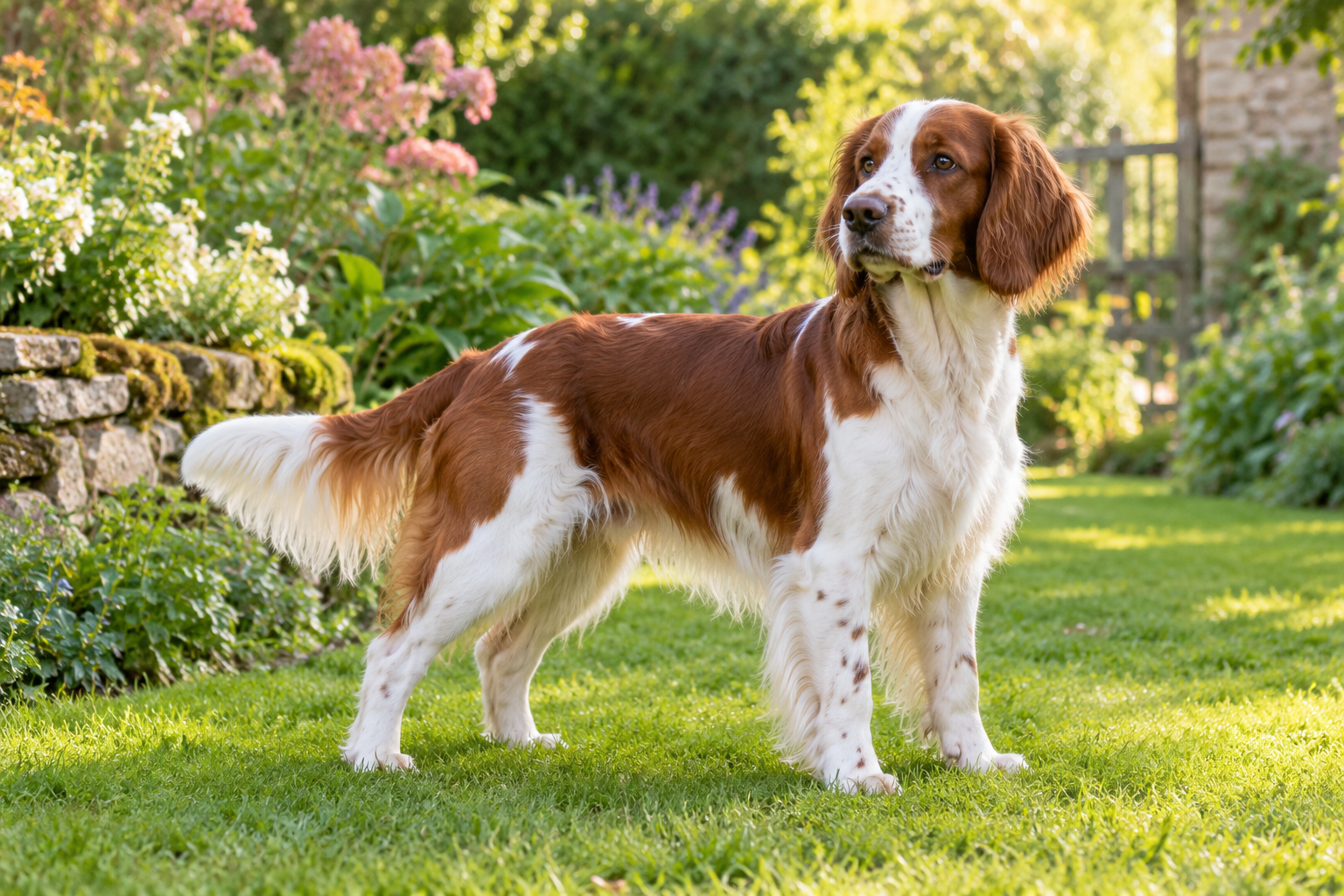
The breed standard gives a height of approximately 48 cm at the withers for dogs and 46 cm for bitches. No weight is set, and most sources describe an average of around 16 to 20 kg, with working-bred and male dogs sometimes heavier. The body is compact and strong, slightly longer than tall, built for endurance rather than speed, with a muscular hindquarter and well-boned legs.
Coat and Colours
The coat is straight, flat, silky and dense, never wiry or wavy, with moderate feathering on the chest, the backs of the legs, the ears and the tail. The only permitted colour is rich red and white, in any pattern. Ticking is common on the white areas. Liver, black or tan markings are not part of the breed and suggest an English Springer or a cross.
Distinctive Features
The ears are a good identifying feature. The standard describes them as set moderately low and hanging close to the cheeks, comparatively small, and gradually narrowing towards the tip, shaped somewhat like a vine leaf. The head is slightly domed with a clear stop, the eyes are hazel or dark, and the expression is kind and soft.
The difference between a Welsh Springer and an English Springer Spaniel is the question most buyers ask, so the main points are set out side by side.
| Feature | Welsh Springer Spaniel | English Springer Spaniel |
|---|---|---|
| Height | Dogs about 48 cm, bitches about 46 cm | About 51 cm |
| Colours | Rich red and white only | Liver and white or black and white, with or without tan |
| Ears | Smaller, vine-leaf shaped, lighter feathering | Longer and wider, well feathered |
| Temperament | Often more reserved with strangers | Typically outgoing with everyone |
| Availability in Australia | Uncommon, small breeder network | Far more widely available |
Gender Differences
Dogs are around 2 cm taller under the standard and usually heavier, with a broader head. Bitches are finer and lighter. Temperament differences are modest, though some owners find bitches slightly more independent and dogs slightly more openly affectionate.
Temperament of the Welsh Springer Spaniel: Gentle, Loyal, and Quietly Energetic
Core Personality Traits
Dogs NSW describes the breed as kindly and gentle, loving human company, and independent yet affectionate. Owners consistently describe a dog that wants to be close to its people, follows them from room to room, and is happiest when included in whatever the family is doing. It is usually less boisterous than an English Springer, though young dogs can be very lively.
Social Behaviour
The Welshie is often wary of strangers. It is not timid or shy, but it may take time to accept newcomers, and many will watch a visitor for a while before deciding to say hello. It is an alert watchdog that will let you know someone has arrived, but it is not a guard dog and is rarely aggressive.
Bonding and Attachment
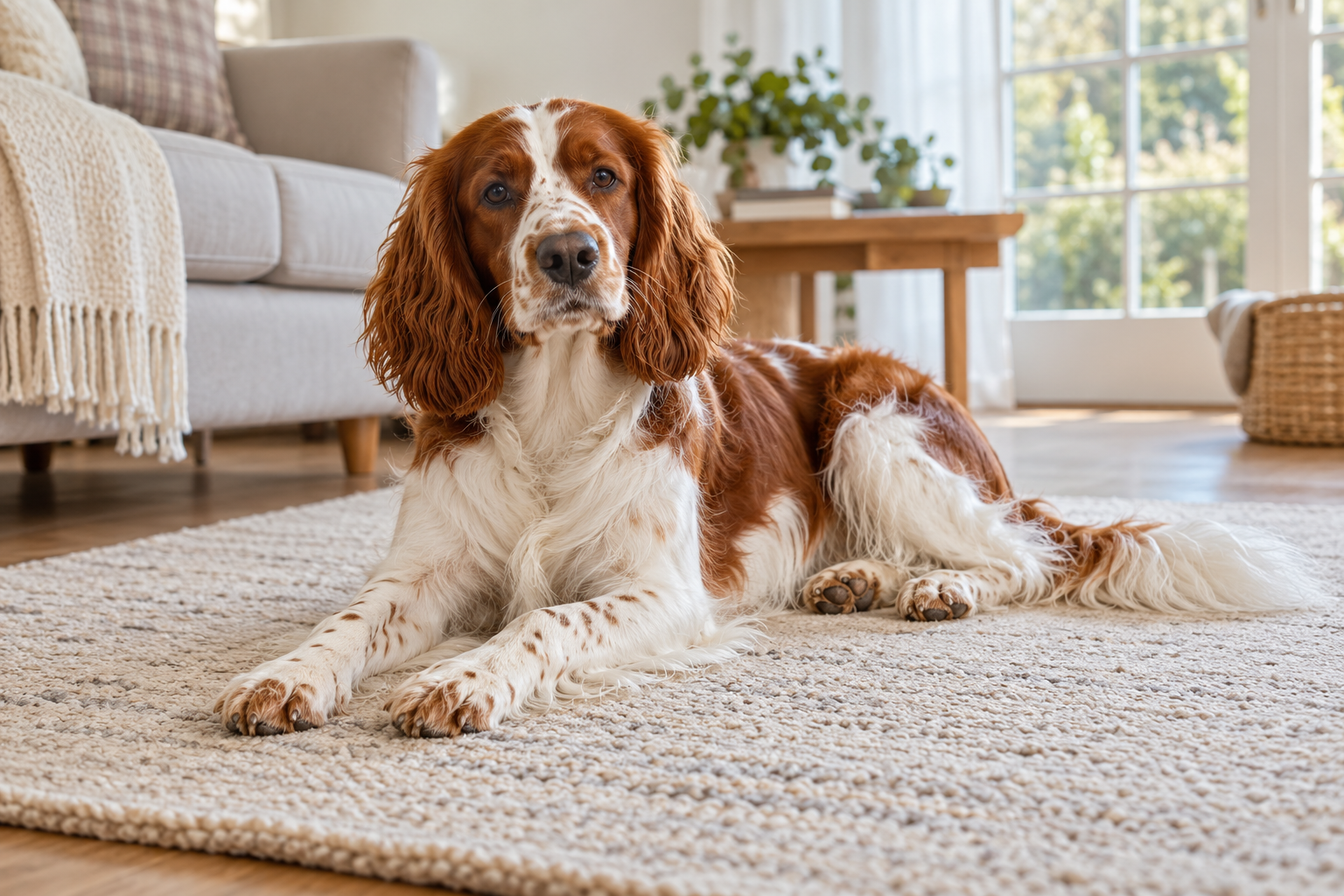
Are Welsh Springer spaniels cuddly? Usually, yes. Most are very affectionate with their own family, enjoy physical contact and will happily share a couch. That strong attachment has a cost: a Welsh Springer left alone for long days is prone to separation-related stress, which can show up as barking, whining or chewing. Watching for the early signs of separation anxiety helps you act before habits set in.
Common Behavioural Challenges
Do Welsh Springer spaniels bark a lot? Not typically. Dogs NSW rates their barking as low, and most will bark to alert rather than for its own sake. The more common challenges are a strong nose that makes recall unreliable when a scent is up, scavenging, and the restlessness of an under-exercised gundog. Boredom, rather than temperament, is behind most problem behaviour in this breed.
Intelligence and Trainability of the Welsh Springer Spaniel: Willing, Sensitive, and Nose-Driven
Intelligence and Learning Ability
The Welsh Springer is a capable, intelligent working dog that learns quickly, especially anything involving retrieving, scent or water. It was bred to work at a distance from its handler and make decisions in thick cover, which gives it a degree of independence that owners of more biddable breeds sometimes underestimate.
Training Approach
Reward-based training works best. The breed is sensitive, and harsh corrections tend to make it shut down or become worried rather than more compliant. Short, positive sessions with food and play rewards suit it well. Retrieving games are a natural motivator and can be built into recall, impulse control and steadiness training.
Early Socialisation
Because the breed can be reserved with strangers, early socialisation matters more than its gentle reputation suggests. Introduce puppies calmly to a wide range of people, dogs, sounds and places from eight weeks. A well-socialised Welshie becomes politely friendly with visitors, while a poorly socialised one can stay anxious around new people.
Potential Training Challenges
Recall is the main training challenge. When a Welsh Springer finds a scent, it follows it, and a dog working cover can be out of sight quickly. Build recall early, use a long line in unfenced areas, and only allow off-lead time where it is legal and safe. Adolescence, from about six to eighteen months, is when selective hearing tends to peak.
Welsh Springer Spaniel Family Life: Living with Children, Pets, and Households
Living with Children
Are Welsh Springer spaniels good pets? For an active family, very much so. Dogs NSW describes them as sweet-tempered and suited to families, and their gentle nature generally makes them tolerant and patient with children. Young dogs can be bouncy enough to knock over a toddler, so supervise early interactions and teach children to give the dog space when it is resting.
Living with Other Pets
Most Welsh Springers get on well with other dogs and enjoy canine company. Raised with a cat, many accept it readily. As a flushing breed, the instinct to chase birds and small animals is present, so poultry, rabbits and guinea pigs need sensible management and secure housing.
Household Environment
Dogs NSW suggests a home with at least an average-sized yard, and that is a sensible minimum. Secure fencing is important for a dog that follows its nose. Indoors, a well-exercised Welshie is calm and settled, but it wants to be with its people rather than kept outdoors alone.
Lifestyle Compatibility
The breed suits families who walk, hike, run or swim, and people interested in gundog work or dog sports. It suits homes where someone is around for much of the day. It is a poor fit for long working days with the dog left alone, or for owners wanting a low-energy companion.
Health of the Welsh Springer Spaniel: Hips, Eyes, and a Long Lifespan
Lifespan and Healthy Living
Dogs NSW gives a lifespan of 12 to 14 years, and the breed compares well with other dogs. A large 2024 UK study of companion dog longevity estimated a median life expectancy of about 14 years for the Welsh Springer, above the average for purebred dogs. Staying lean and active is the most practical way to protect that lifespan.
Common Health Conditions
Owners should be aware of several conditions that can occur in the breed. It is best to discuss any concerns with a veterinarian.
- Hip dysplasia. Dogs NSW names hip dysplasia as a main concern, with elbow dysplasia to a lesser degree.
- Goniodysgenesis and glaucoma. Goniodysgenesis is an abnormality of the eye's drainage angle that can lead to primary glaucoma, a painful condition that can cause rapid loss of vision.
- Hereditary cataract. Named by Dogs NSW among the congenital eye problems seen in the breed.
- Epilepsy and thyroid disease. Both occur, though Dogs NSW describes them as relatively rare in Australia.
- Ear infections. Feathered, hanging ears trap moisture and grass seeds, especially in dogs that swim.
Genetic Health Testing
Ask breeders for hip and elbow scores for both parents, and for a current eye examination certificate from a veterinary ophthalmologist. Because goniodysgenesis is a specific concern, ask whether the parents have been examined by gonioscopy, the test that assesses the eye's drainage angle, as well as the routine annual eye check for cataract. A breeder who can show recent eye results and hip and elbow scores without hesitation is a good sign.
Preventative Health Care
Learn the signs of glaucoma: a red or cloudy eye, squinting, tearing or a dog pawing at its face. Glaucoma is an emergency, and same-day veterinary care can save sight. Beyond that, keep vaccinations current, use year-round parasite prevention including paralysis tick cover on the eastern seaboard, and keep ears clean and dry. Annual veterinary checks are the baseline.
Caring for the Welsh Springer Spaniel: Daily Care and Living Environment
Daily Care Routine
A good day for a Welshie includes a long walk or run with time to sniff, a training or retrieving session, and plenty of time with its family. Check ears and feet after outings, especially in grass seed season. Feed twice daily and keep fresh water available.
Living Environment Requirements
A securely fenced yard is important, with shade and water outdoors. The breed should live indoors with the family rather than in a backyard. A comfortable bed in a quiet corner gives the dog somewhere to rest between outings.
Climate Sensitivity
The silky, feathered coat and high drive make heat a real consideration. A Welsh Springer will keep hunting or retrieving long after it should stop, so exercise in the cool of early morning or evening in summer, and check the safe temperature limits for dogs in Australia before strenuous activity. Swimming is a good way to exercise in warmer weather, as long as ears are dried afterwards. In paralysis tick regions, run your hands through the feathering every day, since ticks hide easily in it.
Caring for Senior Welsh Springers
Older Welsh Springers usually stay keen and active well into their teens. Keep exercise regular but gentler, maintain a lean weight to protect joints, and consider twice-yearly vet checks from around eight years. Keep up eye checks in seniors, since glaucoma and cataract risk does not disappear with age.
Grooming of the Welsh Springer Spaniel: Feathering, Ears, and Grass Seeds
Coat Maintenance
Dogs NSW suggests a weekly groom, with daily brushing of the feathering taking only two or three minutes. Brush through the ears, chest, legs and tail to prevent tangles. The silky coat is relatively easy to keep, and dried mud usually brushes out once the coat is dry.
Ear, Nail, and Dental Care
Ear care matters more than anything else in this breed. Check ears at least weekly, dry them after swimming or bathing, and clean gently when needed. Keeping feathered spaniel ears clean is the best defence against infection. Trim nails every three to four weeks and brush teeth several times a week.
Bathing and Professional Grooming
Bathe every month or two, or when the dog is genuinely dirty. Tidy the hair on the ears and upper chest with thinning scissors or clippers, and trim the hair between the pads and around the feet. Many owners do this themselves, while others book a professional tidy every couple of months.
Grass Seed Season
From late spring into summer, grass seeds lodge in feathering, between toes and inside ears, where they can migrate under the skin. Trim the hair between the pads short during seed season, check feet and ears after every walk, and see a vet promptly if your dog suddenly shakes its head, licks a paw or holds an ear at an odd angle.
Exercise Needs of the Welsh Springer Spaniel: A Working Gundog at Heart
Daily Exercise Requirements
Plan on around 60 to 90 minutes of exercise a day for an adult, including off-lead running where it is safe. Dogs NSW gives a quick-glance figure of about 20 minutes a day but also describes the breed as very active, and that lower figure understates what a fit young gundog needs. Owners who give only short leash walks usually end up with a restless, frustrated dog.
Activities Welsh Springers Enjoy
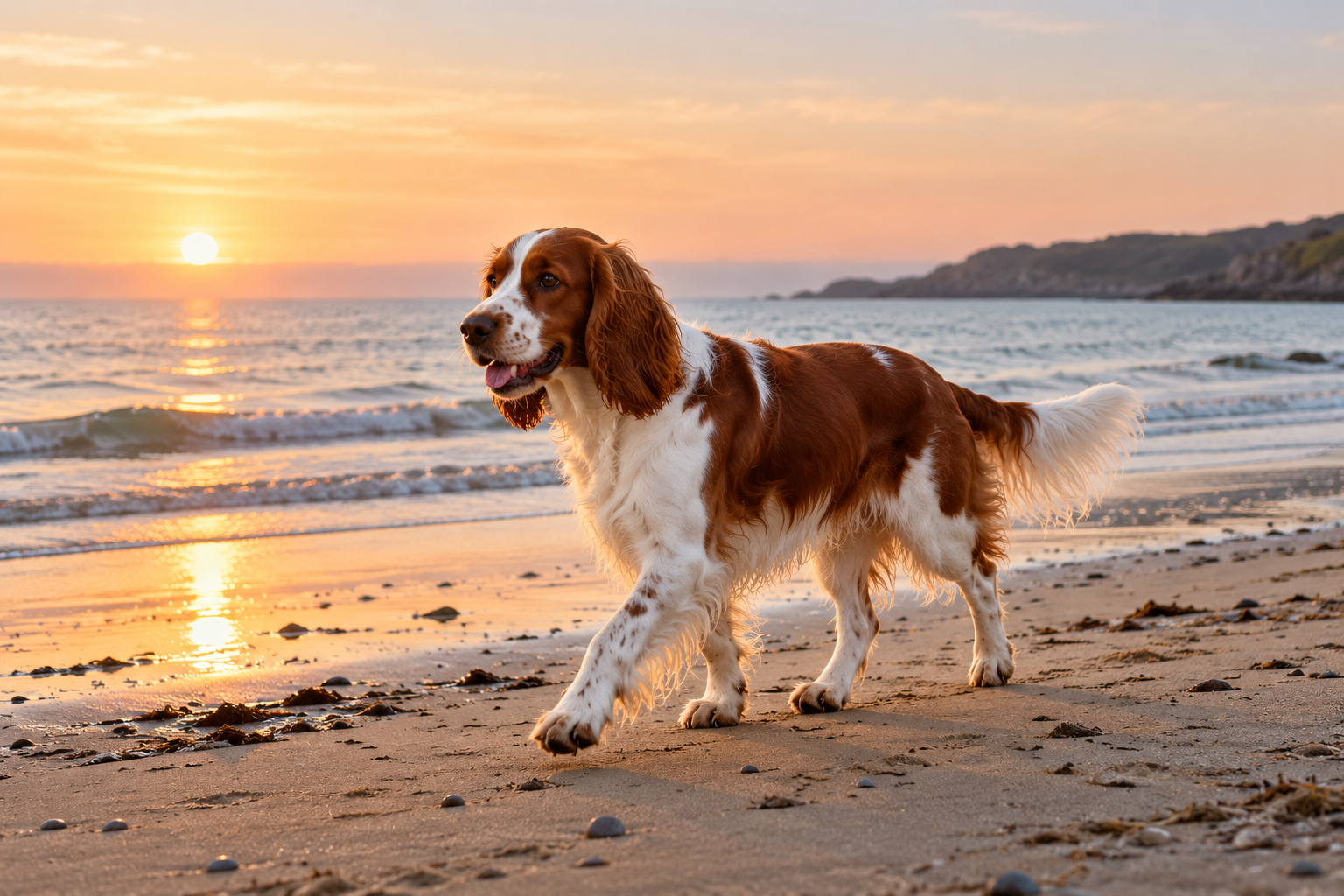
Swimming, retrieving, long walks with time to sniff, scent work and tracking all suit the breed. Gundog field trials and retrieving tests are a natural outlet, and many Welshies also enjoy agility and rally. A game of finding hidden toys in the yard uses the nose and tires the dog surprisingly well.
Exercise by Life Stage
Puppies need short, free play sessions rather than long forced walks while their joints develop. Increase distance gradually through the first year to eighteen months. Adolescents need plenty of outlet and structured training together. Adults are excellent hiking and swimming companions, and seniors do well with shorter, gentler walks and swimming.
Importance of Mental Stimulation
A Welsh Springer was bred to use its nose and its judgement, and physical exercise alone does not fully satisfy it. Scent games, puzzle feeders, retrieving drills and training sessions give it mental work. A dog that sniffs and solves problems for 20 minutes is often calmer than one that simply runs for an hour.
Feeding the Welsh Springer Spaniel: Nutrition and Diet Needs
Nutritional Requirements
A complete and balanced diet for active medium-sized dogs suits the breed. Working and very active dogs may need a higher-energy food, while pets with moderate activity can gain weight easily on the same food. Choose a diet that meets Australian standards for complete pet food.
Feeding by Life Stage
Feed puppies three to four times a day until around four months, then twice daily. Use a puppy formula until around 12 months. Adults do well on two meals a day, and seniors may need fewer calories and more attention to joint health.
Portion Control and Weight Management
Spaniels are often enthusiastic eaters, and extra weight puts strain on hips and elbows in a breed where dysplasia is a concern. Keep the dog lean, with ribs easily felt and a visible waist. Count training treats as part of the daily ration, and weigh the dog monthly.
Foods to Avoid
Avoid the standard toxic foods: grapes, sultanas, chocolate, onion, garlic, macadamias and anything containing xylitol. Cooked bones should never be fed. Scavenging is common in the breed, so keep bins secured and watch what your dog picks up on walks.
Welsh Springer Spaniel Price in Australia: Purchase Cost and Ongoing Expenses
Puppy Purchase Price
No Welsh Springer Spaniel puppy listing in Australia carried a price on 17 October 2026. The single litter on the Dogz Online puppy listings, in the Hawkesbury region of New South Wales, was price on request, which is normal for this breed.
The only published figure found was an estimate of $1,000 to $2,500 from the finance site Savvy, last updated in 2023. That estimate is likely dated, and puppies from health-tested, Dogs Australia registered parents may cost more today. Treat it as a starting point and ask breeders directly, since most will give a price once they know you are a serious buyer.
Supply is the bigger issue than price. With 22 listed breeders and one litter at the time of checking, expect a waiting list, and be prepared to travel or arrange transport from interstate.
Initial Setup Costs
Beyond the purchase price, RSPCA NSW puts microchipping at $60 to $80, puppy vaccinations at $280 to $420, desexing at $350 to $650, a collar, lead or harness at $40 to $100, a bed at $100 to $200 and puppy school at about $170. Registered breeders usually microchip, vaccinate and worm puppies before they go home. Budget for grooming tools, including a slicker brush, comb and thinning scissors.
Ongoing Monthly Costs
| Cost | Typical figure (AUD) | Source |
|---|---|---|
| Food | About $600 to $1,000 per year | RSPCA NSW |
| Flea and worming | $200 to $250 per year | RSPCA NSW |
| Heartworm prevention | Up to $250 per year | RSPCA NSW |
| Pet insurance | Around $1,693 per year for a medium dog, accident and illness | Canstar, 2026 |
| Annual vet check and booster | $140 and upwards per year | RSPCA NSW |
| Professional grooming | Optional tidy every couple of months, to confirm locally | n/a |
Canstar's 2026 research put the average accident and illness premium for a medium dog at around $1,693 a year. With hip dysplasia and glaucoma both possible in the breed, taking out cover while the puppy is young, before any condition becomes pre-existing, is sensible.
Long-Term Financial Commitment
Across a 12 to 14 year lifespan, a Welsh Springer costs around the national average to keep. Animal Medicines Australia's Pets in Australia 2025 survey puts average spending by dog-owning households at about $2,520 a year. Eye treatment, joint surgery and treatment for recurring ear infections are the costs most likely to push that higher.
Buying Advice for a Welsh Springer Spaniel: Choosing a Healthy Puppy
Choosing a Responsible Breeder
Look for a breeder who is a member of their state Dogs Australia body, registers litters, health tests breeding stock and is happy to discuss both the good and the hard parts of the breed. Contacting the breed club or attending a show is often the best way to meet breeders and dogs. Expect a good breeder to ask about your home, routine and experience before offering a puppy.
Health Checks Before Purchase
See the puppy with its mother and, where possible, meet or see photos of the sire. Look for clear eyes, clean ears, a healthy coat and confident behaviour. Ask to see hip and elbow scores, a current eye certificate including gonioscopy for both parents, and written records of vaccination, worming and microchipping. Check that the coat is red and white only.
Questions to Ask the Breeder
- What are the parents' hip and elbow scores?
- Do both parents have current eye certificates, and have they had gonioscopy?
- Is there any history of epilepsy, thyroid disease or glaucoma in the line?
- Are the parents from show, working or dual-purpose lines?
- How have the puppies been socialised with people, children and household noise?
- Is the puppy on the main or limited register?
- What is your breeder or supply number, and which state issued it?
- Will you take the dog back at any stage if I cannot keep it?
Working through the wider questions to ask about health testing and contracts before you visit will help you compare breeders.
Considering Adoption
Purebred Welsh Springers rarely come up for adoption in Australia, though breed clubs and breeders occasionally rehome adults or retired show dogs. Ask breeders to keep you in mind for an older dog. Springer and spaniel crosses do appear in general rescue, and an adult dog assessed by a rescue group can suit owners who want the type without the wait.
Is the Welsh Springer Spaniel Right for You? A Gentle Family Gundog That Needs an Active Home
Lifestyle Compatibility
The Welsh Springer suits active families, walkers, swimmers and anyone interested in gundog work. It suits homes where someone is around for much of the day.
It is a poor match for long days alone or a low-activity household.
Time and Care Commitment
Expect 60 to 90 minutes of exercise a day, weekly grooming and regular ear checks, for 12 to 14 years.
The biggest commitment is company, since this breed wants to be with its people.
Grooming and Health Awareness
Grooming is moderate, with ears and feathering needing the most attention. Grass seeds and ticks are seasonal hazards.
Know the signs of glaucoma and buy from parents with current eye and hip results.
Ideal Owner Profile
The ideal owner is active, patient and enjoys training with rewards. They want an affectionate dog and are happy to wait for the right puppy.
Find Welsh Springer Spaniel Puppies for Sale
Welsh Springer litters are few, so it pays to start looking early and talk to breeders before a litter is born.
You can browse puppies for sale on Pups4Sale and watch for Welsh Springer listings as they appear.
Frequently Asked Questions
Related Breeds
Other sporting breeds on Pups4Sale.
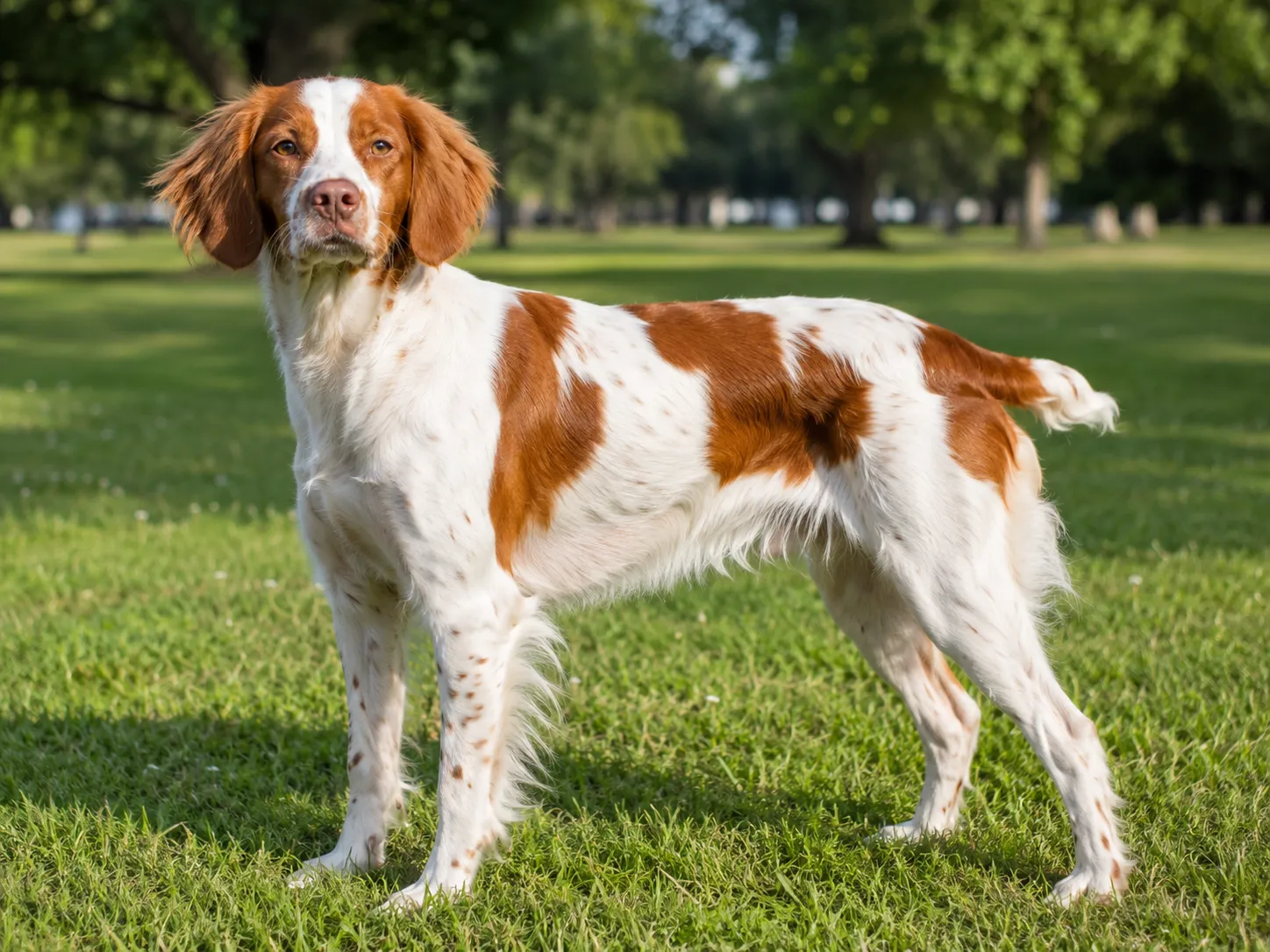 BrittanyMedium • Gundog (Hunt, Point, Retrieve)
 Chesapeake Bay RetrieverLarge • Gundog (Group 3)
 Clumber SpanielMedium • Gundog / Sporting
 Cocker SpanielMedium • Sporting / Gundog
 Curly Coated RetrieverLarge • Gundogs (Group 3)
 English SetterLarge • Gundogs (Group 3)