Chesapeake Bay Retriever
By James C. • Updated
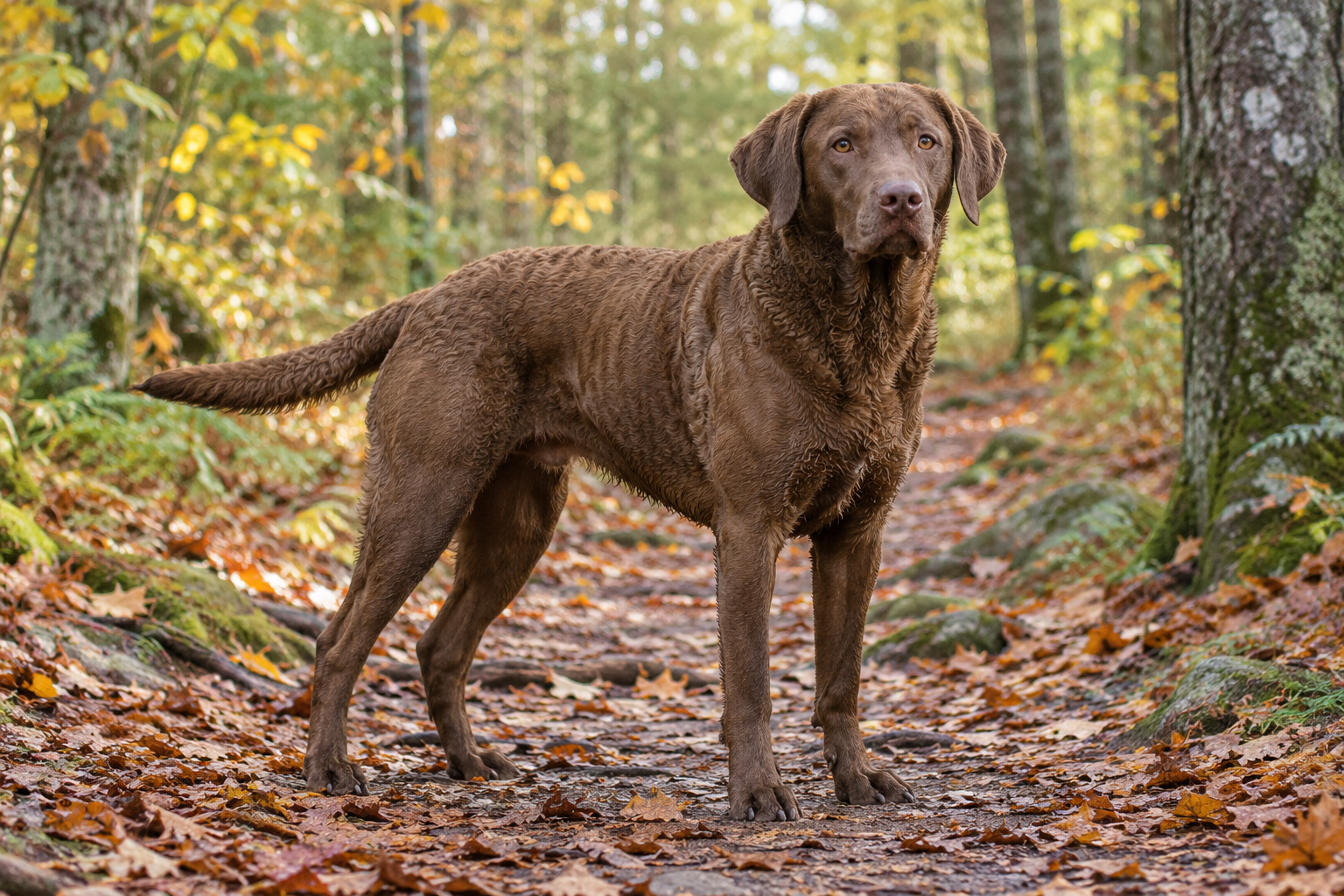
The Chesapeake Bay Retriever is an American gundog developed on the Chesapeake Bay in Maryland in the nineteenth century to retrieve waterfowl from cold, rough water. It is recognised by Dogs Australia in Group 3 (Gundogs). Males stand 58 to 66 cm and weigh about 29 to 36 kg, females 53 to 61 cm and about 25 to 32 kg, with a lifespan of roughly 10 to 14 years. The breed has a short, wavy, oily double coat in shades of brown, sedge and deadgrass, and it is tougher, more independent and more protective than the Labrador or Golden Retriever. It is rare in Australia, with only a handful of registered breeders.
Breed Overview
Life Span
10 - 14 years
Average Price
AUD 2500 - AUD 4000
Weight
Male: 29 - 36 kg Female: 25 - 32 kg
Height
Male: 58 - 66 cm Female: 53 - 61 cm
Life Expectancy
Male/Female: 10 - 14 years
Breed Group
Gundog (Group 3)
Nicknames
Chessie, Chesapeake, CBR
Breed Information
The Chesapeake Bay Retriever is a rare, tough American water retriever, and it is not a Labrador in a brown coat. It is recognised by Dogs Australia in the Gundog group, and Dogs Victoria describes it as affectionate and protective, but reserved and cautious with strangers, which sets it apart from the more easy-going retrievers.
Availability in Australia is very limited. In October 2026 Dogz Online listed just five breeders, in NSW and Queensland, and a single litter. Most buyers should expect a waiting list and possibly interstate transport, and anyone wanting a puppy soon will usually find a Labrador Retriever with a similar love of water far easier to source.
Characteristics of the Chesapeake Bay Retriever
The Chessie rates highly for energy, durability and loyalty, and lower for ease of training and tolerance of strangers than other retrievers.
| Trait | Rating | Star Rating | Meaning |
|---|---|---|---|
| Size | Large | ★★★★ | 25 to 36 kg and strongly built. |
| Adaptability | Moderate | ★★★ | Built for cold water, needs care in heat. |
| Exercise Needs | High | ★★★★ | An hour or more daily, ideally swimming. |
| Easy to Train | Moderate | ★★★ | Clever but independent and sensitive. |
| Amount of Shedding | Moderate | ★★★ | Two heavier seasonal sheds a year. |
| Grooming Needs | Low | ★★ | Weekly brushing, rare baths. |
| Good With Children | Good | ★★★★ | Devoted to its own family's children. |
| Health | Good | ★★★★ | Robust, with DNA tests for key conditions. |
| Cost to Keep | Moderate | ★★★ | Large dog food, no grooming costs. |
| Tolerates Being Alone | Low | ★★ | Bored and destructive without company. |
| Intelligence | High | ★★★★ | Quick to learn and solve problems. |
History of the Chesapeake Bay Retriever: Bred for Icy Water
The breed traces back to 1807, when two Newfoundland-type puppies were rescued from a ship wrecked off the coast of Maryland. Crossed with local water dogs, they produced a powerful dog able to retrieve ducks from icy water all day. Its roots therefore lie in the Newfoundland, a giant water dog, and local retrievers.
The breed was recognised in the United States in 1878, according to Dogs Victoria, and later became the state dog of Maryland. In Australia it remains a niche gundog.
Appearance of the Chesapeake Bay Retriever: Wavy, Oily and Built for Water
Size and Build
Males stand 58 to 66 cm and weigh about 29 to 36 kg, while females stand 53 to 61 cm and weigh about 25 to 32 kg. The build is strong, with powerful hindquarters for swimming.
Coat and Colours
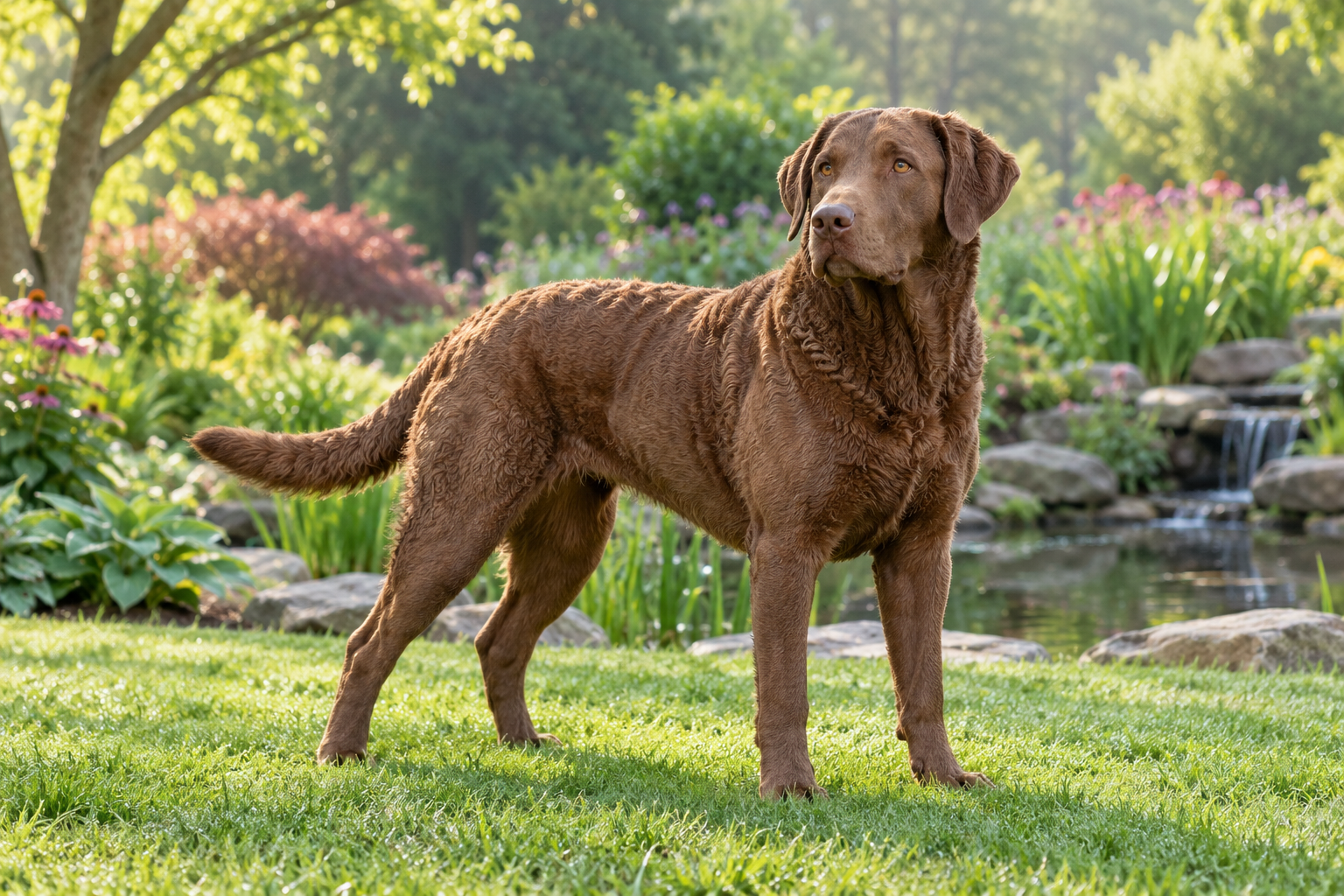
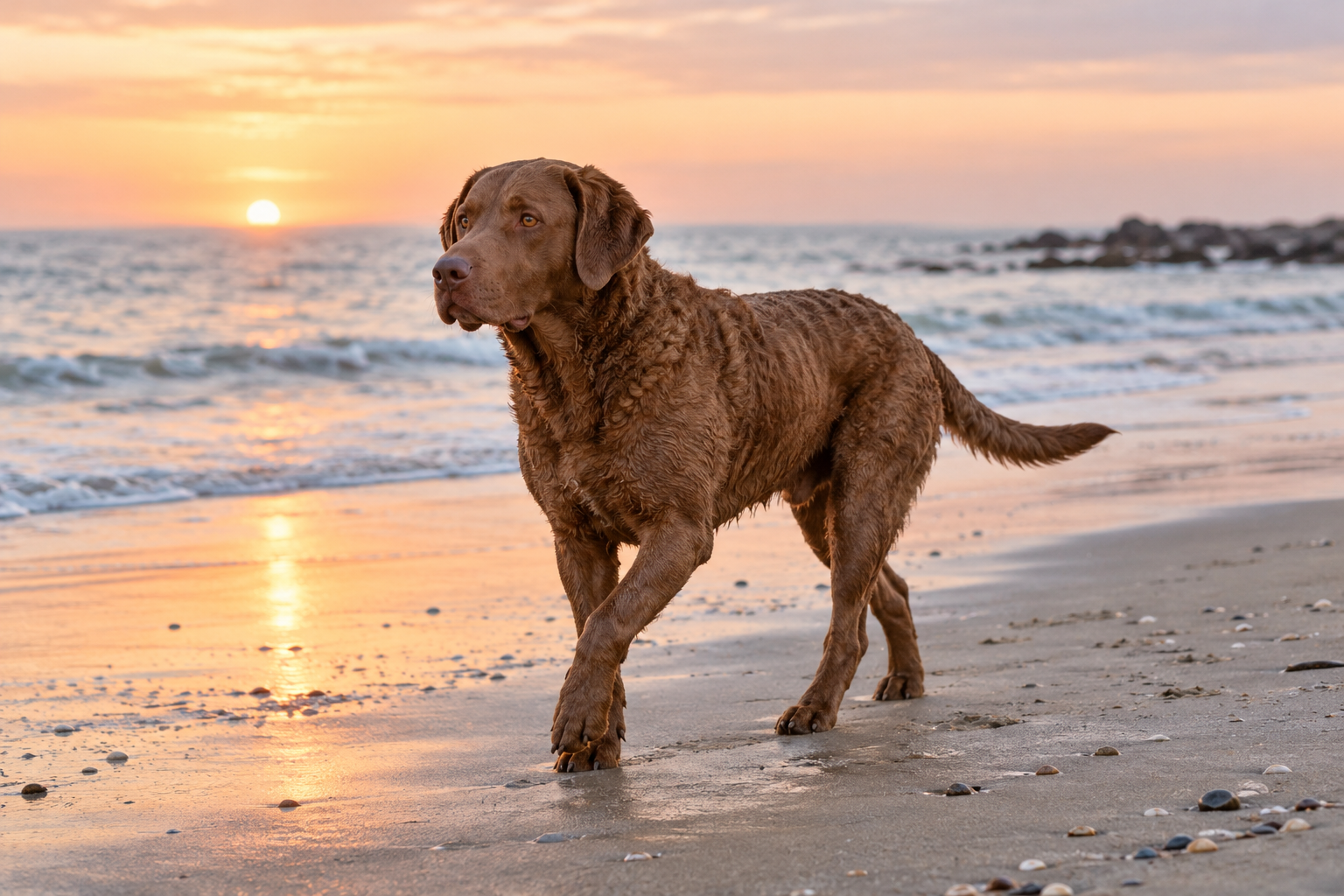
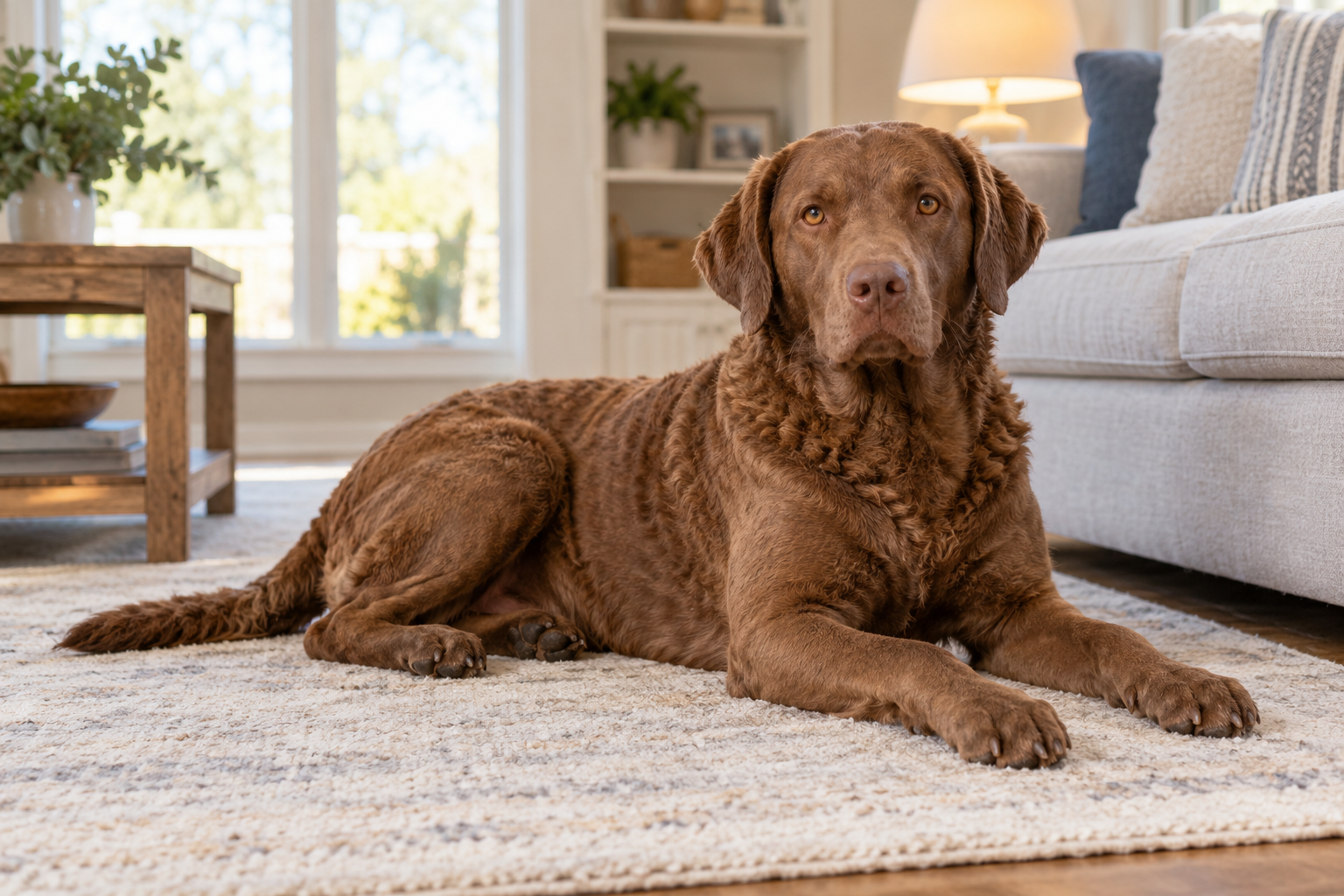
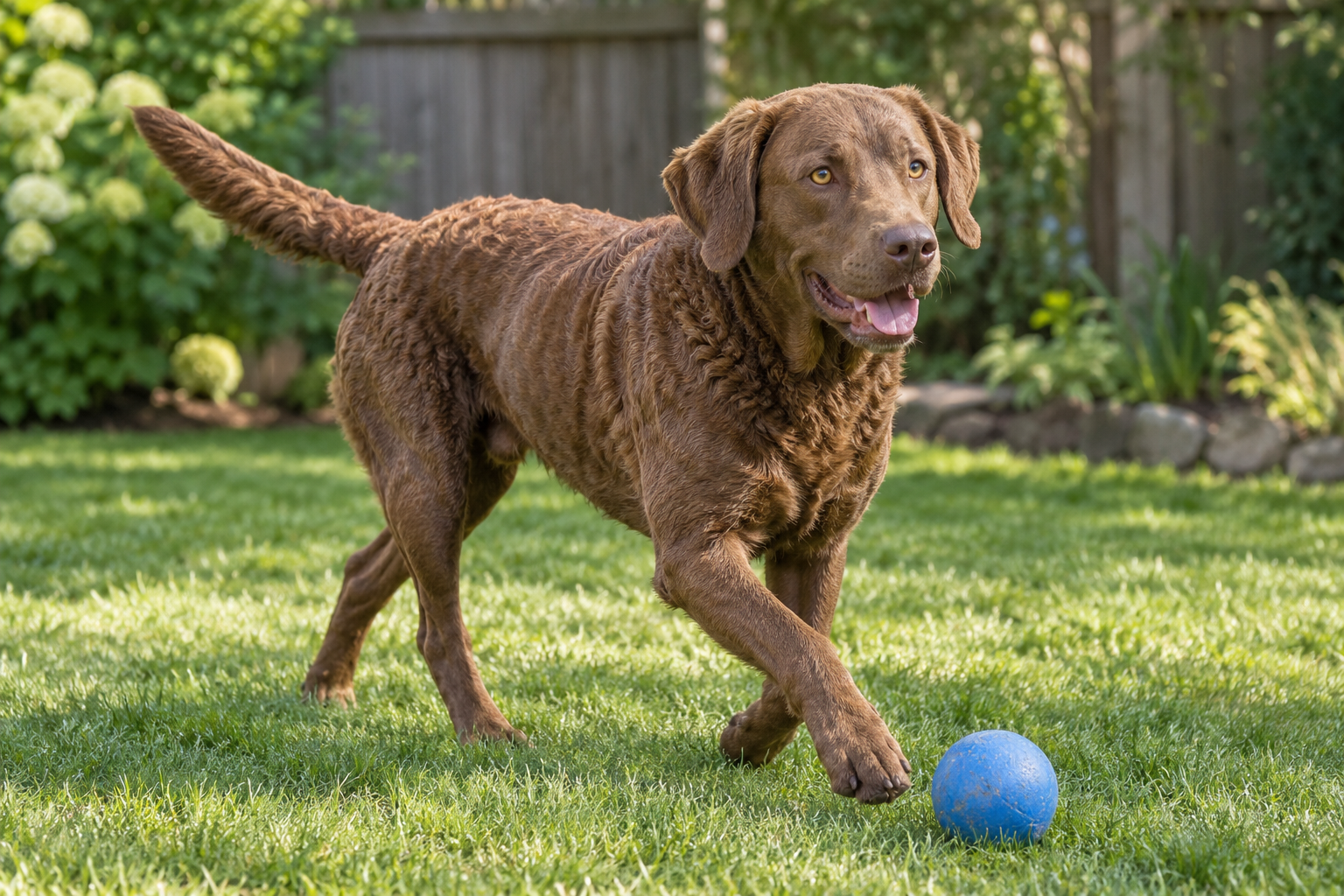
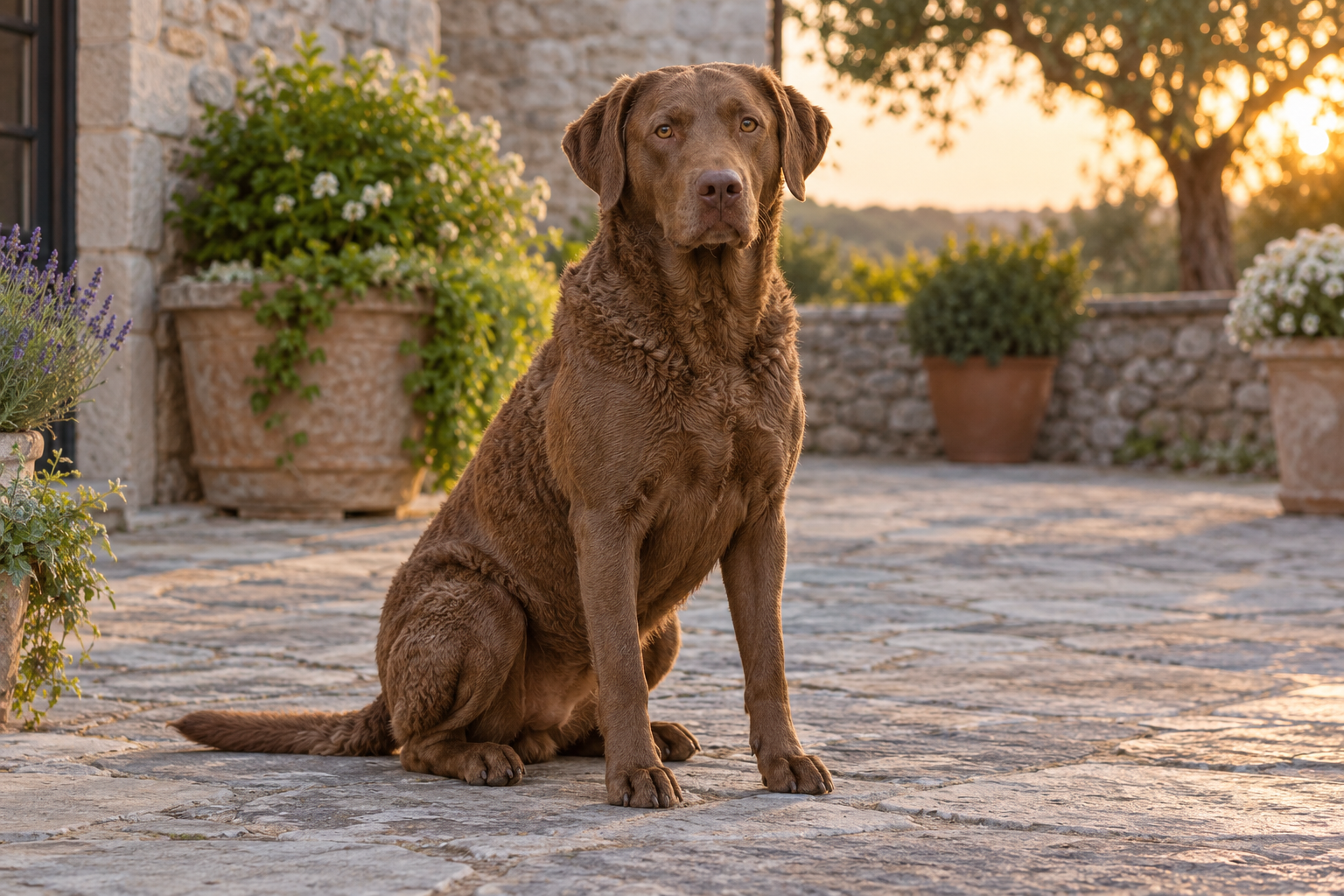
The coat is short and wavy over a dense woolly undercoat, rich in natural oils that shed water. Colours are any shade of brown, sedge (reddish gold) or deadgrass, a straw shade that blends into dry reeds.
Distinctive Features
Many Chessies have striking yellow or amber eyes. The coat feels slightly oily, with waves along the back.
Gender Differences
Males are larger, heavier and broader in the head.
Temperament of the Chesapeake Bay Retriever: Loyal, Protective and Strong-Willed
Core Personality Traits
Chessies are bright, devoted and hard working, and they bond so strongly with their family that the breed does not rehome well.
Social Behaviour
Chessies are more reserved and protective than Labradors or Golden Retrievers. Many are aloof with strangers and some dislike unfamiliar dogs.
Working Instincts
The drive to retrieve and swim is very strong, and a Chessie without that outlet will invent its own jobs.
Common Behavioural Challenges
Guarding, stubbornness, digging and chewing are the usual problems, and most are prevented by structure, exercise and fair handling.
Intelligence and Trainability of the Chesapeake Bay Retriever: Clever but Independent
Intelligence and Learning Ability
The Chessie learns quickly, but it was bred to make its own decisions in the water and often thinks for itself.
Training Approach
Use reward-based, consistent training with clear boundaries. Harsh corrections make this sensitive breed shut down.
Early Socialisation
Calm, positive exposure to many people, dogs and places is the most important step in raising a confident rather than suspicious Chessie.
Potential Training Challenges
Adolescent males test boundaries, and recall around water or birds takes real work.
Chesapeake Bay Retriever Family Life: Children, Pets and Households
Living with Children
Chessies are usually devoted to children in their own family. Supervise visiting children, since rough play can trigger its protective streak.
Living with Other Pets
Many live well with a dog they are raised with, but same-sex tension and interest in birds or small pets are possible.
Household Environment
A house with a fenced yard suits the breed far better than an apartment, and nearby water is a real advantage.
Lifestyle Compatibility
It suits active owners and hunters, and suits sedentary households poorly.
Health of the Chesapeake Bay Retriever: Joints, Eyes and DNA Testing
Lifespan and Healthy Living
Most Chessies live 10 to 14 years, spanning the AKC figure of 10 to 13 and the Dogs Victoria figure of 12 to 14.
Common Health Conditions
The breed is generally healthy, but owners should be aware of several conditions. It is best to discuss any concerns with a veterinarian.
- Hip and elbow dysplasia, abnormal joint development that can lead to arthritis.
- Progressive retinal atrophy, an inherited eye disease that causes gradual vision loss.
- Exercise induced collapse, which the OFA lists as most common in Chesapeake Bay Retrievers and other field breeds, causing hind leg weakness after intense exercise.
- Degenerative myelopathy, a progressive spinal cord disease of older dogs.
- Cataracts and other inherited eye conditions.
Genetic Health Testing
The American Chesapeake Club recommends that breeding dogs be checked for hip and elbow dysplasia, eye disease, EIC and DM. Ask Australian breeders for hip and elbow scores, a current eye examination and DNA results for PRA, EIC and DM on both parents.
Preventative Health Care
Keep vaccinations and parasite prevention current, including paralysis tick control on the east coast. Avoid water with visible blue-green algae.
Caring for the Chesapeake Bay Retriever: Daily Care and Climate
Daily Care Routine
A good day includes a long walk, a swim or retrieving session and some training, with ears dried after swimming.
Living Environment Requirements
Provide secure fencing, shade and water, and keep the dog living with the family rather than outside alone.
Climate Sensitivity
The dense, water-resistant coat was built for cold water, not Australian summers. Exercise early or late, offer water to swim in, and watch for the warning signs of heatstroke that the RSPCA lists for dogs in hot weather.
Caring for Senior Chesapeake Bay Retrievers
Older Chessies benefit from lower impact exercise, with swimming ideal for stiff joints. Report any hind leg weakness to your vet.
Grooming of the Chesapeake Bay Retriever: Protecting the Oily Coat
Coat Maintenance
Brush weekly with a rubber curry or bristle brush, and more often during seasonal sheds. A wire slicker or metal comb can damage the wave and texture, so a gentle routine for double coats works best.
Bathing and Coat Oils
Bathe only when truly needed. Shampoo strips the waterproofing oils, and a fresh water rinse after sea swims is enough.
Ear, Nail and Dental Care
Check and dry ears weekly, trim nails every three to four weeks and brush teeth several times a week.
Odour and Professional Grooming
The natural coat oils give the breed a mild doggy smell, which is normal. Professional grooming is not required.
Exercise Needs of the Chesapeake Bay Retriever: Water, Work and Purpose
Daily Exercise Requirements
Plan on 60 to 90 minutes a day for an adult, split into two sessions.
Activities Chesapeake Bay Retrievers Enjoy
Swimming, retrieving, dock diving, tracking and field trials suit the breed perfectly.
Exercise in Australian Conditions
Avoid hard exercise in the middle of hot days, and check the temperature limits for dogs in Australia before training. Check for paralysis ticks after bush or river walks.
Importance of Mental Stimulation
Training, scent games and retrieving puzzles tire a Chessie as much as distance does.
Feeding the Chesapeake Bay Retriever: Nutrition for a Working Dog
Nutritional Requirements
Feed a complete diet for large, active dogs, adjusted for workload.
Feeding by Life Stage
Use a large breed puppy food to support steady, not rapid, growth. Feed adults twice daily rather than once.
Portion Control and Weight Management
Keep the dog lean, with ribs easily felt. Extra weight adds strain to joints in a breed prone to dysplasia.
Foods to Avoid
Avoid grapes, sultanas, chocolate, onion, garlic, macadamias, xylitol and cooked bones.
Chesapeake Bay Retriever Price in Australia: Puppy Cost and Ongoing Expenses
Puppy Purchase Price
Expect to pay around $2,500 to $4,000 for a Chesapeake Bay Retriever puppy from a registered Australian breeder. The only Australian price found in 2026 was a single NSW listing at $3,500. Pets4Homes guidance puts UK puppies at £400 to £1,900, roughly AUD 800 to AUD 3,800, and US regional breeder prices run about USD 1,000 to USD 2,500, roughly AUD 1,500 to AUD 3,800. Scarcity keeps Australian prices near the top of those ranges.
Waiting Lists and Imports
With five breeders and one litter listed nationally in October 2026, a waiting list of months is realistic. Interstate transport adds several hundred dollars.
Ongoing Monthly Costs
| Cost | Typical figure (AUD) | Source |
|---|---|---|
| Food | Above the $91 monthly dog average, given a 25 to 36 kg body weight | Animal Medicines Australia, Pets in Australia 2025 |
| Parasite prevention | Above the $122 annual average, since dosing is by weight | Animal Medicines Australia, Pets in Australia 2025 |
| Pet insurance | Around $1,461 per year for a large dog | Canstar, prepared March 2026 |
| Annual vet check and booster | From $140 per year | RSPCA NSW |
| Professional grooming | Nil, not required | n/a |
Dog-owning households spend about $2,520 a year on average, according to Animal Medicines Australia, and Canstar's pet insurance premium figures rise with a dog's age.
Long-Term Financial Commitment
Over 10 to 14 years, food, insurance and vet care for a large active dog add up. The first-year and annual costs set out by RSPCA NSW are a sensible baseline, with joint surgery the main risk to the budget.
Buying Advice for a Chesapeake Bay Retriever: Finding a Rare Puppy
Choosing a Responsible Breeder
Choose a breeder registered with their state canine body who health tests both parents and lets you meet the mother. Working through the right questions for a breeder matters more when there are so few to choose from.
Health Checks Before Purchase
See written hip and elbow scores, a current eye certificate and DNA results for PRA, EIC and DM. Puppies should be vaccinated, wormed and microchipped before leaving.
Questions to Ask the Breeder
- What are the hip and elbow scores of both parents?
- Do you have DNA results for PRA, EIC and DM?
- How do the parents behave with strangers and other dogs?
- How long is your waiting list, and how do you choose homes?
- Can you arrange interstate transport if needed?
- Will you take the dog back at any age if needed?
Considering Adoption
Chessies rarely appear in Australian rescue, but breed clubs sometimes help rehome adults, whose temperament you can judge before committing.
Is the Chesapeake Bay Retriever Right for You? A Retriever for Experienced Owners
Lifestyle Compatibility
The Chessie suits active, experienced owners who want a loyal working dog and can offer water and retrieving. It is a poor fit for first-time owners wanting an easy-going family Labrador.
| Trait | Chesapeake Bay Retriever | Labrador Retriever | Golden Retriever |
|---|---|---|---|
| Coat | Short, wavy, oily | Short, dense | Long, feathered |
| With strangers | Reserved, can be protective | Friendly | Very friendly |
| Trainability | Independent | Eager to please | Eager to please |
| Guarding tendency | Moderate | Low | Low |
| Supply in Australia | Very limited | Plentiful | Plentiful |
Time and Care Commitment
Expect at least an hour of exercise daily plus training, for up to 14 years.
Grooming and Health Awareness
Grooming is easy. The priorities are health-tested parents, a lean weight and care in summer heat.
Ideal Owner Profile
The ideal owner is confident, consistent and outdoorsy. A softer, more sociable option is the Golden Retriever, the gentler family retriever.
Find Chesapeake Bay Retriever Puppies for Sale
Chessie litters are rare, so browse puppies for sale on Pups4Sale and register your interest with breeders early.
Frequently Asked Questions
Related Breeds
Other sporting breeds on Pups4Sale.
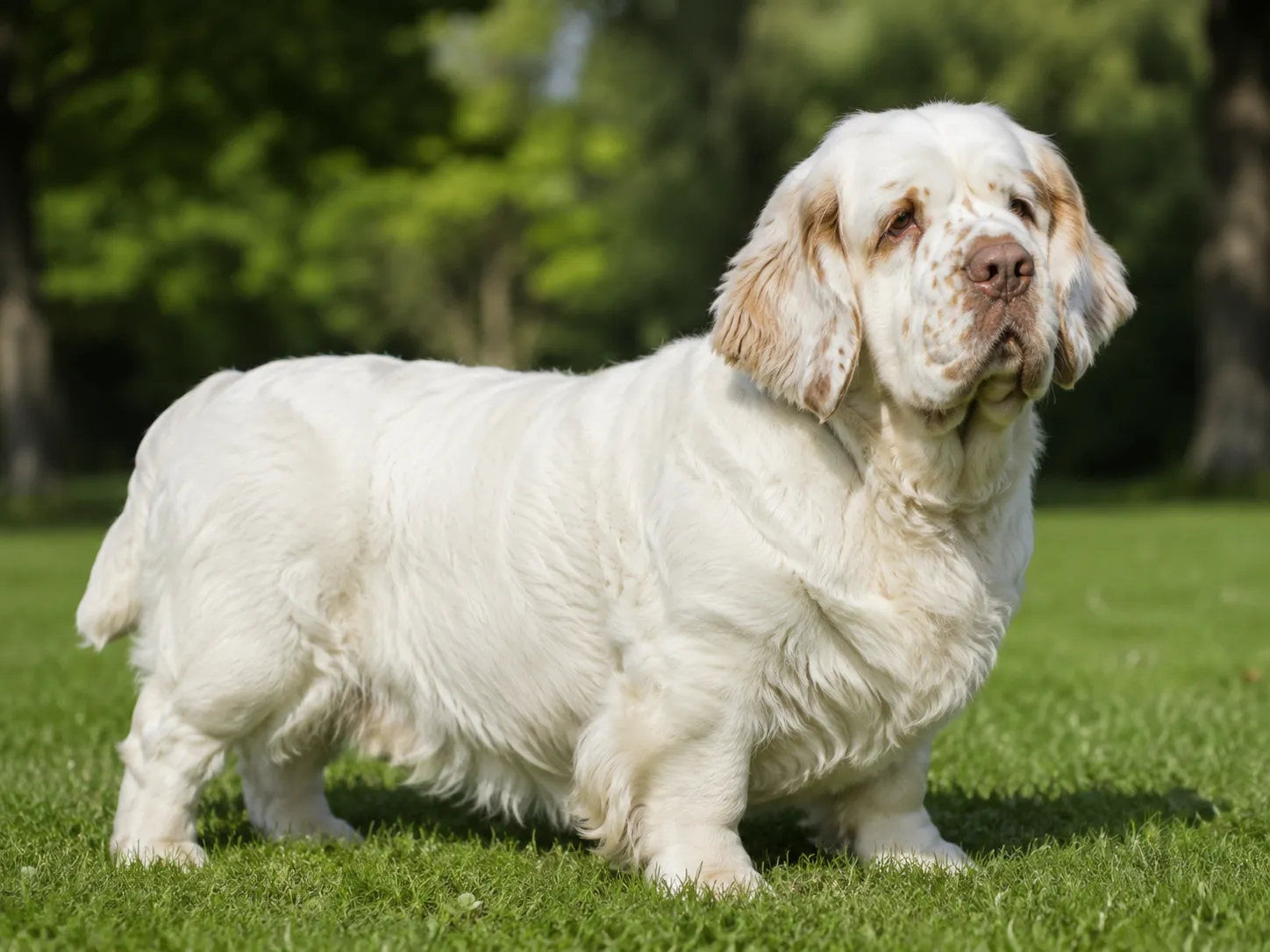 Clumber SpanielMedium • Gundog / Sporting
 Cocker SpanielMedium • Sporting / Gundog
 Curly Coated RetrieverLarge • Gundogs (Group 3)
 English SetterLarge • Gundogs (Group 3)
 English Springer SpanielMedium • Gundogs (Group 3)
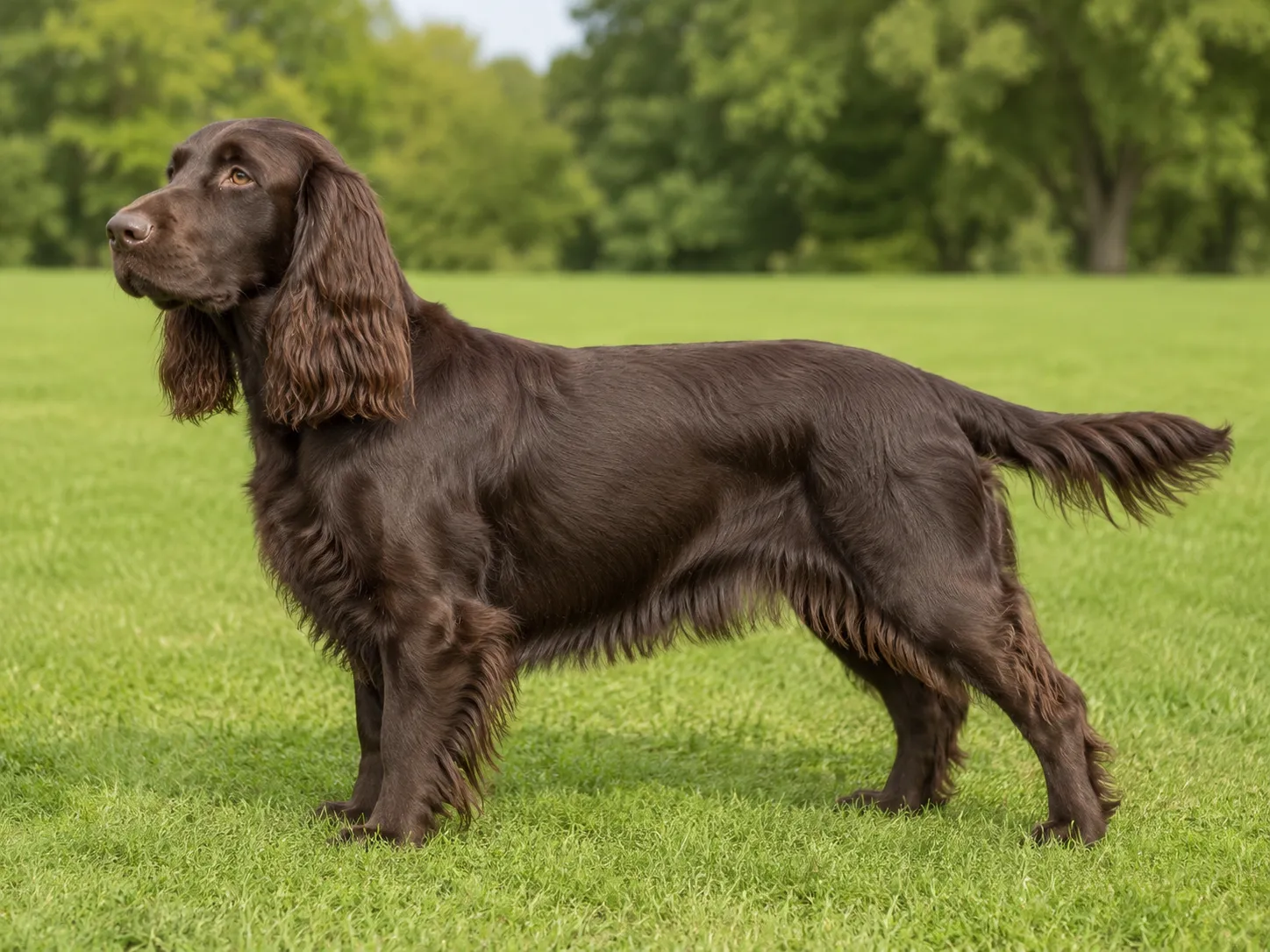 Field SpanielMedium • Gundog / Sporting