Gordon Setter
By James C. • Updated
The Gordon Setter is a black and tan Scottish bird dog, named after the fourth Duke of Gordon and bred to find grouse on the Highland moors. It is the heaviest and slowest maturing of the setters, with a long, silky coat, a loyal nature and more reserve with strangers than its Irish and English cousins. The Dogs Australia standard gives dogs an ideal of 66 cm and bitches 62 cm, and most adults weigh roughly 20 to 36 kg. It needs plenty of daily exercise, regular grooming and patient training. Supply in Australia is small, so buyers should expect to join a breeder waiting list.
Breed Overview
Life Span
10 - 14 years
Average Price
AUD 3000 - AUD 4000
Weight
Male: 25 - 36 kg Female: 20 - 32 kg
Height
Male: 62 - 69 cm Female: 58 - 66 cm
Life Expectancy
Male/Female: 10 - 14 years
Breed Group
Gundogs (Group 3)
Nicknames
Gordon, Black and Tan Setter, Gordon Castle Setter
Breed Information
The Gordon Setter is a black and tan Scottish bird dog, and the heaviest and slowest maturing of the three British setters. It was bred to range across the Highland moors, find grouse by scent and hold a point until the guns arrived. Today it is a loyal, affectionate family dog that still carries that stamina and independence, and it suits owners who enjoy long days outdoors.
The breed is recognised by Dogs Australia in Group 3, Gundogs, and has been in Australia since at least 1865, according to the DOGS NSW Gordon Setter breed profile. It remains uncommon. Dogz Online listed 17 Gordon Setter breeders and a single litter on 18 October 2026, so most buyers will wait, and many will travel interstate.
Buyers often weigh it against the Irish and English Setter. The Irish is a solid red, lighter and racier dog with a famously exuberant nature, while the English is speckled white and usually the most easy-going of the three. The Gordon is the most substantial, the most reserved with strangers and the most likely to attach itself firmly to one family, and it can take up to three years to settle fully into adulthood.
Characteristics of the Gordon Setter
The Gordon Setter rates highly for loyalty, intelligence and exercise needs, and moderately for ease of training, so it suits patient, active owners rather than first-time owners wanting a quick learner.
| Trait | Rating | Star Rating | Meaning |
|---|---|---|---|
| Size | Large | ★★★★ | About 20 to 36 kg, strong and deep chested. |
| Adaptability | Moderate | ★★★ | Settles well in a house with a yard, poorly in apartments. |
| Exercise Needs | High | ★★★★ | At least an hour daily, ideally with off-lead running. |
| Easy to Train | Moderate | ★★★ | Intelligent but independent and slow to mature. |
| Amount of Shedding | Moderate | ★★★ | Steady year-round shedding from a long coat. |
| Grooming Needs | Moderate to High | ★★★★ | Brushing several times a week and trimming of the feathering. |
| Good With Children | Good | ★★★★ | Gentle and loyal with its own family, boisterous when young. |
| Health | Good | ★★★★ | Generally robust, with DNA tests available for key inherited conditions. |
| Cost to Keep | Moderate | ★★★ | Large dog food bills, but little need for professional grooming. |
| Tolerates Being Alone | Low | ★★ | Bonds closely and may bark or dig if left alone for long hours. |
| Intelligence | High | ★★★★ | A thinking dog that solves problems and remembers routines. |
History of the Gordon Setter: From Gordon Castle to Australian Homes
Setting dogs worked across Scotland long before the breed had a name. They quartered the moors ahead of the shooters, located grouse by air scent and then froze, or "set", so that birds could be netted or shot. Black and tan setters were among the types kept by Scottish estates, and the breed takes its name from the fourth Duke of Gordon (1743 to 1827), who established a setter kennel at Gordon Castle, according to the breed history kept by DOGS NSW.
The Gordon kennel favoured a heavier, more methodical dog that worked steadily rather than at a gallop and had the stamina to hunt all day in wet Highland weather. That background explains the breed's build and its independence, since a setter far ahead of the guns had to make its own decisions.
The breed reached Australia early, with DOGS NSW recording it here from 1865, but it has never been numerous. Today the Gordon is kept mainly as a companion and show dog, with a small number still worked on game birds or in field trials.
Appearance of the Gordon Setter: Substantial, Elegant and Black and Tan
Size and Build
The Dogs Australia standard gives an ideal height of 66 cm for dogs and 62 cm for bitches, with ideal weights of about 29.5 kg and 25.5 kg. In practice dogs vary either side of those figures, and the American Kennel Club allows a wider range. The build is strong and deep chested with good bone, giving a dog that looks capable of a full day's work rather than built purely for speed.
Coat and Colours
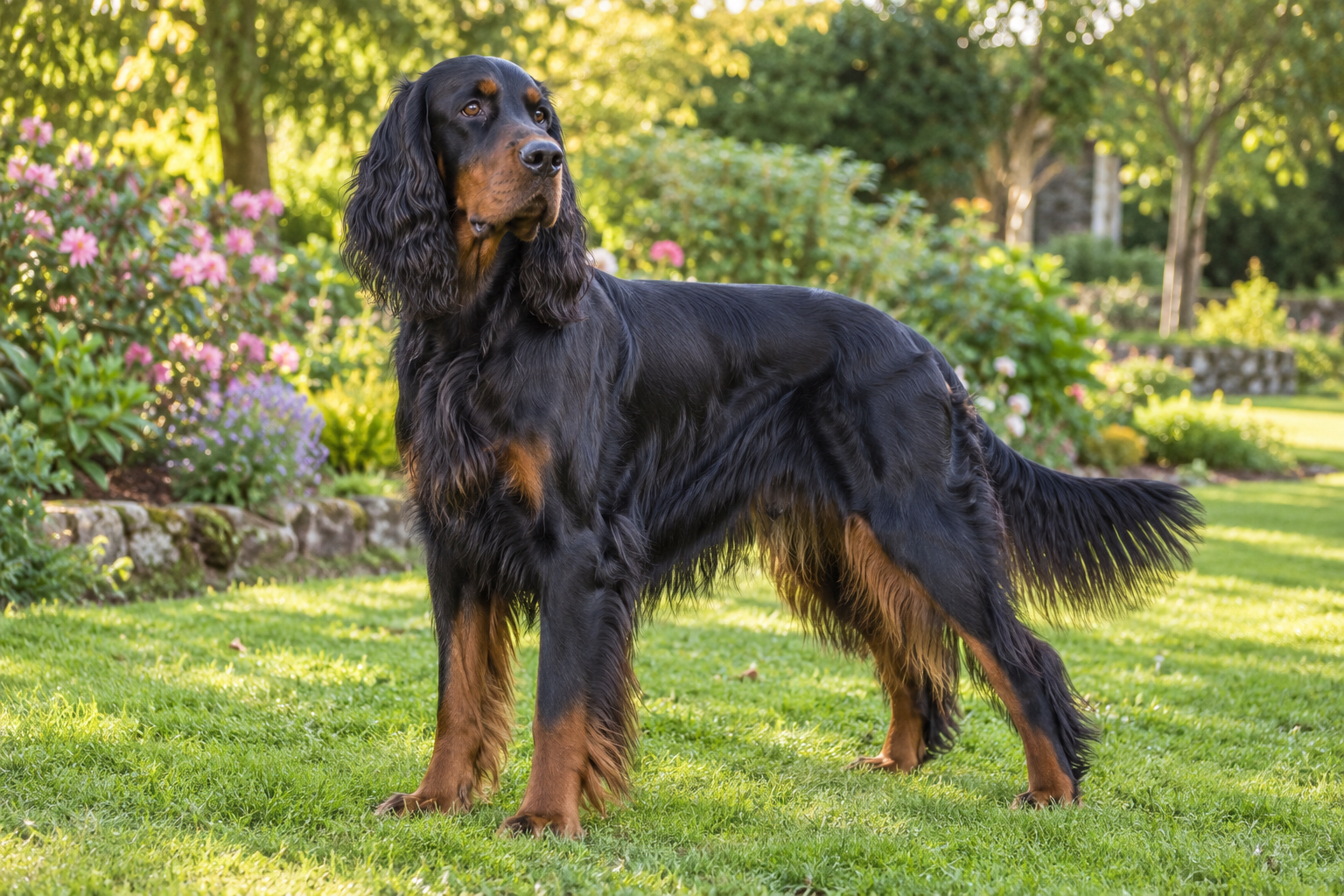
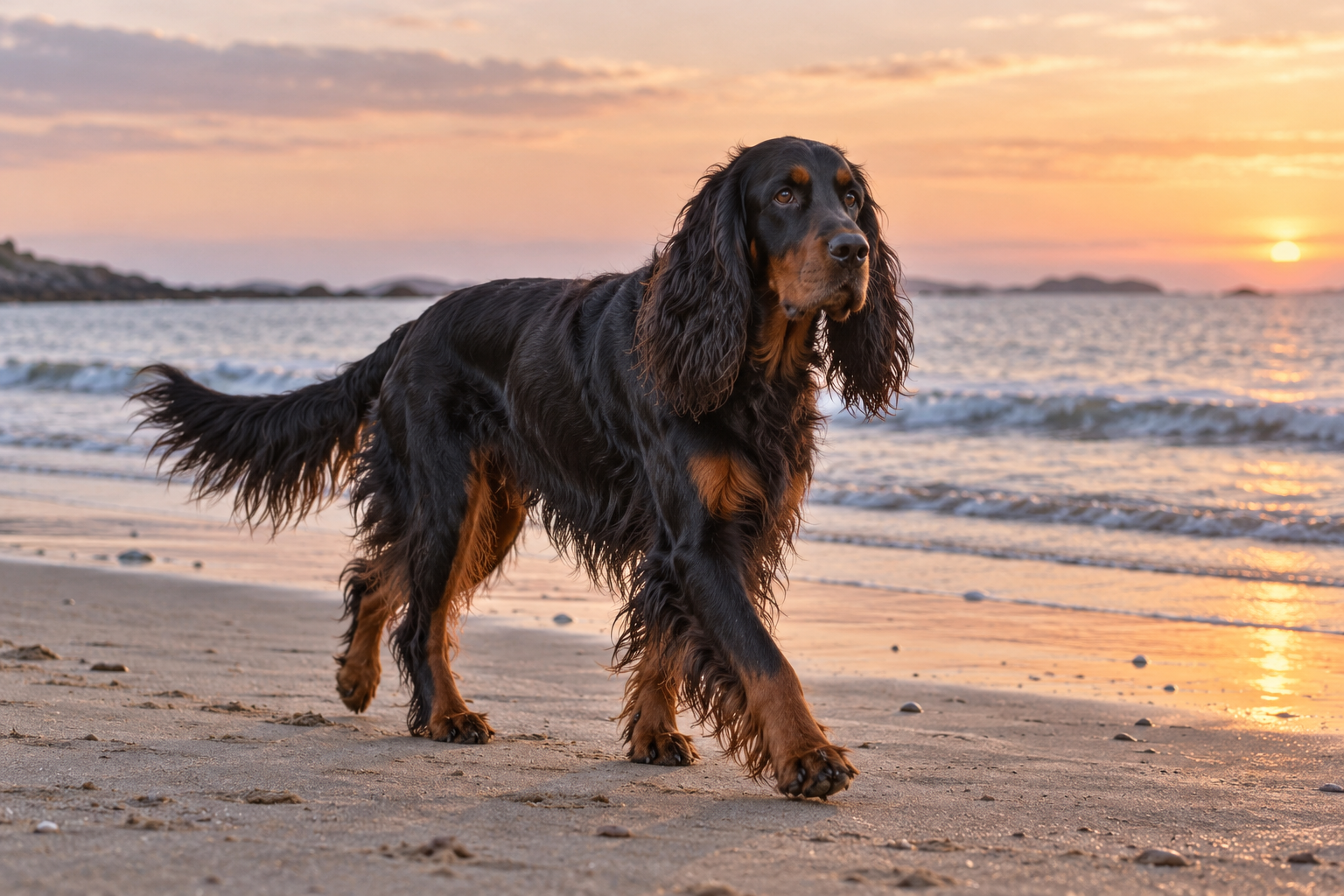
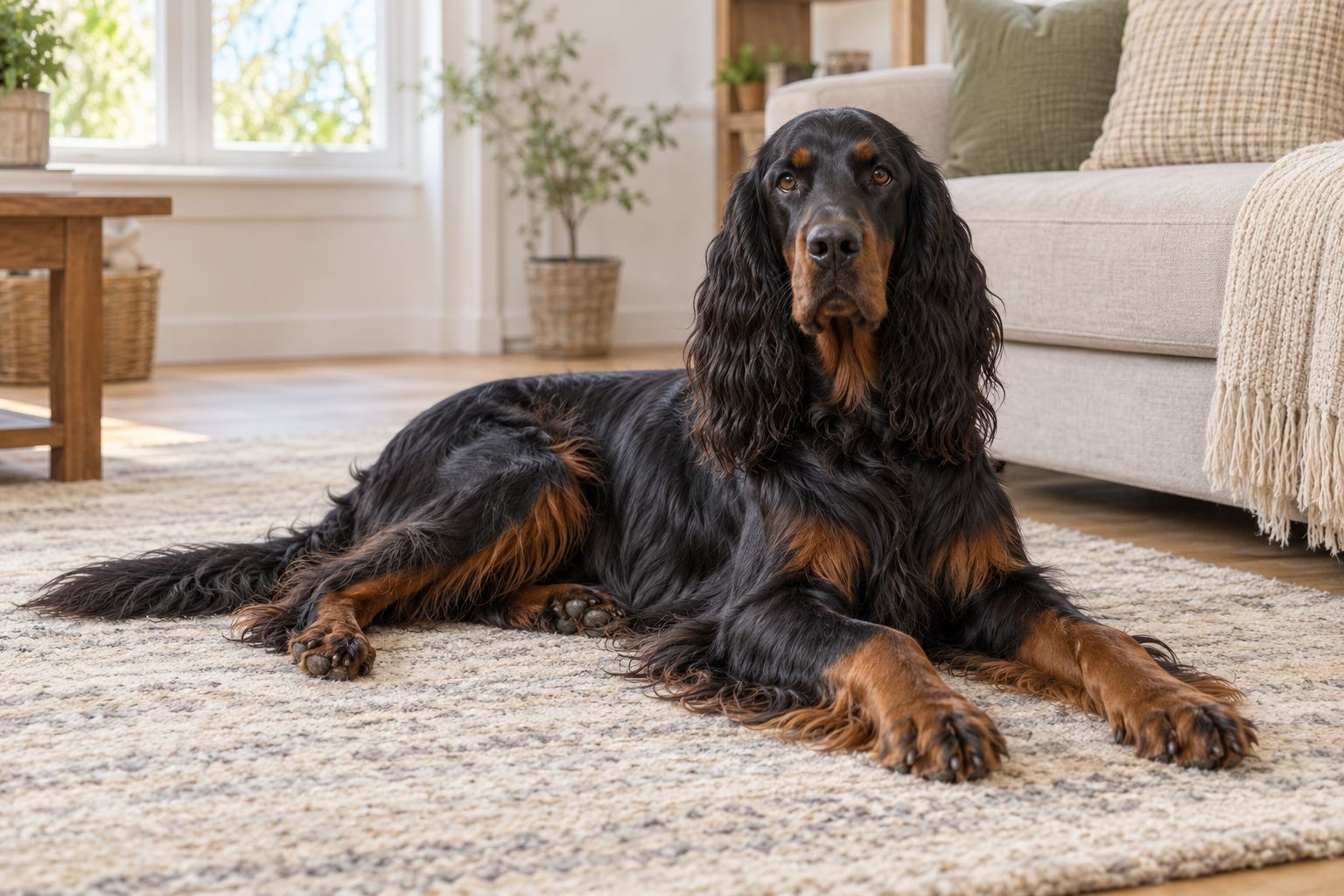
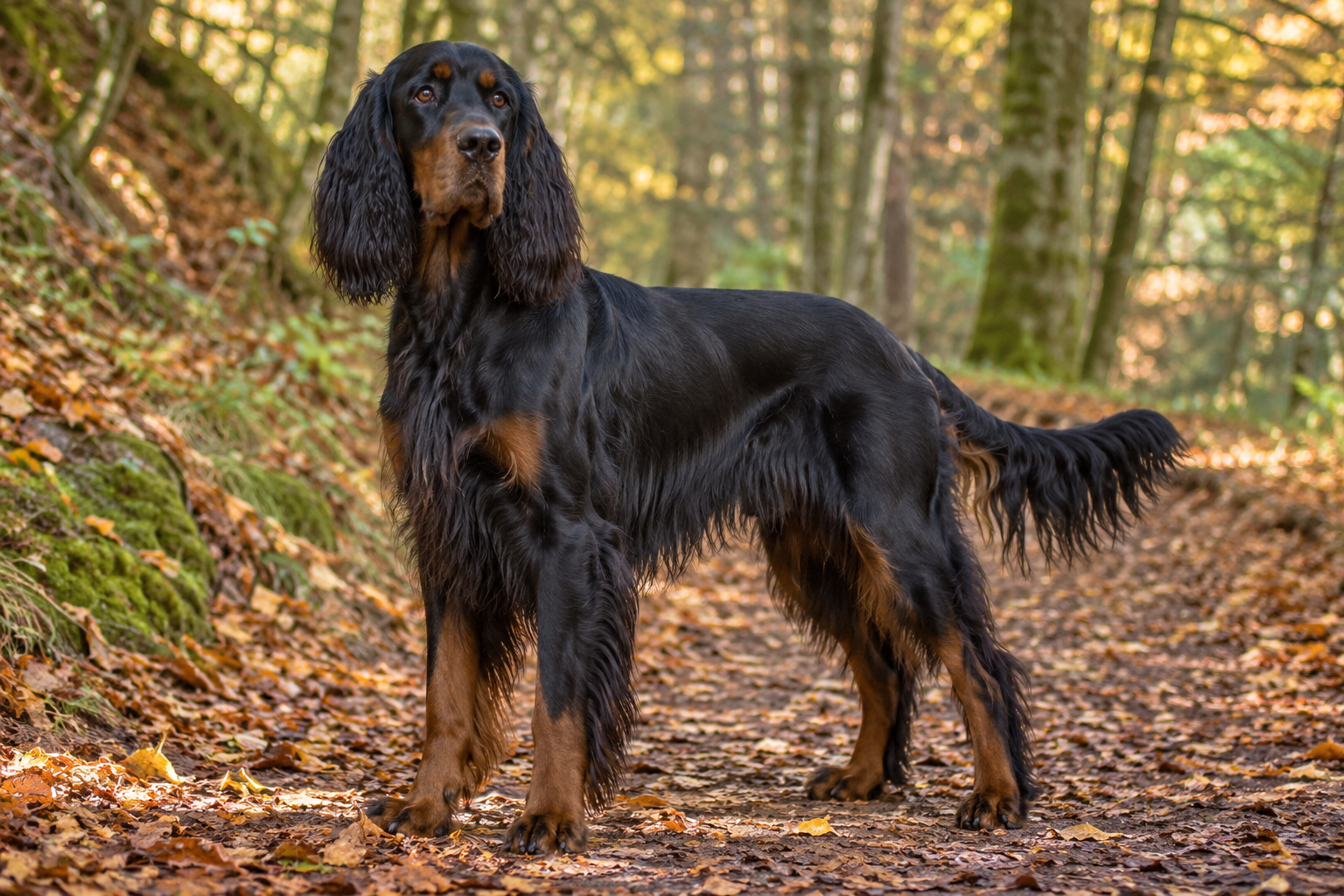
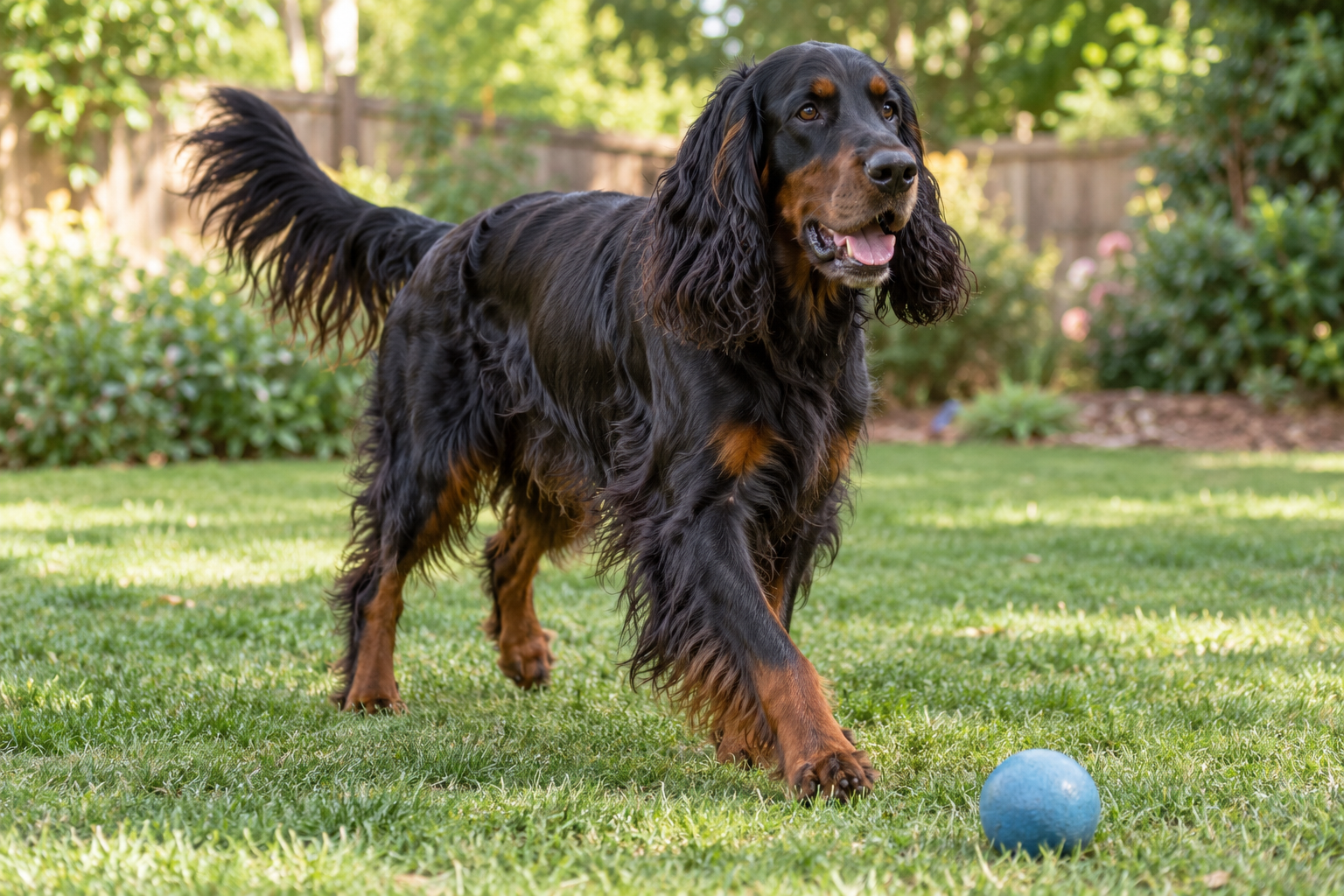
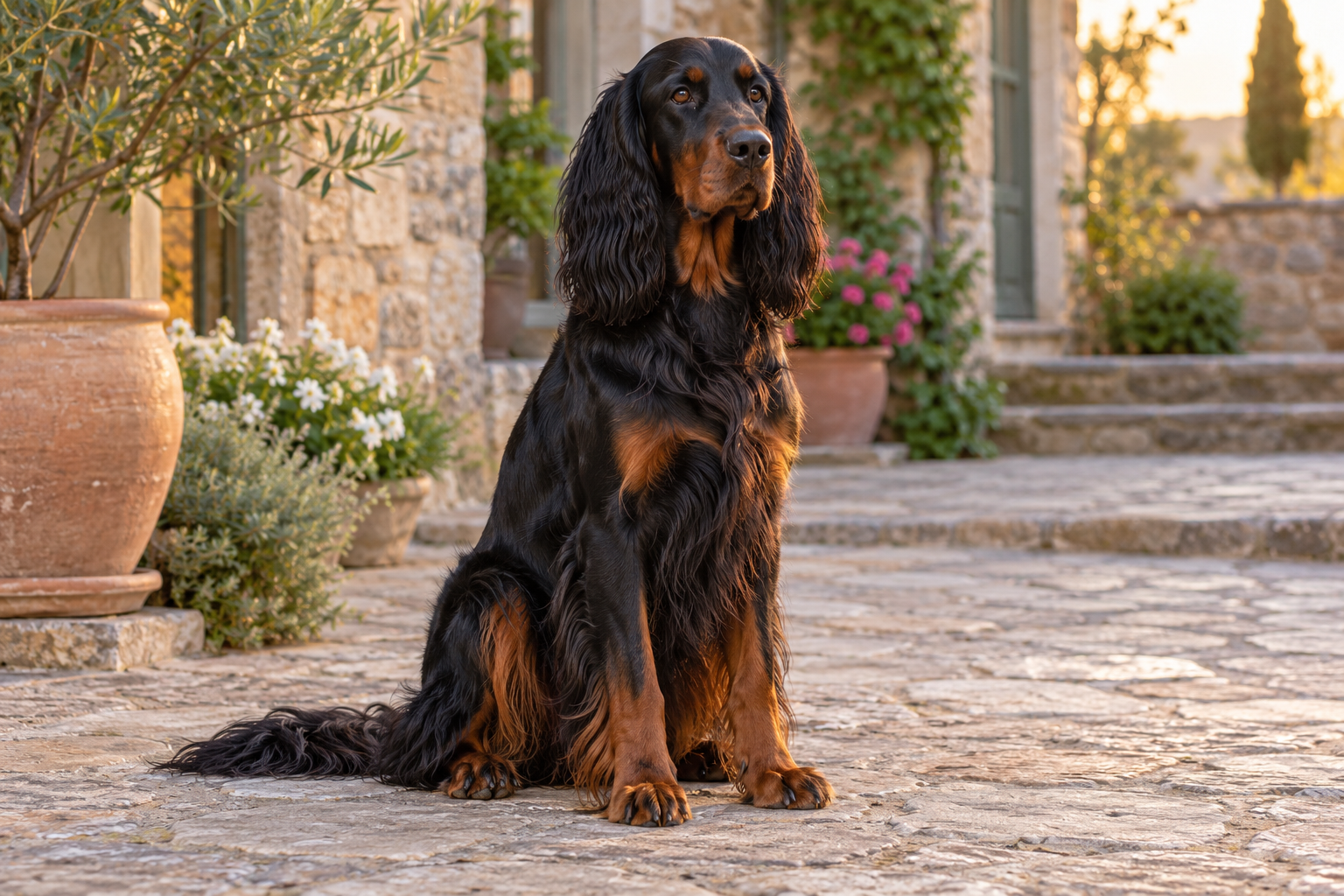
The coat is soft, shining and flat or slightly waved, with longer feathering on the ears, chest, belly, legs and tail. The only accepted colour is deep coal black with rich chestnut tan markings over the eyes, on the muzzle, chest, legs and under the tail. A very small white spot on the chest is permitted. Searches for a "red Gordon Setter" refer to the occasional red puppy produced by a recessive gene; these are healthy dogs but cannot be shown under the standard.
Distinctive Features
The head is deeper and heavier than that of the Irish or English Setter, with a clear stop, dark brown eyes and long, low-set ears. The tan markings above the eyes give the breed a thoughtful, expressive look, and in movement it is bold and free striding.
Gender Differences
Males are noticeably taller, heavier and broader through the head and chest, and often carry more coat. Females are lighter and sometimes mature a little sooner. Temperament differences are small and individual.
Temperament of the Gordon Setter: Loyal, Thoughtful and Reserved With Strangers
Core Personality Traits
The breed standard describes the Gordon as bold, outgoing and of a kindly, even disposition. At home most are affectionate, gentle and closely attached to their family. They are also thinkers, and a Gordon that does not see the point of a request may simply take its time, which owners should read as independence rather than disobedience.
Social Behaviour
Gordons are usually polite but reserved with strangers, more so than other setters, and make reliable watchdogs without being aggressive. Most get on well with other dogs when socialised, although a young Gordon's size and enthusiasm can overwhelm smaller or older dogs.
Working Instincts
The Gordon is a capable bird dog with a good nose and a natural tendency to point. In Australia it is rarely chosen as a working gundog, where the German Shorthaired Pointer and Labrador dominate. Pet owners will still see the instincts: ranging wide when off lead, following scent intently and freezing at birds, which is why recall needs serious work.
Common Behavioural Challenges
Slow maturity is the trait owners most often underestimate. Many Gordons stay puppyish, mouthy and boisterous until two or three years old. Under-exercised dogs may bark, dig or chew, and dogs left alone for long hours can become distressed. Planning exercise, training and company around a long adolescence prevents most problems.
Intelligence and Trainability of the Gordon Setter: Clever, Independent and Slow to Mature
Intelligence and Learning Ability
Gordons learn quickly and remember well, and DOGS NSW notes they respond well to early training. They are less eager to repeat drills than a retriever, so short, varied sessions work far better than long repetitive ones.
Training Approach
Reward-based training with food, play and praise suits the breed. Gordons are sensitive and shut down under harsh handling, but they also test boundaries, so calm consistency matters. Start at home from eight weeks, and use the guidance on when to start obedience training to plan puppy classes.
Early Socialisation
Broad exposure to people, dogs, traffic and new places from an early age helps balance the breed's natural reserve with strangers. A well-socialised Gordon is calm and confident; an under-socialised one may become wary. Puppy school, visits to friends and short trips in the car all count.
Potential Training Challenges
Recall is the main challenge, since a Gordon on a bird scent will range a long way. Practise recall on a long line in open areas and only let the dog off lead in safe, fenced or remote places. Loose lead walking also needs early attention, because an adult male can be a strong puller.
Gordon Setter Family Life: Living with Children, Pets, and Households
Living with Children
DOGS NSW describes the Gordon as generally good with children, and most are gentle and patient with their own family. Young dogs are big, fast and clumsy, so toddlers should always be supervised. Older children who can join in walks and training usually form a strong bond with the breed.
Living with Other Pets
Most Gordons live happily with other dogs, particularly when raised together. Many accept a household cat they grow up with. Birds, chickens and pet rabbits are a different matter for a bird dog, and these should be kept securely separated.
Household Environment
A house with a large, securely fenced yard suits the breed best. Gordons want to be indoors with their family rather than kept outside, and they settle well once exercised. Apartments and small courtyards are a poor fit for a dog of this size and energy.
Lifestyle Compatibility
The Gordon suits active households that walk, hike or run and enjoy time outdoors. It suits people who are home for a good part of the day or can arrange company. It is less suited to busy households that want a low-maintenance dog or a quick, compliant learner.
Health of the Gordon Setter: Eyes, Joints, Bloat and Lifespan
Lifespan and Healthy Living
DOGS NSW gives a lifespan of 12 to 14 years, while most international profiles quote 10 to 12. The difference probably reflects small sample sizes and different populations rather than a real change in the breed, so 10 to 14 years is a fair expectation. Keeping a Gordon lean, fit and on a regular vet schedule gives it the best chance of reaching the upper end.
Common Health Conditions
The breed is generally robust, but owners should be aware of several conditions that can be associated with it. It is best to discuss any concerns with a veterinarian.
- Late-onset progressive retinal atrophy (LOPRA). An inherited eye disease that causes gradual blindness, usually from around nine or ten years of age. The rcd4 mutation behind it can be identified with a DNA test.
- Hip and elbow dysplasia. Abnormal joint development that can lead to arthritis. DOGS NSW notes that breeders have monitored these closely and incidence is low.
- Gastric dilatation volvulus (bloat). A sudden, life-threatening twisting of the stomach, listed among the breed's main health risks by PDSA, alongside hypothyroidism and skin allergies.
- Hypothyroidism. An underactive thyroid that can cause weight gain, lethargy and coat changes, usually managed with daily medication.
- Cerebellar cortical degeneration. A rare inherited neurological condition causing a progressive loss of coordination, typically appearing between six months and four years of age; a DNA test is available.
Genetic Health Testing
Ask any breeder for hip and elbow scores on both parents and DNA results for rcd4 PRA. The Gordon Setter Club of America's health committee also points breeders to a DNA test for cerebellar degeneration. Research cited by the OFA suggests a high proportion of Gordons carry rcd4, so a carrier parent is not unusual; what matters is that carriers are only mated to clear dogs. A clear rcd4 result does not rule out every form of PRA, so annual eye checks are still sensible.
Preventative Health Care
Keep vaccinations, worming and heartworm prevention current, and use year-round flea and tick control, including paralysis tick protection on the east coast. The long coat hides ticks well, so check by hand after every walk in bush or long grass. Feed two smaller meals rather than one large one and avoid hard exercise around meals to reduce bloat risk. A useful baseline is knowing how often adult dogs should see a vet, with senior checks every six months.
Caring for the Gordon Setter: Daily Care and Living Environment
Daily Care Routine
A typical day includes a long walk or run, a training or scent game, a quick brush and two meals. After outdoor time, check the feathering, ears and paws for grass seeds and ticks.
Living Environment Requirements
Provide a securely fenced yard of good size, shade and fresh water outside, and a comfortable bed indoors. Most Gordons are happiest sleeping inside near their people.
Climate Sensitivity
A long black coat absorbs heat, so Australian summers need careful management. Exercise early in the morning or in the evening, keep walks shorter on hot days and provide shade, water and a cool place indoors. Knowing the temperatures that are unsafe for dogs in Australia helps you decide when to skip a walk. Clipping the belly and feathering a little shorter in summer can help, but avoid shaving the whole coat.
Caring for Senior Gordon Setters
Older Gordons often slow down from around eight or nine. Keep exercise regular but gentler, maintain a lean weight to protect joints, and watch for changes in vision that could indicate PRA. Non-slip flooring and a supportive bed make a real difference to an older large dog.
Grooming of the Gordon Setter: Caring for the Silky Feathered Coat
Coat Maintenance
Brush two to three times a week with a pin brush and comb, paying close attention to the ears, armpits, belly and legs where mats form first. A weekly grooming routine for long-haired dogs is a good starting framework. Expect steady shedding year round.
Grass Seeds and Burrs
Feathered ears, legs and paws collect grass seeds, which can work into the skin, ears and between the toes. Check after every walk in long grass, and trim the hair between the pads and around the feet regularly. Head shaking, licking a paw or a sudden limp after a walk are reasons to see a vet promptly.
Ear, Nail, and Dental Care
The long, heavy ears trap moisture, so check and clean them weekly, especially after swimming. Trim nails every three to four weeks and brush teeth several times a week. Wiping around the eyes is also part of routine care.
Bathing and Professional Grooming
Bathe every four to eight weeks, or after a muddy outing, and dry the coat well. Most owners manage grooming at home, although a professional tidy of the feet, ears and tail every few months keeps the coat neat. Show dogs need more detailed trimming.
Exercise Needs of the Gordon Setter: Stamina for Long Days Outdoors
Daily Exercise Requirements
DOGS NSW suggests about 40 minutes a day as a baseline with access to off-lead running, while PDSA advises at least two hours for this breed. In practice most adult Gordons are at their best with an hour or more of varied exercise each day, including some free running in a safe area.
Activities Gordon Setters Enjoy
Long walks, hiking, swimming, scent games and retrieving all suit the breed, and Gordons do well in obedience, tracking and field trials. Running with an owner is fine for a fully grown adult.
Exercise by Life Stage
Puppies need short, frequent play sessions rather than long runs while their joints develop, building up gradually through the first 18 months. Adults are true endurance companions, and seniors need lower impact activity.
Importance of Mental Stimulation
A bored Gordon finds its own work, often in the garden. Scent games, puzzle feeders and short training sessions tire the mind as well as the body. In tick and snake country, keep off-lead runs to cleared, open areas and check the coat afterwards.
Feeding the Gordon Setter: Nutrition and Diet Needs
Nutritional Requirements
A complete, balanced diet formulated for large, active dogs suits the breed. Working dogs may need a higher energy food, while companion dogs often do best on a standard adult formula.
Feeding by Life Stage
Feed puppies three to four times a day until around four to six months, then twice daily for life. A feeding schedule built for large breed puppies helps keep growth steady rather than rapid. Move to an adult food at around 12 to 18 months, and to a senior diet when activity drops.
Portion Control and Weight Management
You should be able to feel the ribs easily under a thin layer of fat and see a waist from above. The coat can hide weight gain, so check by hand rather than by eye. Weigh your dog every few months and adjust portions for activity.
Special Dietary Considerations
Because of bloat risk, avoid one large daily meal, vigorous exercise straight after eating and gulping large amounts of water. A slow feeder bowl can help a fast eater. Avoid grapes, onions, chocolate, cooked bones and other foods that are toxic to dogs.
Gordon Setter Price in Australia: Purchase Cost and Ongoing Expenses
Puppy Purchase Price
Expect to pay about $3,000 to $4,000 for a Gordon Setter puppy from a registered Australian breeder. The only current litter on Dogz Online, checked on 18 October 2026, is listed as price on request, so this is a derived range. US breeder averages on Good Dog's Gordon Setter listings sit around USD 1,800 to USD 2,250, roughly AUD 2,700 to AUD 3,400, and Australian prices for rare gundogs typically sit above that because so few litters are bred.
With 17 breeders and one litter nationally, the bigger cost is often time, since many buyers join a waiting list months ahead and pay for interstate transport. Puppies advertised well below this range, or available immediately, deserve extra caution.
Initial Setup Costs
According to RSPCA NSW's cost of owning a pet guide, typical first-year items include microchipping at $60 to $80, puppy vaccinations at $280 to $420, desexing at $350 to $650, a bed at $100 to $200 and puppy school at around $170. Add a large crate, a quality brush and comb, and possibly fencing upgrades. Registered breeders usually microchip, vaccinate and worm before sale, which reduces the first-year bill.
Ongoing Monthly Costs
| Cost | Typical figure (AUD) | Source |
|---|---|---|
| Food | $600 to $1,000 a year, toward the top for a large active dog | RSPCA NSW |
| Flea, tick and worming | $200 to $250 a year, plus up to $250 for heartworm | RSPCA NSW |
| Pet insurance | Around $1,834 a year for a large dog, accident and illness | Canstar, 2026 |
| Annual vet check and vaccination | From $140 a year | RSPCA NSW |
| Professional grooming | Optional, a tidy every few months | Owner choice |
Insurance is the cost most likely to have risen recently, and Canstar's 2026 premium data shows large dog cover becoming noticeably dearer. Given the breed's bloat and joint risks, cover taken out while the puppy is young avoids pre-existing condition exclusions.
Long-Term Financial Commitment
Across a 10 to 14 year life, a Gordon Setter is a moderate to high cost dog, driven mainly by food, insurance and vet care. Emergency bloat surgery or joint treatment can run into thousands of dollars, so setting aside a monthly amount from the start helps.
Buying Advice for a Gordon Setter: Choosing a Healthy Puppy
Choosing a Responsible Breeder
Look for a breeder registered with Dogs Australia through their state body, who health tests both parents and answers detailed questions openly. The state Gordon Setter clubs and the Dogz Online directory are sensible starting points.
Health Checks Before Purchase
Ask to see hip and elbow scores for both parents and DNA results for rcd4 PRA and cerebellar degeneration. Meet the mother, and look for puppies with clear eyes, clean coats, steady movement and a curious nature.
Questions to Ask the Breeder
- What are the hip and elbow scores for both parents?
- Can I see the DNA results for rcd4 PRA and cerebellar degeneration?
- How long have dogs in your lines typically lived?
- Have any relatives had bloat, hypothyroidism or eye disease?
- How have the puppies been socialised, and with what?
- Are the puppies bred from show, working or companion lines?
- Will you take the dog back at any age if circumstances change?
Working through a broader list of questions to ask a dog breeder before paying a deposit helps you compare breeders fairly.
Considering Adoption
Gordon Setters rarely appear in Australian rescue, but breed clubs sometimes rehome adult dogs whose owners' circumstances have changed. Ask your state breed club to put you on a list for retired or rehomed dogs.
Is the Gordon Setter Right for You? A Loyal Bird Dog for Patient, Active Owners
Lifestyle Compatibility
The Gordon suits active owners who enjoy long walks, hiking or field sports.
It is a poor fit for apartments or households where the dog would be alone all day.
Time and Care Commitment
Plan for an hour or more of exercise daily, plus grooming several times a week.
That commitment lasts 10 to 14 years, through a long, lively adolescence.
Grooming and Health Awareness
Expect regular brushing and constant checks for grass seeds and ticks.
Ask for hip, elbow and PRA results, and learn the signs of bloat.
Ideal Owner Profile
The ideal owner is patient, consistent and outdoorsy, with a large secure yard.
If you want a fast, eager learner from day one, a retriever may suit better.
Find Gordon Setter Puppies for Sale
If the breed suits your household, you can browse puppies for sale on Pups4Sale and contact registered breeders early.
Ask for health results before you pay a deposit.
Frequently Asked Questions
Related Breeds
Other sporting breeds on Pups4Sale.
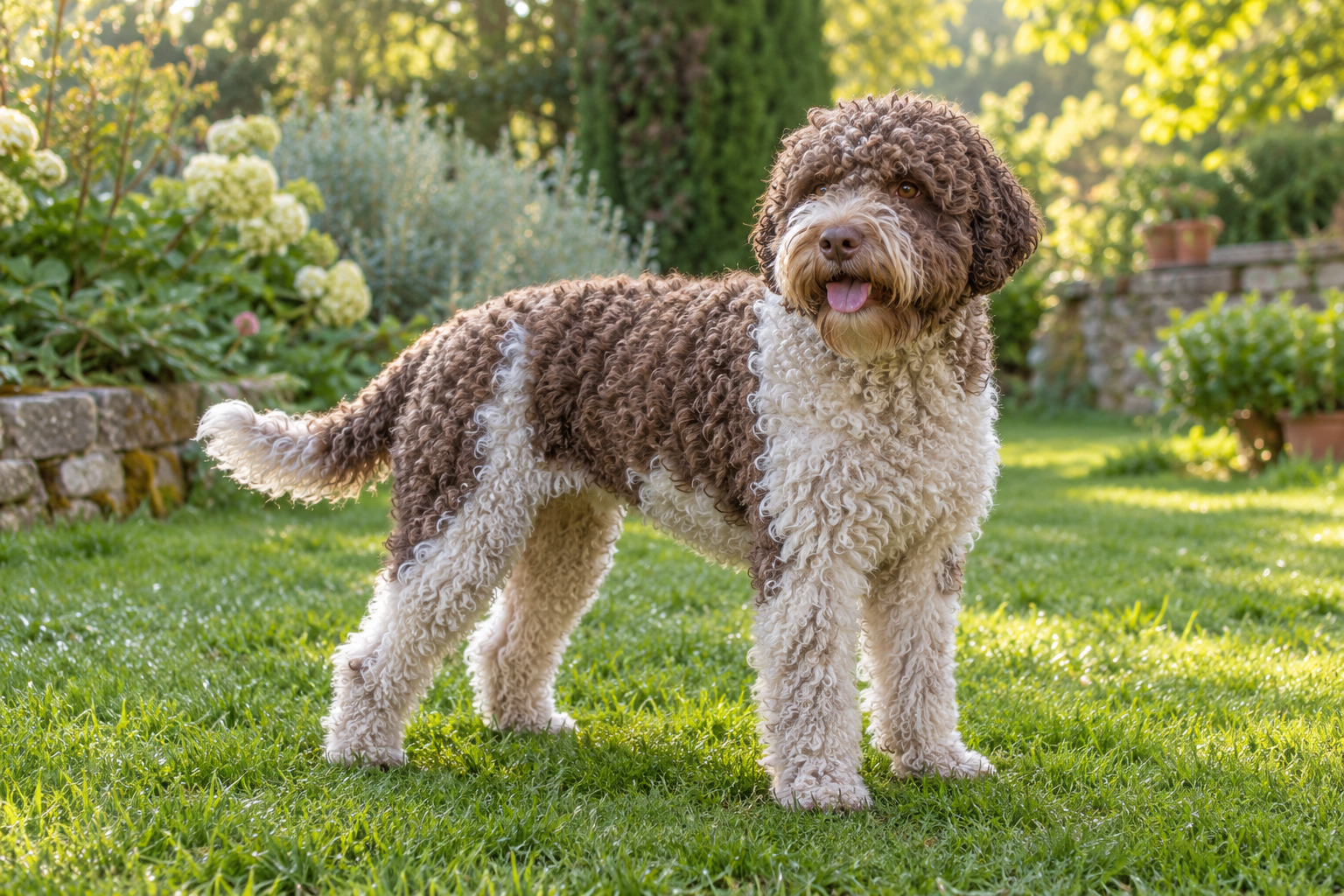 Lagotto RomagnoloMedium • Gundogs (Group 3)
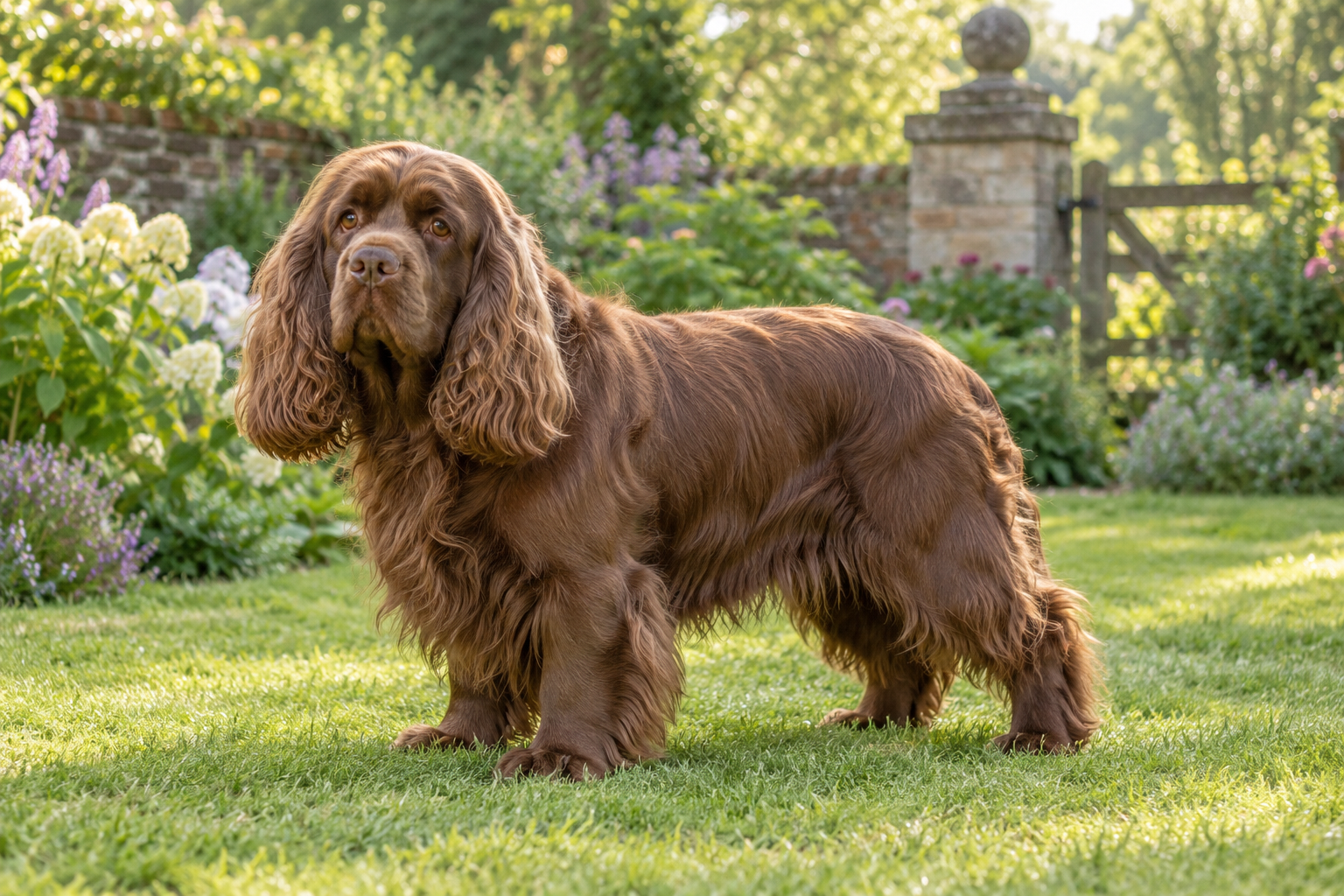 Sussex SpanielMedium • Gundogs (Group 3)
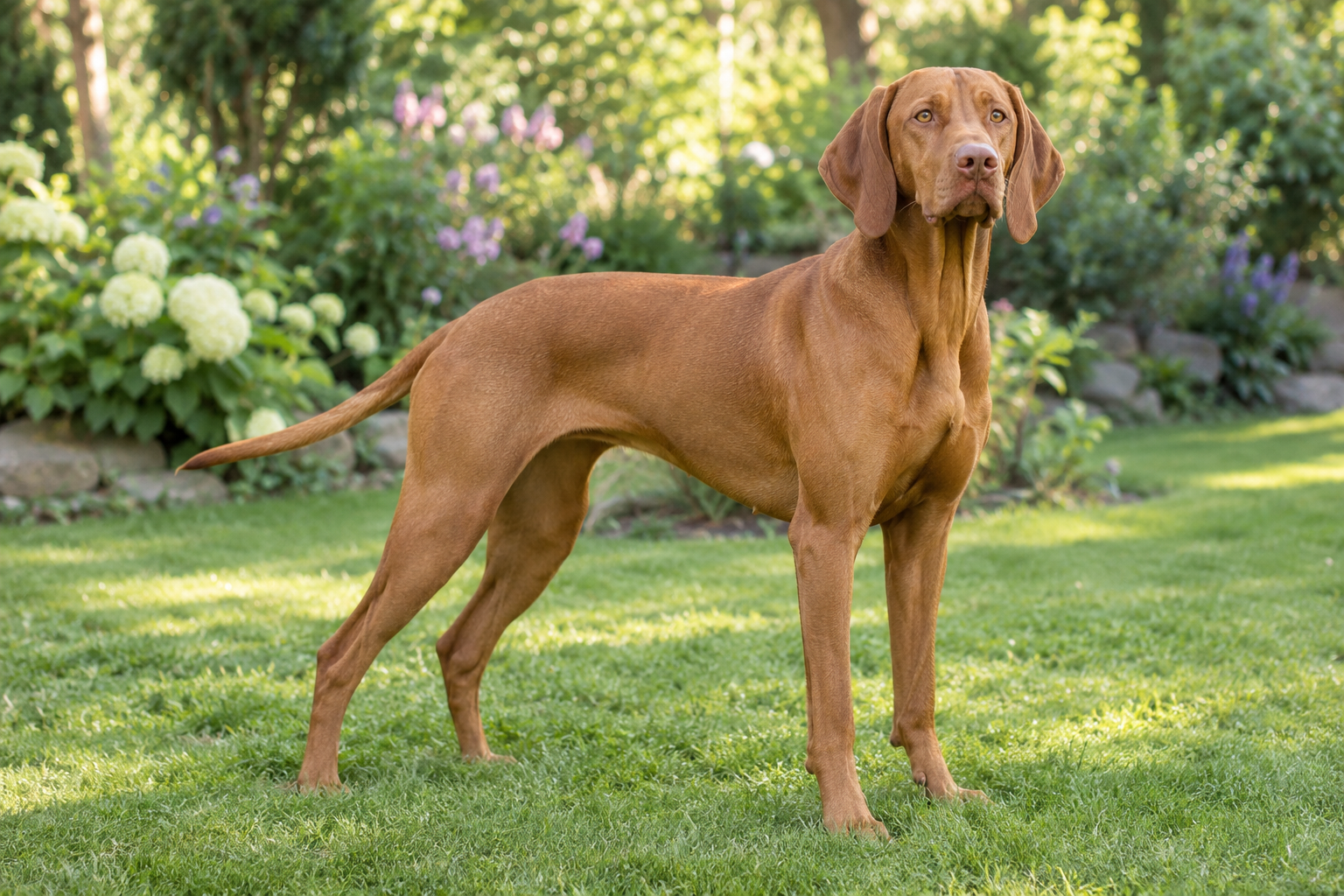 VizslaMedium • Gundogs (Group 3)
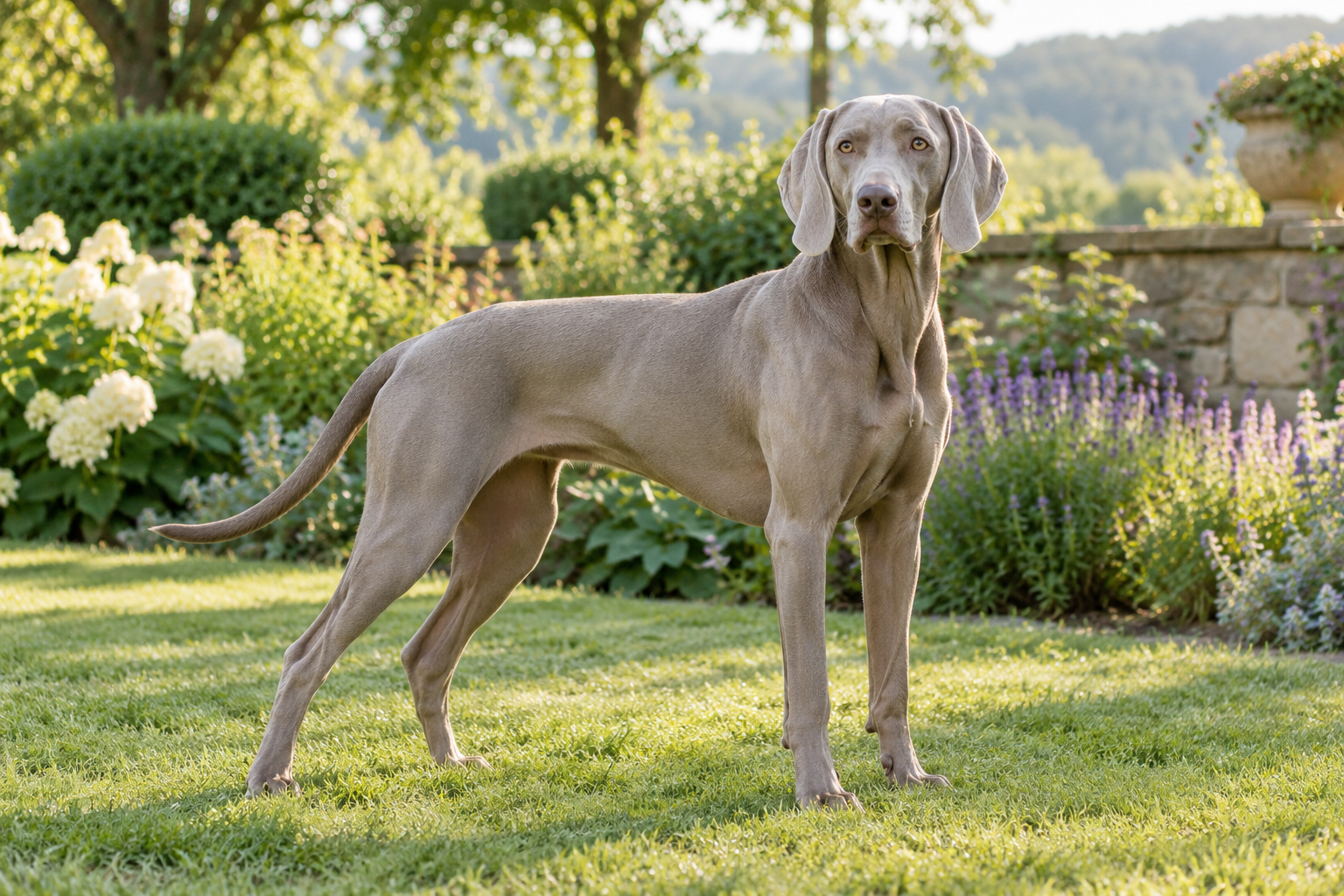 WeimaranerLarge • Gundogs (Group 3)
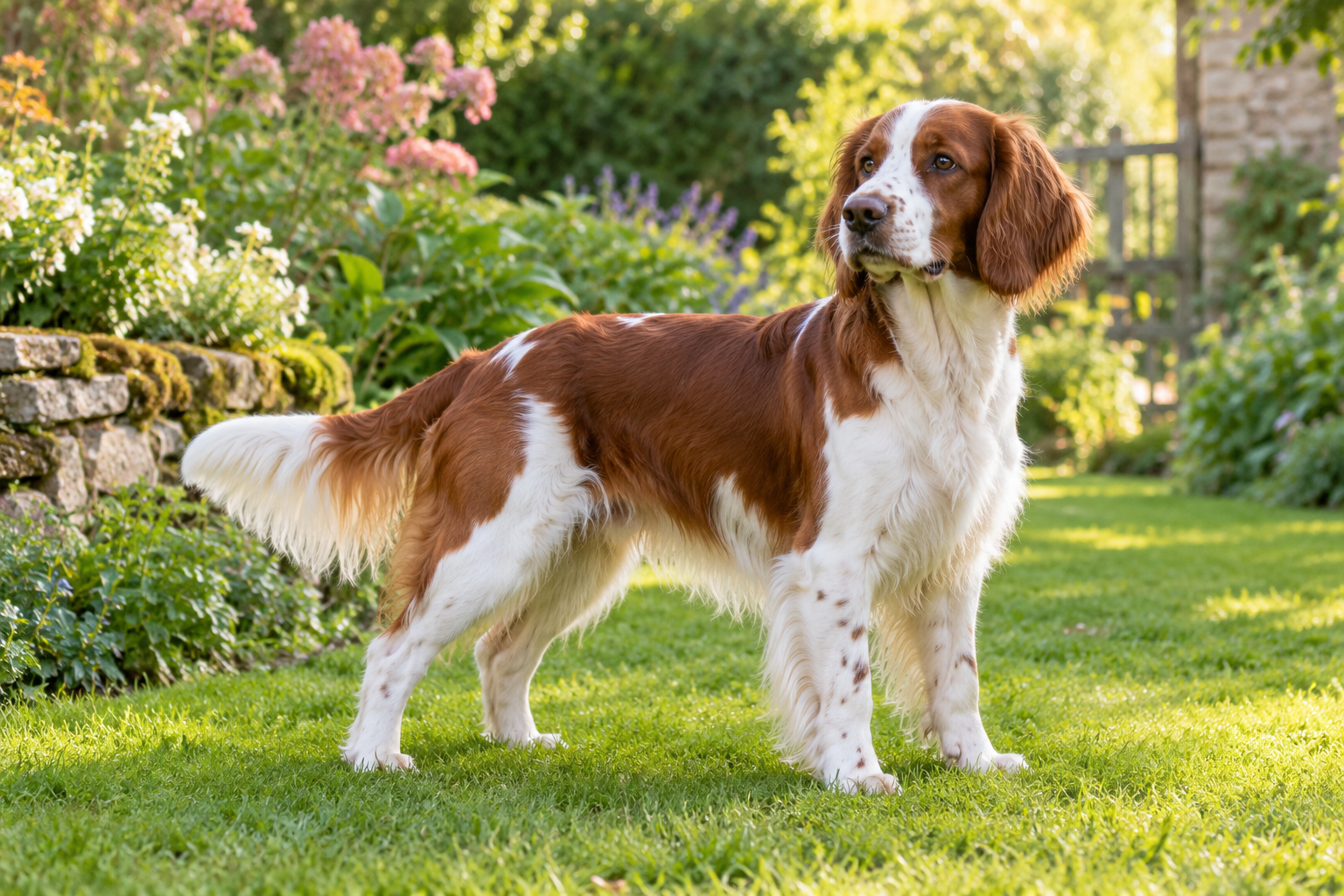 Welsh Springer SpanielMedium • Gundogs (Group 3)
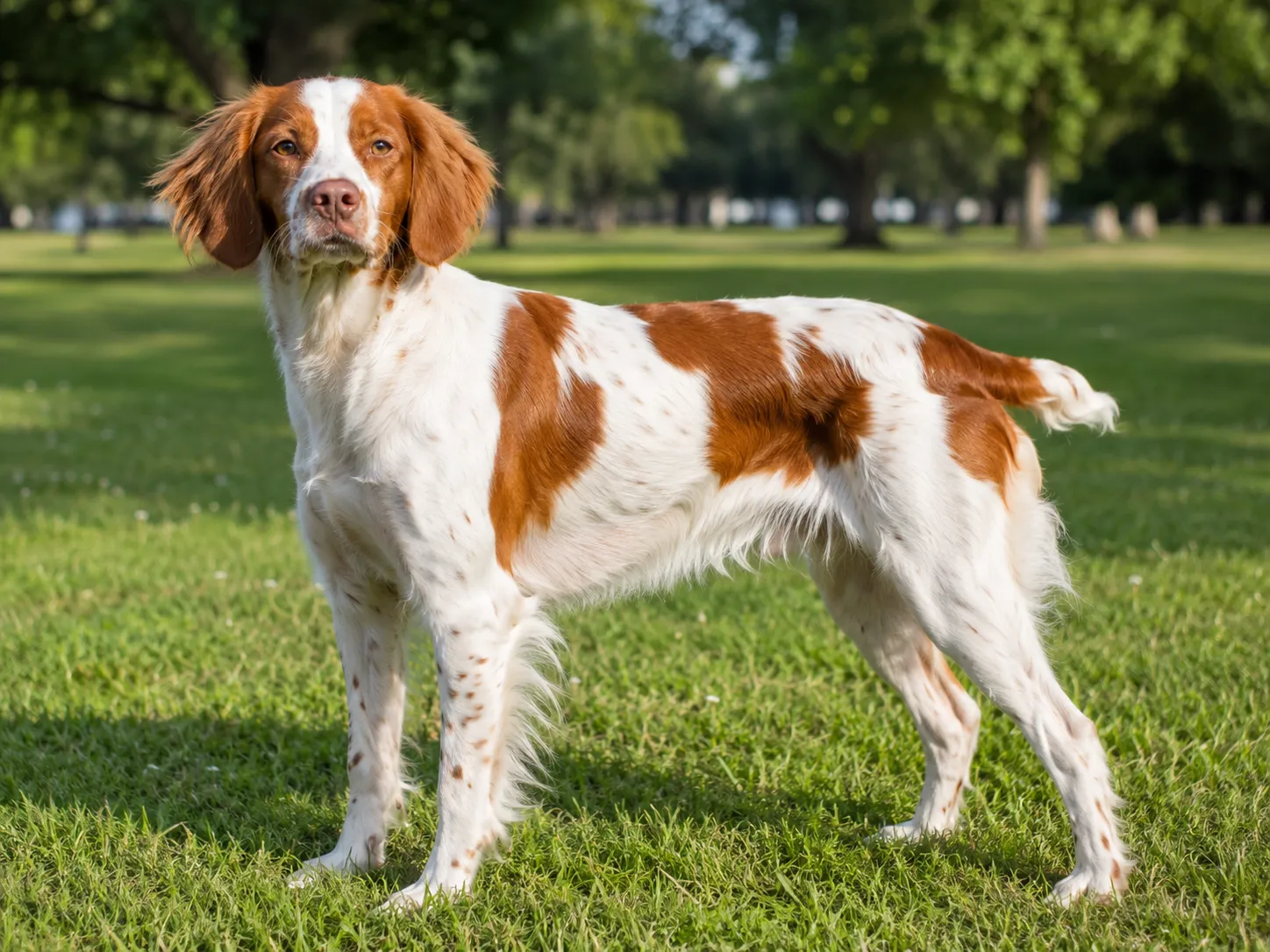 BrittanyMedium • Gundog (Hunt, Point, Retrieve)