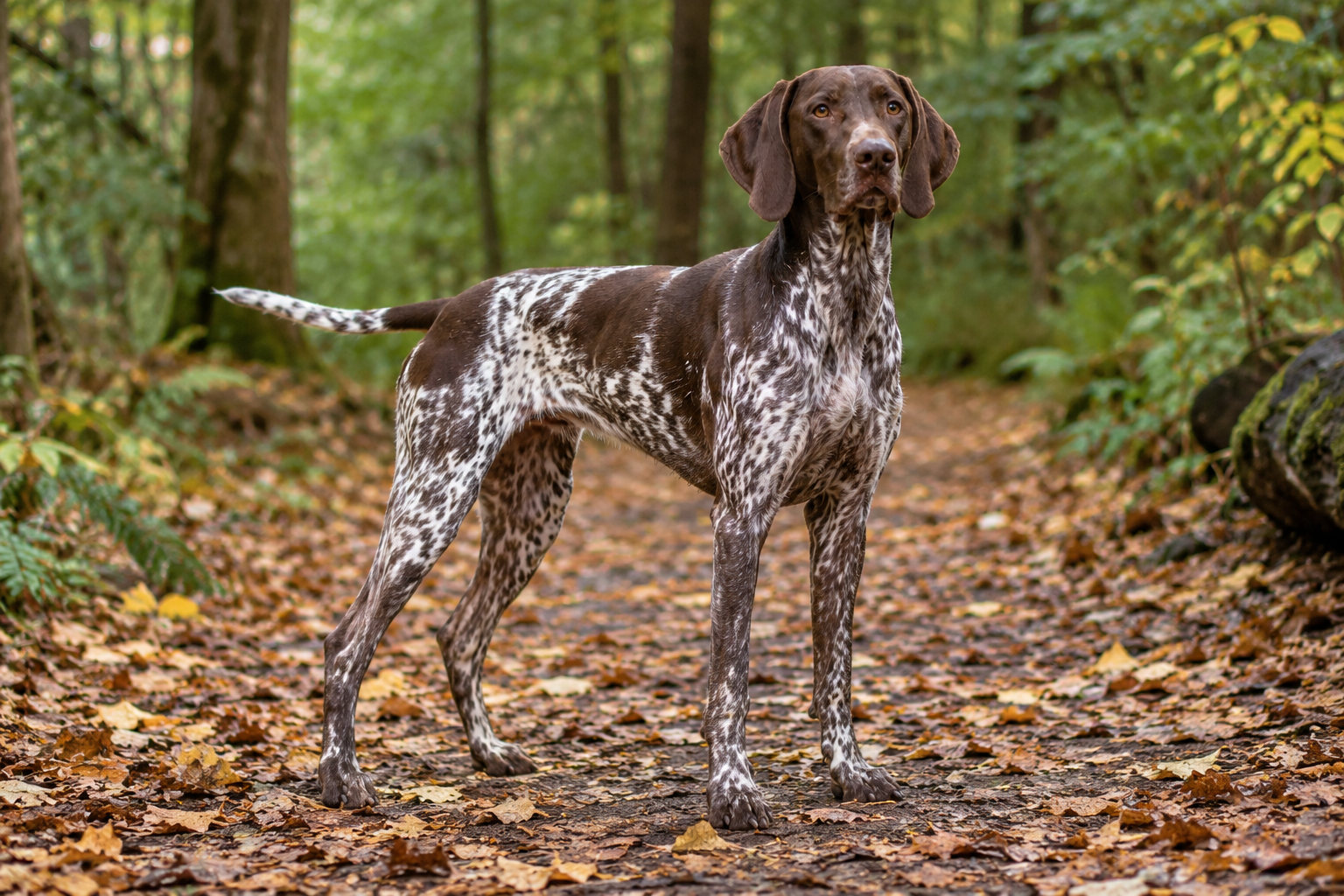
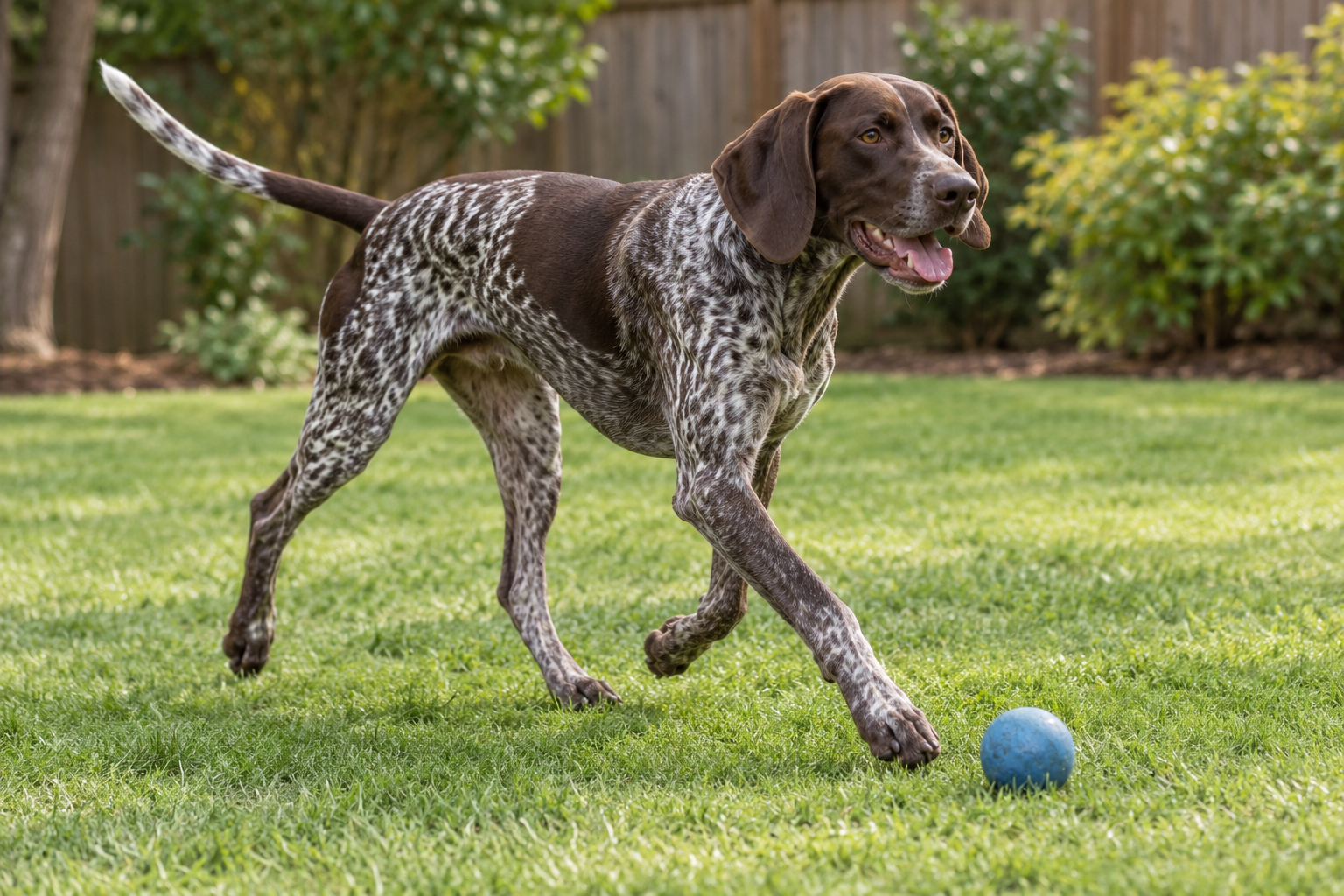
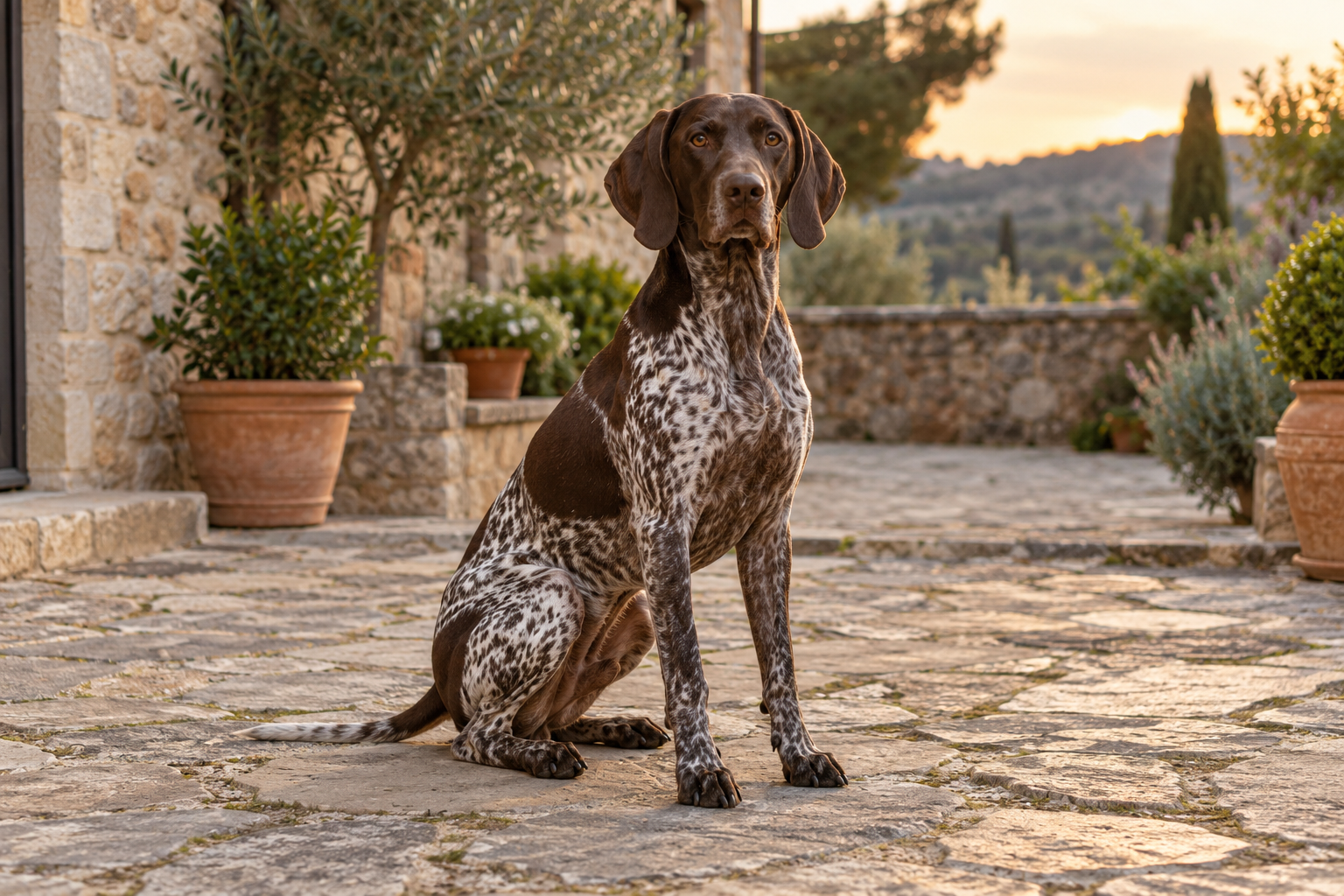
German Shorthaired Pointer
By James C. • Updated
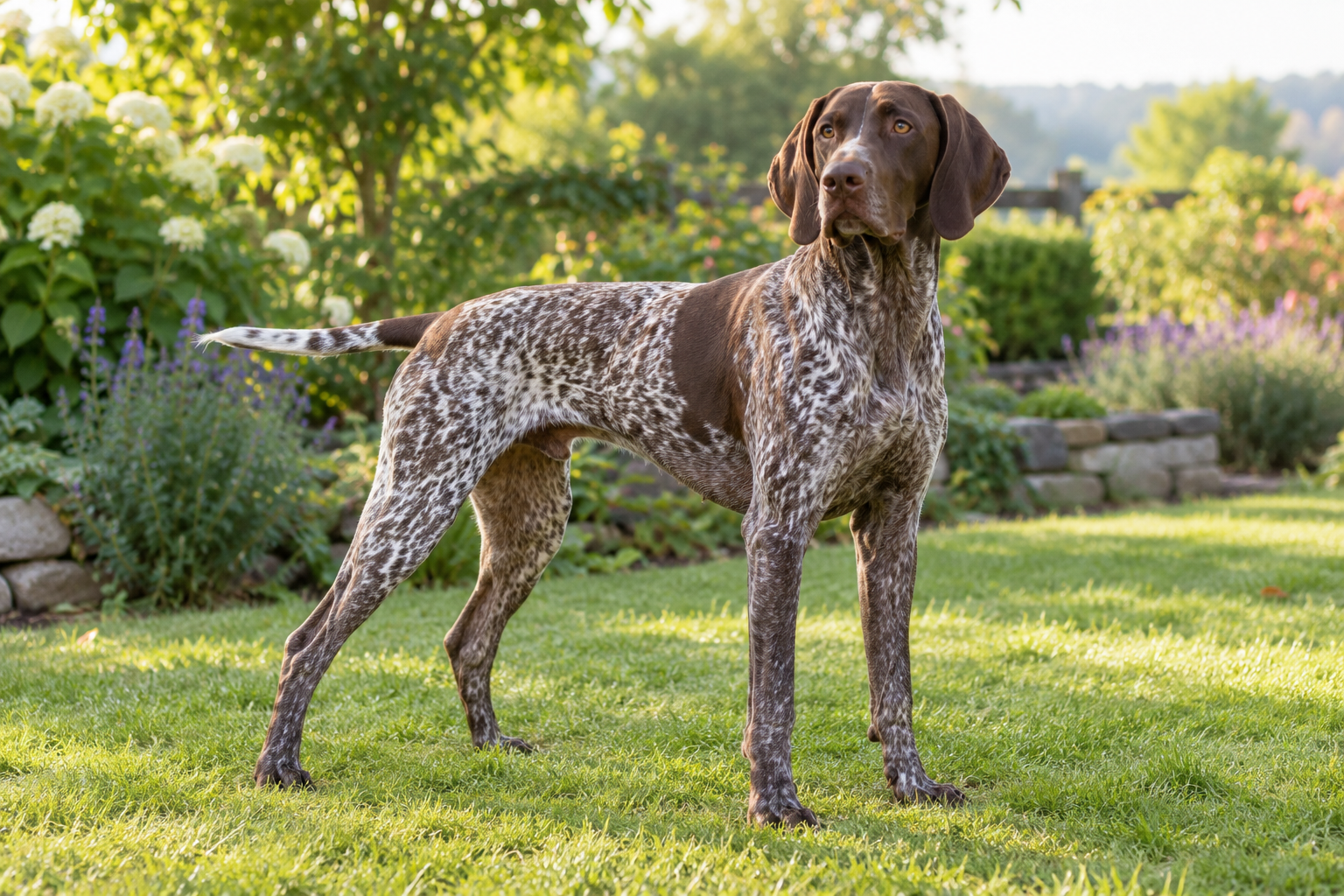
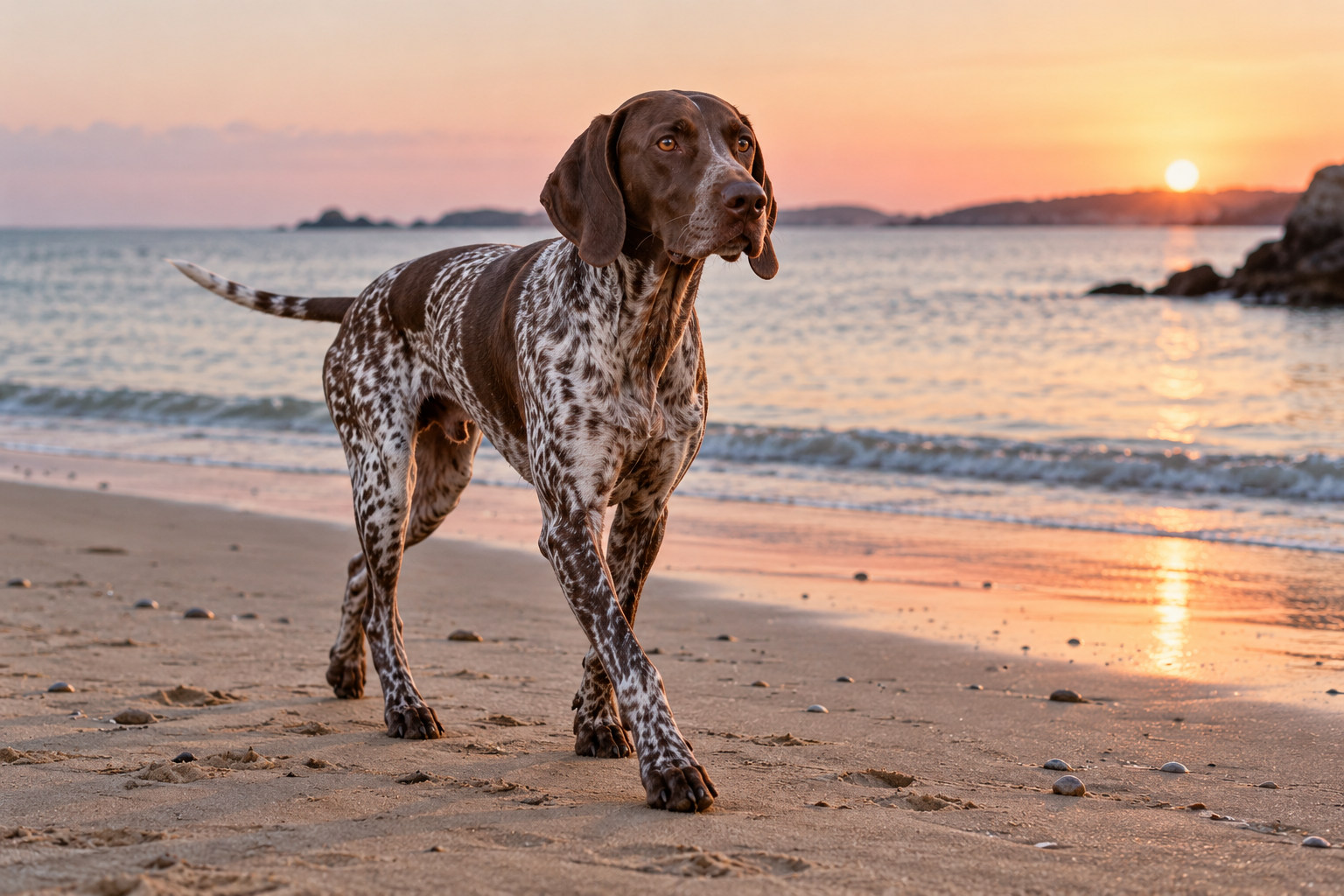
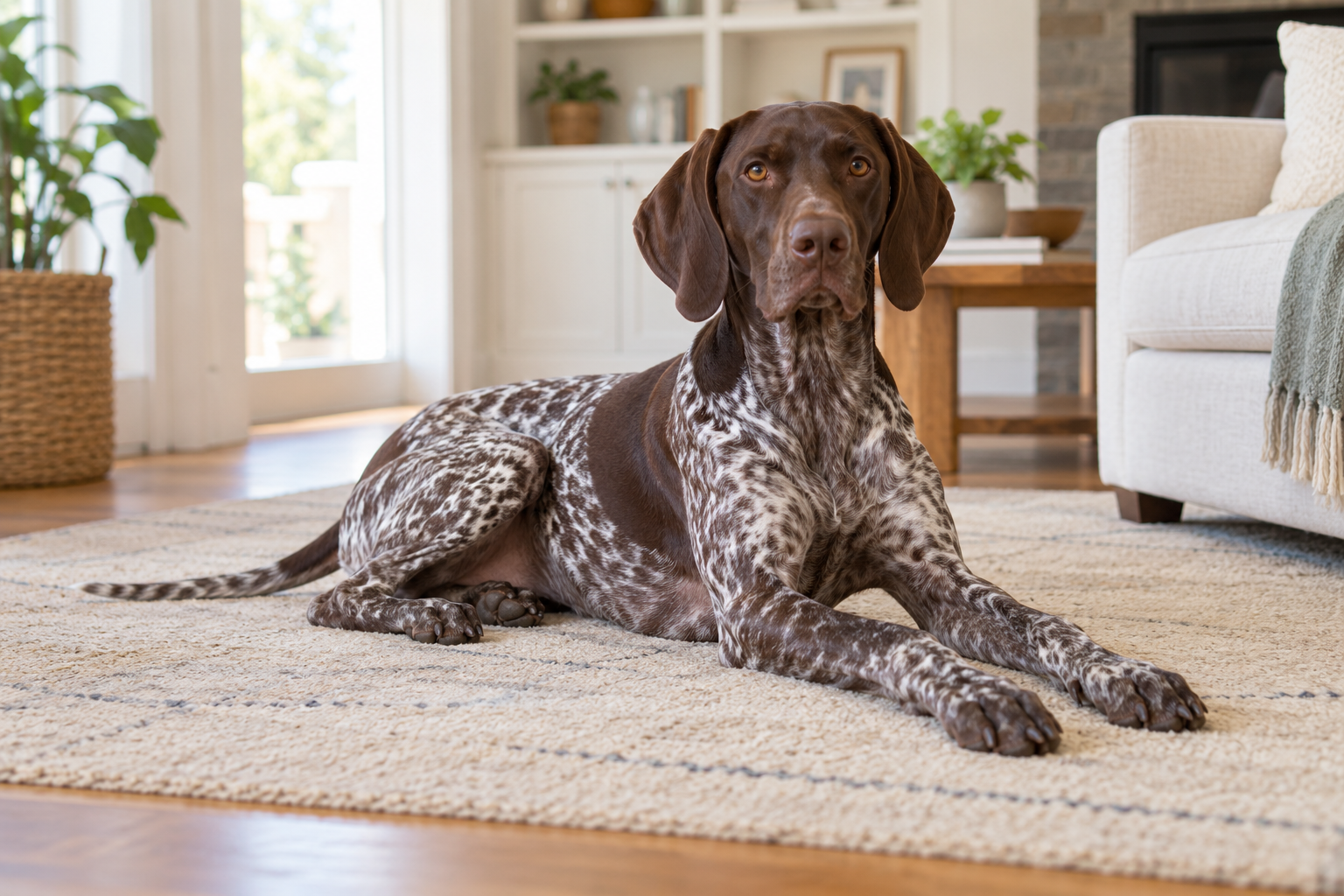
The German Shorthaired Pointer, widely known as the GSP or German Pointer, is a versatile German gundog bred in the nineteenth century to hunt, point and retrieve on land and in water. It is athletic, friendly and enthusiastic, with a short, easy-care coat in liver or black, solid or mixed with white. Dogs stand 62 to 66 cm and bitches 58 to 63 cm under the Dogs Australia standard, and most weigh roughly 20 to 32 kg. It needs a great deal of daily exercise, secure fencing and plenty of company. A UK study of more than 3,300 GSPs found a median lifespan of 13.4 years, one of the best figures among large breeds.
Breed Overview
Life Span
12 - 14 years
Average Price
AUD 3000 - AUD 4200
Weight
Male: 20 - 32 kg Female: 20 - 32 kg
Height
Male: 62 - 66 cm Female: 58 - 63 cm
Life Expectancy
Male/Female: 12 - 14 years
Breed Group
Gundogs (Group 3)
Nicknames
GSP, German Pointer, Kurzhaar
Breed Information
The German Shorthaired Pointer is a versatile German gundog, commonly called the GSP or German Pointer, bred to find, point and retrieve game on land and in water. It is one of the most capable all-round hunting dogs in the world and an increasingly popular family dog in Australia. It is also one of the most energetic breeds you can choose.
The GSP is friendly, eager and affectionate, and most are good with children and other dogs. The downsides are just as real: very high exercise needs, a strong prey drive, a tendency to escape and a dislike of long hours alone. Prospective owners usually ask what the disadvantages are, and the honest answer is that nearly all of them come from under-estimating how much activity this breed needs.
The breed is recognised by Dogs Australia in Group 3, Gundogs, and supply here is deep. Dogz Online listed 95 GSP breeders and 13 litters across the country on 17 October 2026, which makes it one of the easier pointing breeds to buy well, provided you choose between show, working and companion lines with care.
Characteristics of the German Shorthaired Pointer
The German Shorthaired Pointer rates very highly for exercise needs, intelligence and friendliness, and low for tolerance of being alone, so it rewards active owners and frustrates sedentary ones.
| Trait | Rating | Star Rating | Meaning |
|---|---|---|---|
| Size | Medium to Large | ★★★★ | Roughly 20 to 32 kg, lean, athletic and fast. |
| Adaptability | Low | ★★ | Copes poorly with confinement, small spaces and isolation. |
| Exercise Needs | Very High | ★★★★★ | At least two hours daily, with off-lead running. |
| Easy to Train | Good | ★★★★ | Eager and capable, though distractible around scent and birds. |
| Amount of Shedding | Moderate | ★★★ | Short hairs shed year round and weave into fabric. |
| Grooming Needs | Low | ★★ | A weekly brush and regular ear checks. |
| Good With Children | Very Good | ★★★★ | Friendly and playful, but bouncy as a young dog. |
| Health | Very Good | ★★★★ | Long-lived for its size, with known inherited conditions to test for. |
| Cost to Keep | Moderate | ★★★ | Moderate food and insurance costs, minimal grooming. |
| Tolerates Being Alone | Low | ★★ | Becomes vocal, destructive or escapes when bored. |
| Intelligence | Very High | ★★★★★ | Quick learner with an outstanding nose. |
History of the German Shorthaired Pointer: Germany's All-Round Gundog
The German Shorthaired Pointer was developed in nineteenth-century Germany by hunters who wanted one dog that could do everything. Rather than keeping separate breeds to find, point, retrieve and track, they selected for a versatile dog that could work birds and fur, on land and in water, and follow a wounded animal. Old German pointing dogs, scent hounds and imported English Pointers all contributed to the type.
Breeders formalised the breed in the late nineteenth century, and a German stud book for the Kurzhaar was established in 1897. Selection always placed working ability and sound temperament first, with field tests used to decide which dogs were bred. That emphasis on function is why the GSP remains such a capable hunting dog today.
The breed spread internationally in the twentieth century, gaining recognition in North America in 1930 and becoming established worldwide. In Australia, GSPs work as bird dogs, compete in field trials and are used by pig hunters, and the breed's scenting ability is one reason it is often traced among the foundation breeds of the Australian Bull Arab. Most Australian GSPs, however, now live as active family companions.
Appearance of the German Shorthaired Pointer: Lean, Athletic and Noble
Size and Build
The Dogs Australia breed standard sets dogs at 62 to 66 cm and bitches at 58 to 63 cm at the withers, and sets no weight. Most adult GSPs weigh roughly 20 to 32 kg, with males usually at the heavier end. The build is athletic and balanced, with a deep chest, strong loin and powerful hindquarters, giving a dog that can gallop for hours and turn sharply.
Coat and Colours
The coat is short, dense and harsh to the touch, and it dries quickly after swimming. The standard accepts solid brown (liver), brown with small white markings, dark and light brown roan, white with brown patches or ticking, and the same patterns in black, with tan markings permitted. Blue does not appear among the accepted colours, so puppies marketed as "rare blue" are not something to pay extra for.
Distinctive Features
The head is clean-cut with a strong muzzle, brown eyes and broad, high-set ears that hang flat. The classic pointing stance, with one foreleg raised and the body frozen towards the scent, is the image most people associate with the breed. Tail docking for cosmetic reasons is banned in Australia, so locally bred GSPs keep full tails.
Gender Differences
Males are taller and heavier, with more bone and a broader head, and the standard sets separate height ranges for each sex. Females are lighter and often a little quicker to mature. Both sexes are equally capable working dogs and family companions.
Temperament of the German Shorthaired Pointer: Friendly, Eager and Energetic
Core Personality Traits
GSPs are typically friendly, affectionate, enthusiastic and eager to please. They love being involved in family life and are often described as clownish at home. They are also intense, high-drive dogs. A GSP without enough exercise or work does not quietly settle; it looks for its own entertainment.
Social Behaviour
Can a GSP be aggressive? Aggression towards people is uncommon and not typical of the breed. Most GSPs are outgoing with visitors and sociable with other dogs, though some males can be pushy with other males, and a poorly socialised or under-exercised dog of any breed can become reactive. GSPs will usually bark to announce visitors, which makes them reasonable alarm dogs but poor guard dogs.
Working Instincts
Prey drive is strong and permanent. GSPs were bred to hunt feather and fur, so cats, chickens, rabbits, possums and wildlife will trigger chasing, pointing or worse. Off-lead exercise should be in safe areas away from roads and livestock, and many owners use long lines until recall is very reliable.
Common Behavioural Challenges
Do German pointers bark a lot? A well-exercised GSP is not usually a nuisance barker, but a bored or lonely one often barks, whines or howls. Other common problems are chewing, digging, jumping up, counter-surfing and escaping. Nearly all of them improve with more exercise, structured training and company.
Intelligence and Trainability of the German Shorthaired Pointer: Capable and Keen
Intelligence and Learning Ability
GSPs are quick learners with an outstanding nose and a genuine desire to work with people. They pick up routines and commands rapidly and enjoy having a job. Their intelligence also makes them inventive, and many learn to open doors, raid bins and find gaps in fences.
Training Approach
Reward-based training using food, toys and retrieves works well. Short, varied sessions keep the dog engaged, and training that uses the nose, such as scent games and retrieves, is especially satisfying. Begin basic manners early, and consider when to start obedience training so foundations are in place before adolescence.
Early Socialisation
Expose puppies to children, adults, other dogs, vehicles, household noises and new places in a calm, positive way. Introduce short periods alone from the start. Supervised, careful exposure to cats and small animals helps, though it will not remove prey drive.
Potential Training Challenges
Adolescence, from around six months to two years, is when GSPs are most distractible and most likely to ignore recall. Scent and birds will override training in many dogs. GSPs are also slow to mature mentally, so owners need patience while a physically adult dog still behaves like a teenager.
German Shorthaired Pointer Family Life: Living with Children, Pets, and Households
Living with Children
Are German Shorthaired Pointers good family dogs? For active families, yes. GSPs are usually gentle, playful and tolerant with children. They are also bouncy and strong, especially young dogs, so supervise them with toddlers and teach children calm play.
Living with Other Pets
Most GSPs enjoy other dogs and do well with a canine companion. Cats can be accepted if the dog is raised with them, but this is never guaranteed. Poultry, rabbits, guinea pigs and birds are at genuine risk in a home with a hunting breed.
Household Environment
The Dogs NSW breed profile describes GSPs as able to clear enclosures of four to six feet and as unsuited to being left alone all day. Plan for solid fencing of at least 1.8 metres, with no climbing points near it, and secure gates. GSPs should live indoors with the family and have a yard to rest in, not to exercise themselves in.
Lifestyle Compatibility
The breed suits runners, cyclists, hikers, hunters and families who spend a lot of time outdoors. It suits apartment living and long working days poorly. For households where everyone works, practical ways to reduce separation anxiety, a dog walker or daycare can help, but they do not replace a genuinely active lifestyle.
Health of the German Shorthaired Pointer: Joints, Skin, Blood and Lifespan
Lifespan and Healthy Living
The GSP is one of the longer-lived large breeds. A 2024 UK longevity study found a median lifespan of 13.4 years across 3,313 German Shorthaired Pointers, above the 12 year median for crossbreeds in the same study. A lean body, regular exercise and early attention to injuries support a long life.
Common Health Conditions
The GSP is generally healthy, but owners should be aware of several conditions that can be associated with the breed. It is best to discuss any concerns with a veterinarian.
- Hip and elbow dysplasia. Developmental joint conditions that can lead to arthritis. Hip and elbow scoring is mandatory for accredited breeders under Dogs New Zealand's GSP health testing rules, a useful benchmark for Australian buyers.
- Gastric dilatation volvulus (bloat). A life-threatening emergency in deep-chested dogs, with signs including a swollen belly and unproductive retching.
- Exfoliative cutaneous lupus erythematosus (lupoid dermatosis). An inherited skin disease described by the University of Pennsylvania as a single-gene recessive condition in GSPs, for which a DNA test is available.
- Von Willebrand disease type 2. An inherited bleeding disorder, with a specific DNA variant identified in German Shorthaired and Wirehaired Pointers.
- Cone degeneration. An inherited form of day blindness, with an optional DNA test listed for the breed.
- Zinc-responsive dermatosis. A familial skin condition the Merck Veterinary Manual reports in Siberian Huskies, Alaskan Malamutes and German Shorthaired Pointers.
- Working injuries. Torn pads, lacerations, grass seeds, cruciate ligament injuries and snake bite are realistic risks for a dog that runs hard through scrub.
Genetic Health Testing
Ask for hip and elbow scores for both parents, and for DNA results covering lupoid dermatosis, von Willebrand disease type 2 and cone degeneration. Australian breeders on Dogz Online commonly describe their breeding dogs as "DNA 100% clear, hip and elbow scored", which shows the standard to expect. A breeder who cannot produce these results is not meeting it.
Preventative Health Care
Keep vaccinations current and use year-round parasite prevention including paralysis tick cover on the east coast. The University of Sydney lists early signs of tick paralysis such as wobbly hind legs, vomiting and a changed bark. Feed in two meals to reduce bloat risk, check the coat, feet and ears after every run, and see a vet promptly for lameness that does not resolve.
Caring for the German Shorthaired Pointer: Daily Care and Living Environment
Daily Care Routine
A good day includes a long morning run or off-lead session, a second outing later in the day, a short training or scent game and plenty of time with the family. Feed twice daily, away from strenuous exercise. Build in short, calm periods alone from puppyhood so the dog learns to settle.
Living Environment Requirements
GSPs need a secure yard, indoor living and a comfortable bed. A crate introduced positively gives a young dog a safe place to rest. The short coat offers little warmth, so GSPs feel the cold and should sleep indoors in cooler months.
Climate Sensitivity
The short coat helps the GSP cope with Australian heat better than many breeds, but drive is the danger. A GSP will often keep running long after it should stop, and heat stress can develop quickly. Exercise at dawn and dusk in summer, let the dog swim where safe, carry water, and check safe temperatures for exercising dogs in Australia before heading out. The RSPCA lists heavy panting, drooling, vomiting and weakness among the signs of heatstroke, which needs a vet immediately.
Caring for Senior German Shorthaired Pointers
Many GSPs stay active into their teens. From around nine, watch for stiffness, weight change and slower recovery after exercise. Keep walks regular but gentler, maintain a lean weight and provide soft bedding and good traction indoors.
Grooming of the German Shorthaired Pointer: Simple Coat Care
Coat Maintenance
A weekly brush with a rubber mitt or bristle brush removes loose hair and keeps the coat glossy. The short hairs shed year round and can weave into fabric, so regular brushing saves on vacuuming.
Ear, Nail, and Dental Care
The hanging ears can trap moisture and grass seeds, so check them weekly and after swimming or running through long grass. Trim nails every three to four weeks if they are not worn down naturally. Brush teeth several times a week.
Bathing and Professional Grooming
Bathe only when dirty, since the coat sheds mud easily once dry. Professional grooming is not needed. A rinse after swimming in the sea removes salt from the coat and skin.
Feet and Skin Checks
Check feet, pads and skin after every run in scrub or paddocks. Grass seeds, cuts, ticks and thorns are common in a dog that covers ground fast. Any persistent crusting or scaling of the skin should be checked by a vet, given the breed's inherited skin conditions.
Exercise Needs of the German Shorthaired Pointer: A Gundog That Needs to Run
Daily Exercise Requirements
Plan on at least two hours of exercise every day for an adult GSP, including off-lead running in a safe area. Walking on lead alone will not meet the breed's needs. Under-exercise is the single most common reason GSPs become destructive, noisy or escape artists.
Activities German Shorthaired Pointers Enjoy
Running, swimming, retrieving, scent work, tracking, field trials, agility and canicross all suit the breed. Gundog training and field trial clubs offer a structured outlet for the pointing and retrieving instinct. Many GSPs make excellent running and cycling companions once fully grown.
Exercise by Life Stage
Puppies need short, varied play and should not be run long distances or made to jump repeatedly while growing. Increase exercise gradually through the first 18 months. Adolescents need the most outlets and the most structure. Seniors still need daily movement, at lower intensity.
Importance of Mental Stimulation
Scent games, food puzzles, retrieves and training sessions tire a GSP as effectively as running and help on hot days. In rural and bush areas, take care in snake season, keep dogs away from areas where 1080 baits may be laid, and check for paralysis ticks after every outing on the east coast.
Feeding the German Shorthaired Pointer: Nutrition and Diet Needs
Nutritional Requirements
A complete, balanced diet for active medium to large dogs suits most GSPs. Working and very active dogs may need a higher-energy food, while desexed companions often need less. Fresh water should always be available, especially after exercise.
Feeding by Life Stage
Feed puppies three or four times a day until around four months, then three times a day to six months, and twice daily as adults. Use a puppy food suited to medium to large breeds and aim for steady, not rapid, growth.
Portion Control and Weight Management
A GSP should look lean, with ribs easy to feel and a clear waist. Extra weight loads joints and reduces stamina. Adjust portions for workload, season and body condition rather than the bag guide alone.
Foods to Avoid
Avoid grapes, sultanas, chocolate, onion, garlic, macadamias, xylitol and cooked bones. Rural owners should not feed raw offal from feral animals because of hydatid tapeworm risk, and should secure rubbish that a scavenging GSP could raid.
German Shorthaired Pointer Price in Australia: Purchase Cost and Ongoing Expenses
Puppy Purchase Price
Expect to pay about $3,000 to $4,200 for a registered German Shorthaired Pointer puppy in Australia. On 17 October 2026, three of the 13 GSP litters on Dogz Online puppy listings stated a price: $3,000, $3,300 for a registered NSW puppy from hip and elbow scored, DNA tested parents, and $4,000 to $4,200. The other ten listed price on request.
The Dogz Online GSP cost guide gives a wider range of $2,000 to $5,000 for puppies, $1,200 to $3,500 for young adults and $400 to $800 for rescue adoption. Show, field and companion lines can be priced differently, and main register puppies usually cost more than limited register puppies.
Initial Setup Costs
RSPCA NSW puts first-year setup costs for a dog at about $60 to $80 for microchipping, $280 to $420 for vaccinations, $350 to $650 for desexing, $40 to $100 for a collar, lead or harness, $100 to $200 for a bed and about $170 for puppy school. For a GSP, budget for fencing upgrades, a long training line, a crate and possibly gundog training.
Ongoing Monthly Costs
| Cost | Typical figure (AUD) | Source |
|---|---|---|
| Food | Around or above the $91 monthly dog average, depending on workload | Animal Medicines Australia, Pets in Australia 2025 |
| Parasite prevention including ticks | Around or above the $122 annual average | Animal Medicines Australia, Pets in Australia 2025 |
| Pet insurance | Around $1,461 per year for a large dog, accident and illness | Canstar, prepared March 2026 |
| Annual vet check and booster | From $140 per year | RSPCA NSW |
| Professional grooming | Not required | n/a |
Animal Medicines Australia reports that dog-owning households spend about $2,520 a year on average, and a GSP usually sits close to or a little above that. Comparing how insurance costs vary by breed is sensible for an active dog prone to injuries. Canstar's pet insurance cost figures also show premiums rising with age.
Long-Term Financial Commitment
With a typical lifespan of 12 to 14 years, the GSP is a long commitment. The costs most likely to raise the total are injury treatment, bloat surgery, snake bite treatment and tick paralysis care, all of which are realistic for an active outdoor dog.
Buying Advice for a German Shorthaired Pointer: Choosing a Healthy Puppy
Choosing a Responsible Breeder
Choose a breeder registered with their state canine control body who health tests, raises puppies in or near the home and asks about your lifestyle. Ask whether the litter is from show, field trial or dual-purpose lines. Field lines often have higher drive, which suits hunters and very active owners but can overwhelm a family wanting a companion.
Health Checks Before Purchase
Ask to see hip and elbow scores and DNA results for both parents. Meet the mother, and the father if possible, and watch how they move and behave. A healthy puppy is bright, curious, clean-coated and moves soundly, with clear eyes and clean ears.
Questions to Ask the Breeder
- What are the hip and elbow scores of both parents?
- Are both parents DNA tested for lupoid dermatosis, von Willebrand disease type 2 and cone degeneration?
- Is this litter from show, field or dual-purpose lines?
- Is the puppy on the limited or main register?
- What is your breeder identification number?
- How have the puppies been socialised, and have they had time alone?
- Has there been any history of bloat or epilepsy in the line?
- Will you take the dog back at any age if needed?
Considering Adoption
GSPs and GSP crosses do come up for rehoming, often adolescents whose owners underestimated the breed's energy. Rescue groups can tell you how a dog behaves with cats, children and time alone. Dogz Online puts adoption fees at around $400 to $800.
Is the German Shorthaired Pointer Right for You? Energy, Space and Commitment
Lifestyle Compatibility
The GSP suits active families, runners, hikers and hunters who spend a lot of time outdoors.
It is a poor fit for apartments and households where the dog would be alone all day.
Time and Care Commitment
Expect at least two hours of exercise daily, plus training and mental work.
That commitment runs for 12 to 14 years.
Grooming and Health Awareness
Grooming is easy, with a weekly brush and regular ear checks.
Ask for hip, elbow and DNA results, and learn the signs of bloat, tick paralysis and heatstroke.
Ideal Owner Profile
The ideal GSP owner is active, patient and consistent, with secure fencing and time each day.
If you want a calm, low-energy companion, consider a different breed.
Find German Shorthaired Pointer Puppies for Sale
If the breed fits your lifestyle, you can browse puppies for sale on Pups4Sale and compare registered breeders.
Ask every breeder for health results before paying a deposit.
Frequently Asked Questions
Related Breeds
Other sporting breeds on Pups4Sale.
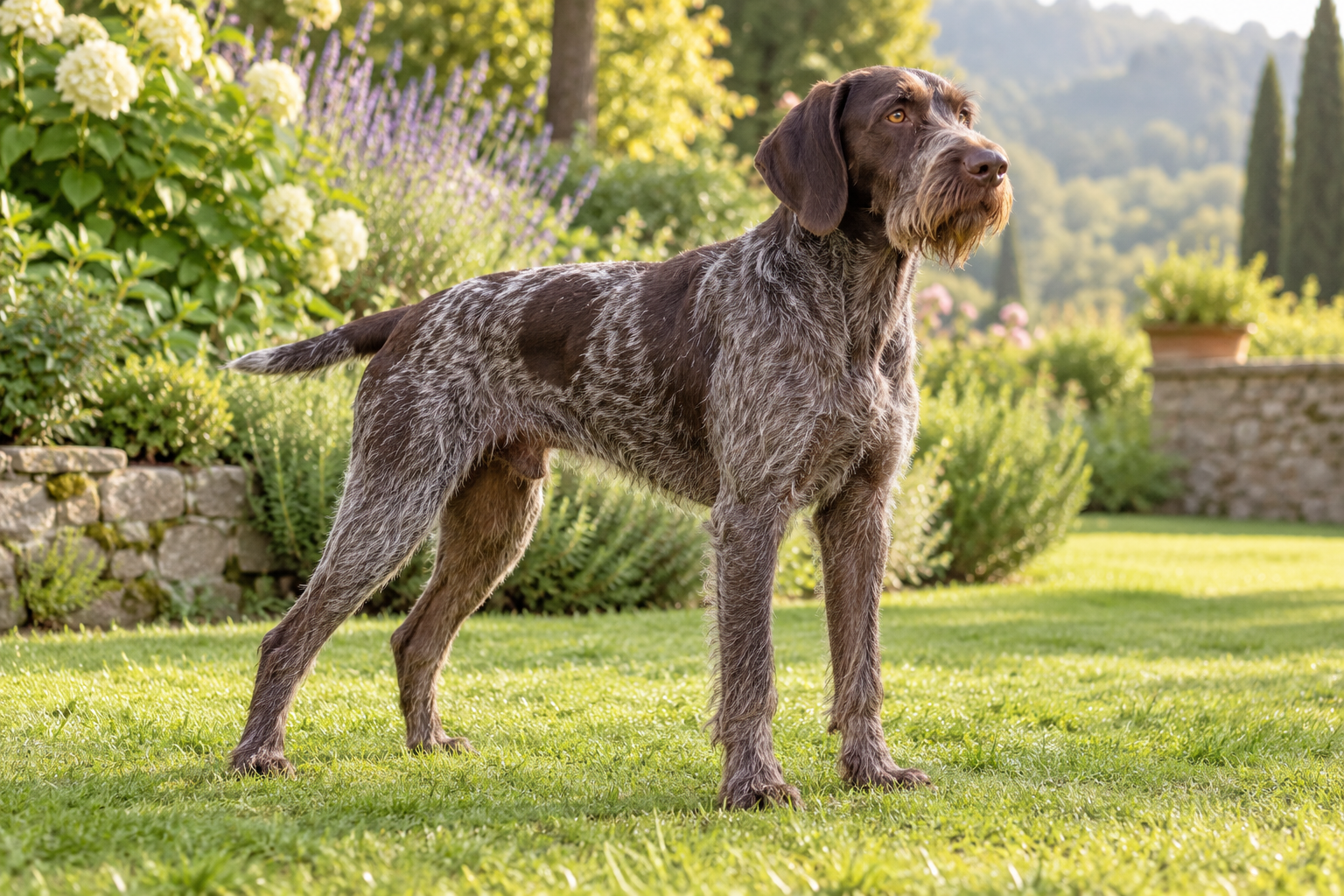 German Wirehaired PointerLarge • Gundogs (Group 3)
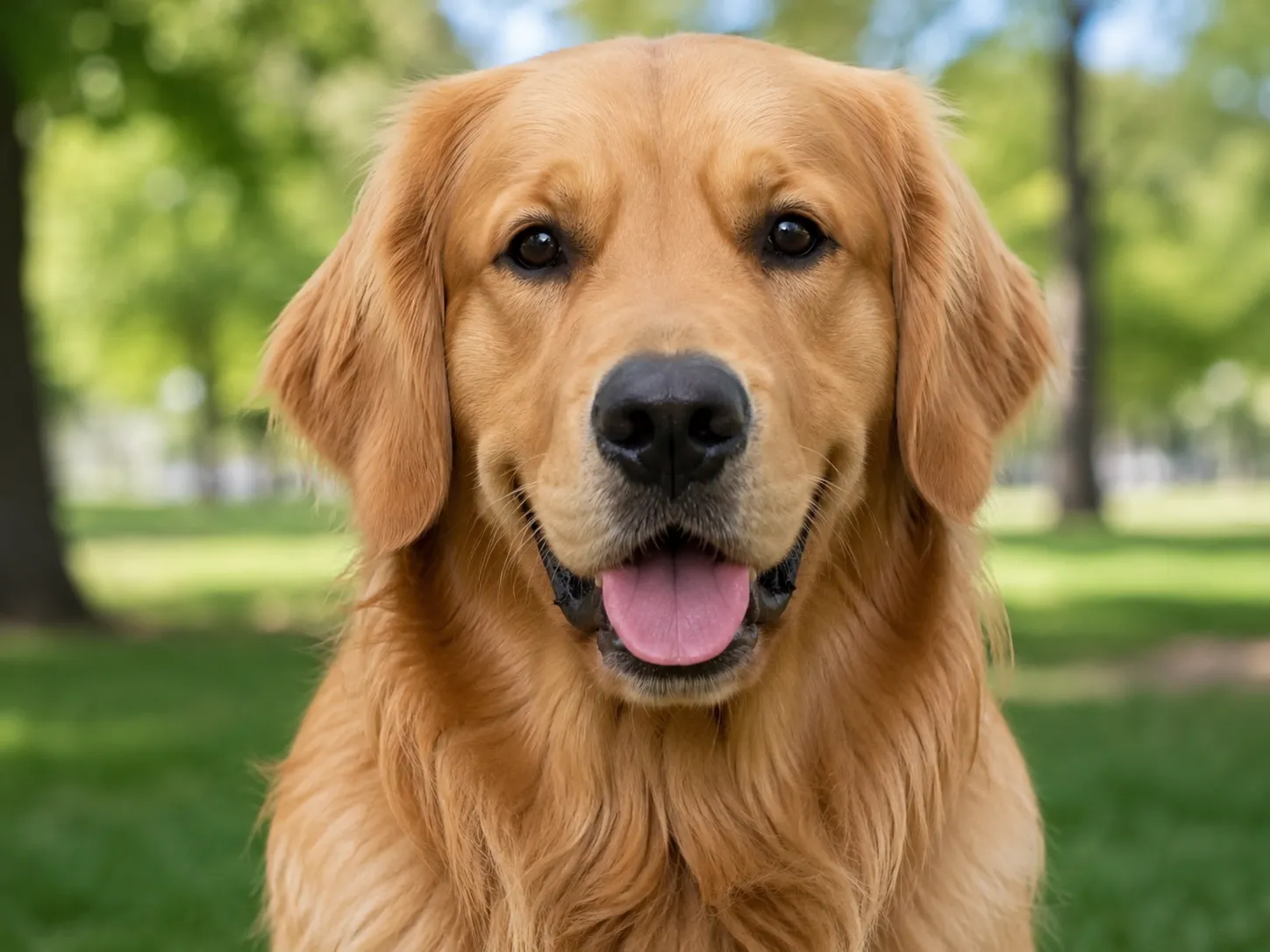 Golden RetrieverLarge • Sporting / Gundog
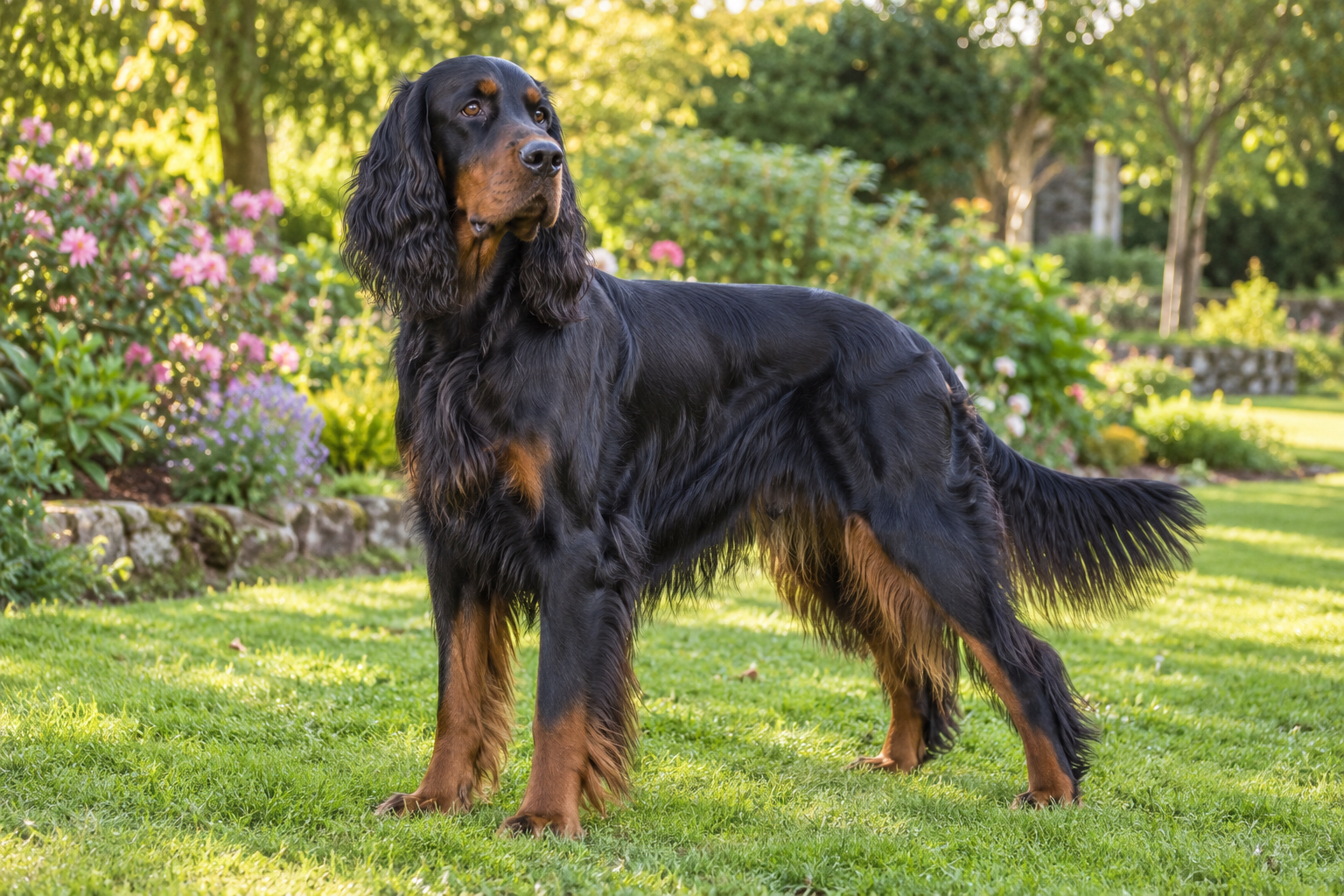 Gordon SetterLarge • Gundogs (Group 3)
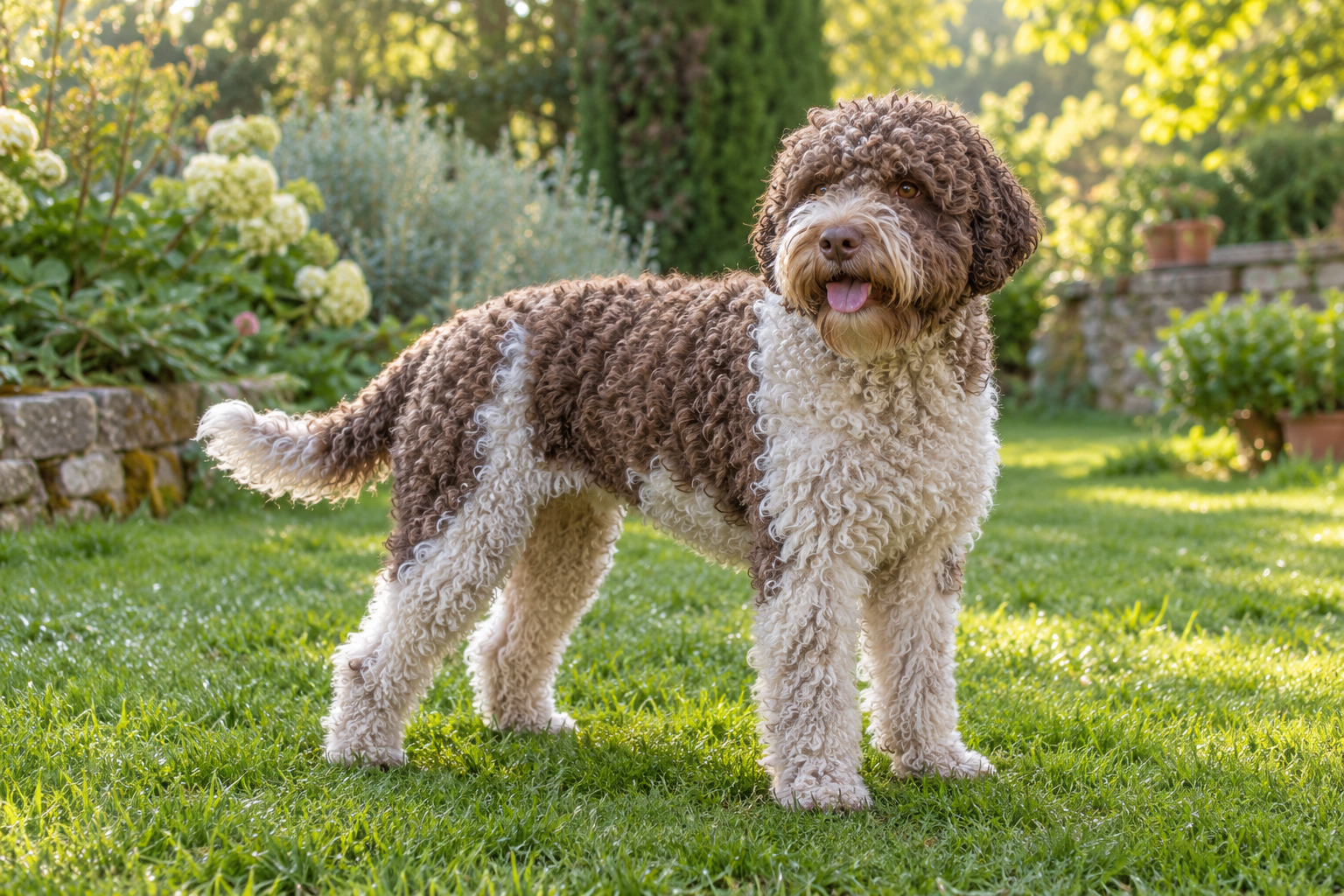 Lagotto RomagnoloMedium • Gundogs (Group 3)
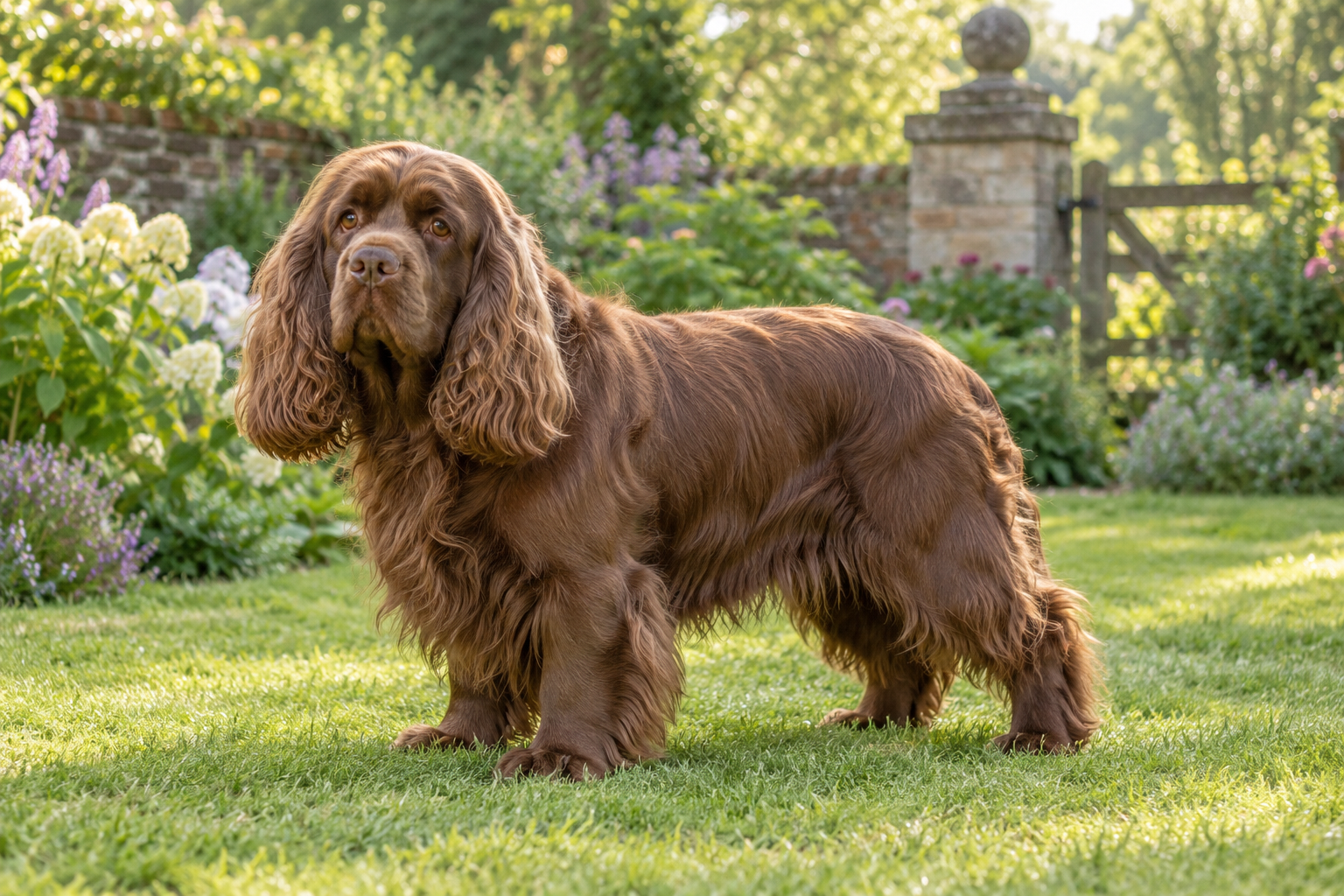 Sussex SpanielMedium • Gundogs (Group 3)
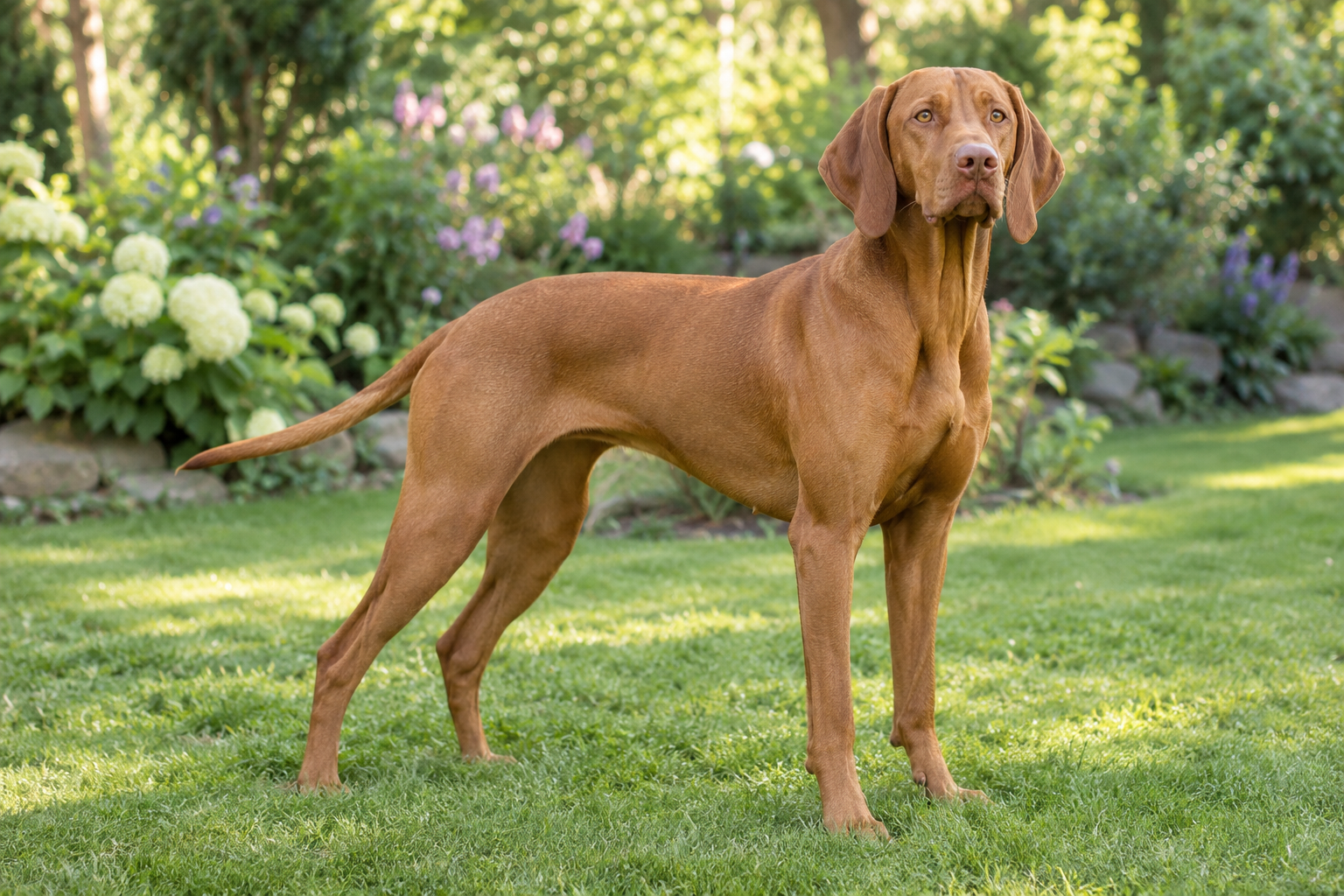 VizslaMedium • Gundogs (Group 3)