Tibetan Mastiff
By James C. • Updated
The Tibetan Mastiff is an ancient guardian breed from the Tibetan Plateau, used by nomadic herders to protect livestock and camps from wolves, leopards and bears. It is recognised by Dogs Australia in Group 6 (Utility), with a minimum height of 66 cm for males and 61 cm for females, and most adults weigh roughly 32 to 68 kg. It is calm with its family but independent, slow to mature and aloof with strangers, with a heavy double coat and a lifespan of about 10 to 12 years. The breed is famous for reported multi-million dollar sales in China, but it is very rare in Australia and not recommended for novice owners.
Breed Overview
Life Span
10 - 12 years
Average Price
AUD 3000 - AUD 8000
Weight
Male: 41 - 68 kg Female: 32 - 54 kg
Height
Male: 66 - 76 cm Female: 61 - 71 cm
Life Expectancy
Male/Female: 10 - 12 years
Breed Group
Utility (Group 6)
Nicknames
TM, Do-Khyi
Breed Information
The Tibetan Mastiff is an ancient Himalayan guardian dog, and in Australia it is extremely rare. In September 2026 Dogz Online listed just nine ANKC breeders nationally, in NSW, Queensland, South Australia and Victoria, and a single litter. There were none in Western Australia, Tasmania, the ACT or the Northern Territory.
The famous million-dollar price tags have nothing to do with the Australian market. They came from a speculative boom in China that collapsed years ago. A registered Australian puppy costs thousands, not millions, but finding one usually means a long wait or an import.
The breed is not recommended for novice dog owners, according to Dogs Victoria, because of its size, independence and protective instincts.
Characteristics of the Tibetan Mastiff
The Tibetan Mastiff rates very highly for size and guarding instinct, and low for trainability and heat tolerance.
| Trait | Rating | Star Rating | Meaning |
|---|---|---|---|
| Size | Giant | ★★★★★ | Commonly 32 to 68 kg, massive and powerful. |
| Adaptability | Low | ★★ | Needs space and struggles in heat. |
| Exercise Needs | Moderate | ★★★ | Daily walks, not endurance work. |
| Easy to Train | Low | ★★ | Intelligent but very independent. |
| Amount of Shedding | Moderate | ★★★ | One heavy moult a year. |
| Grooming Needs | Moderate | ★★★ | Weekly brushing, more in the moult. |
| Good With Children | Moderate | ★★★ | Patient with family, wary of visitors. |
| Health | Good | ★★★ | Fairly robust, with joint and thyroid risks. |
| Cost to Keep | High | ★★★★ | Giant dog food, insurance and cooling. |
| Tolerates Being Alone | Moderate | ★★★ | Copes if secure, but may bark at night. |
| Intelligence | High | ★★★★ | Thinks for itself, as guardians must. |
History of the Tibetan Mastiff: Guardian of the Himalayas
The Tibetan Mastiff is one of the oldest known breeds. Nomadic Tibetan and Nepalese herders used it to guard sheep and camps from wolves, leopards and bears, and it is believed to be foundation stock for many mastiff-type breeds.
The breed reached the West in the nineteenth century and is recognised by Dogs Australia under a standard that originated with the Kennel Club in London. Numbers in Australia have always been very small.
Appearance of the Tibetan Mastiff: Mane, Coat and Size
Size and Build
The standard sets minimum heights of 66 cm for males and 61 cm for females, and most males weigh about 41 to 68 kg. The body is heavy boned, powerful and agile.
Coat and Colours
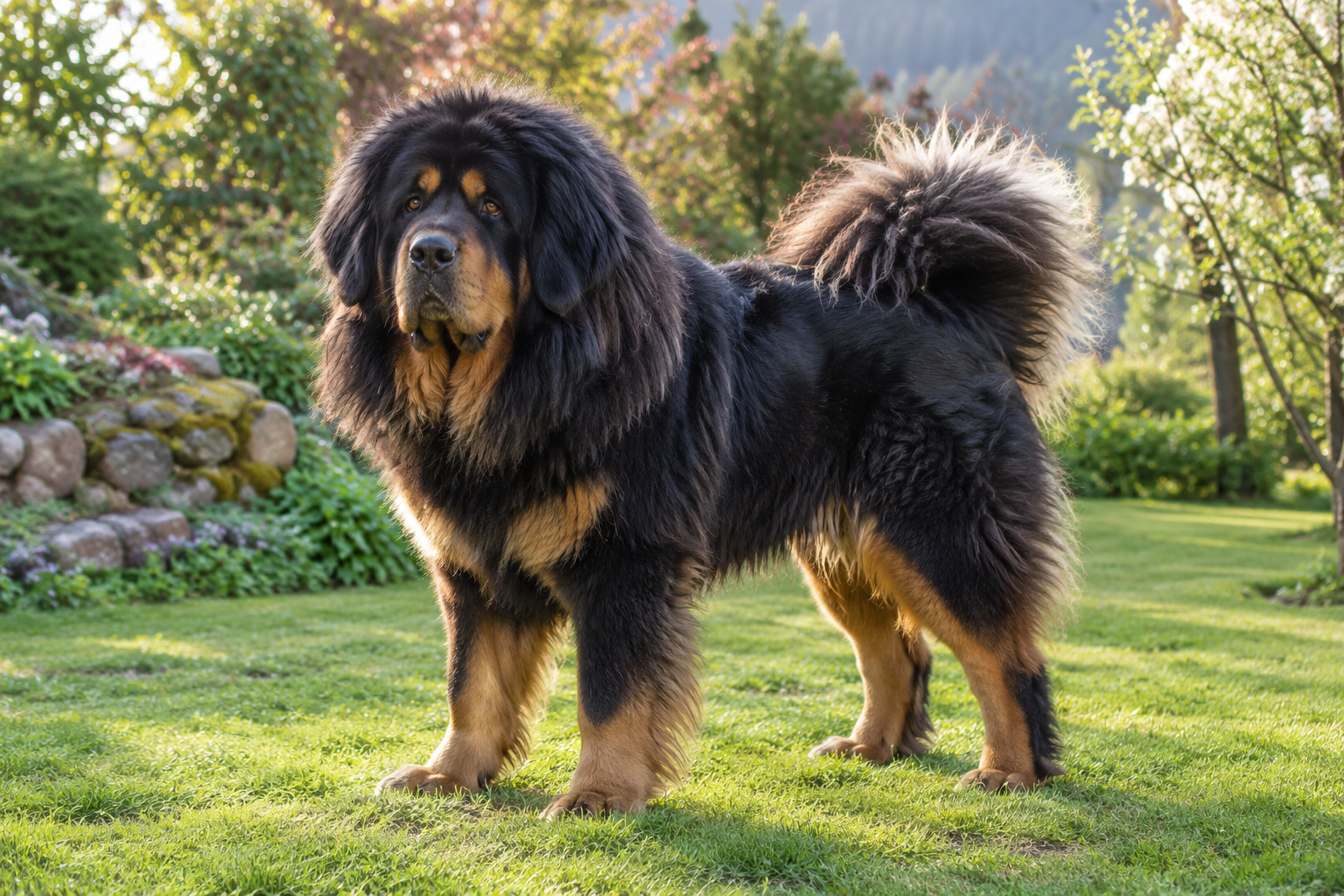
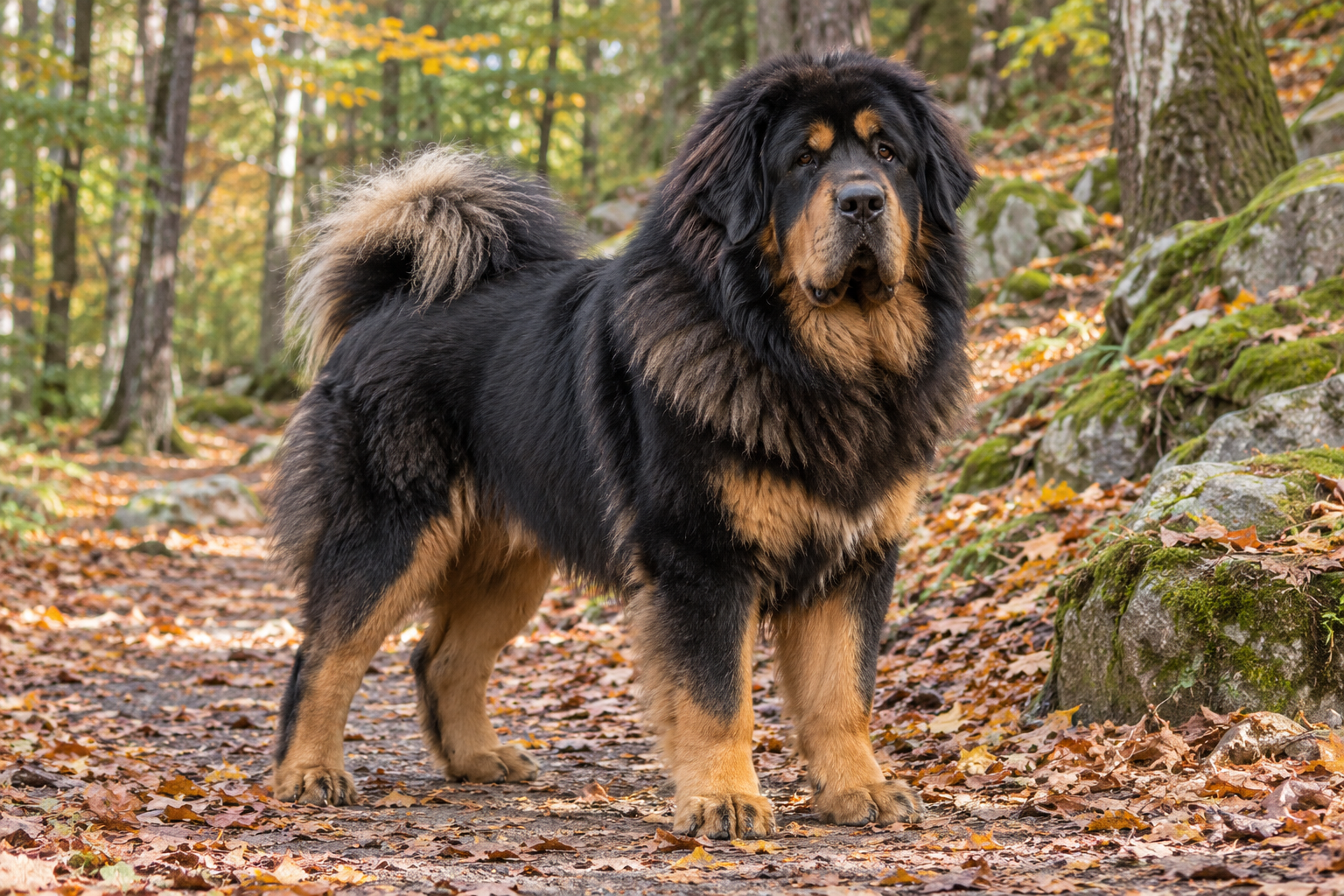
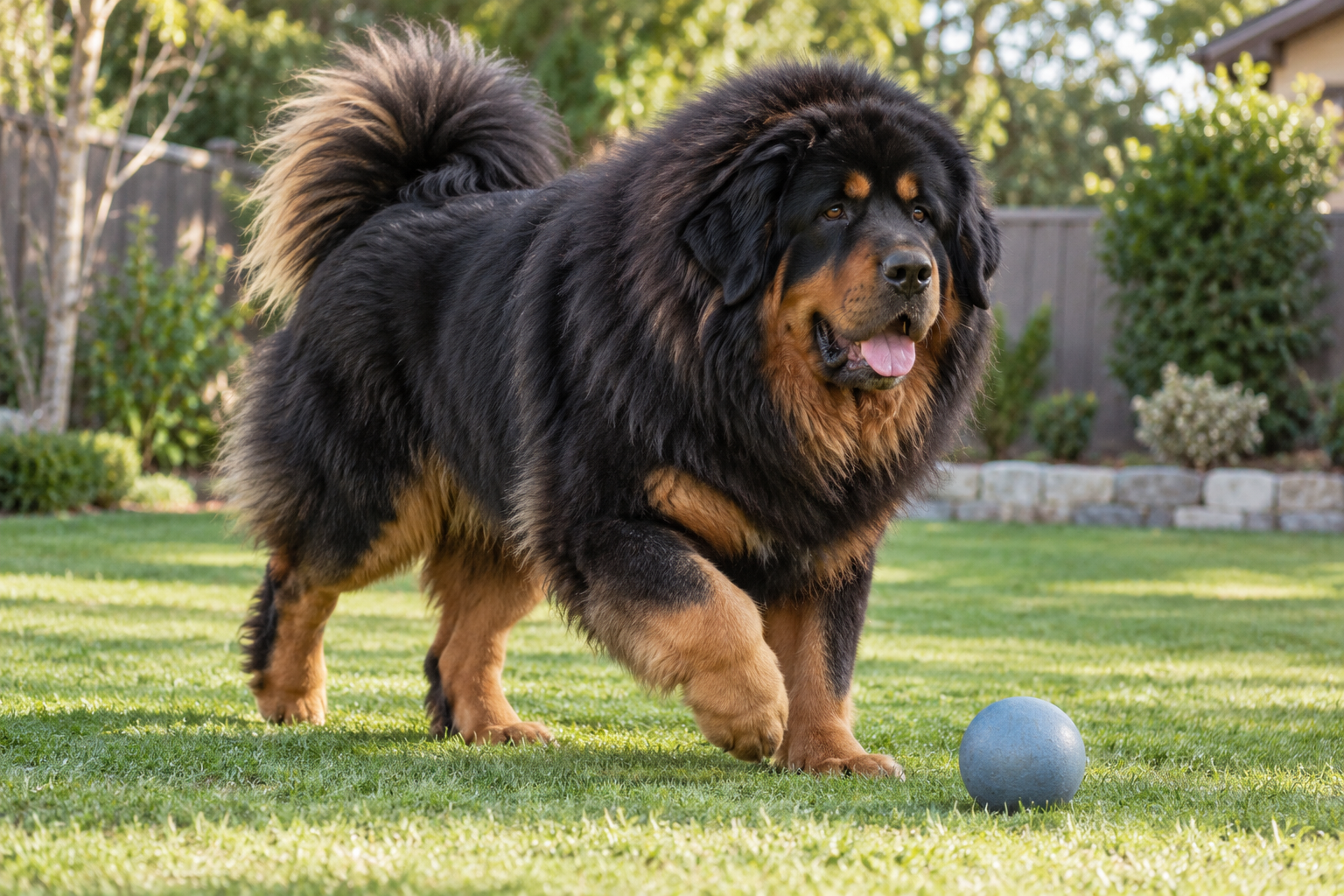
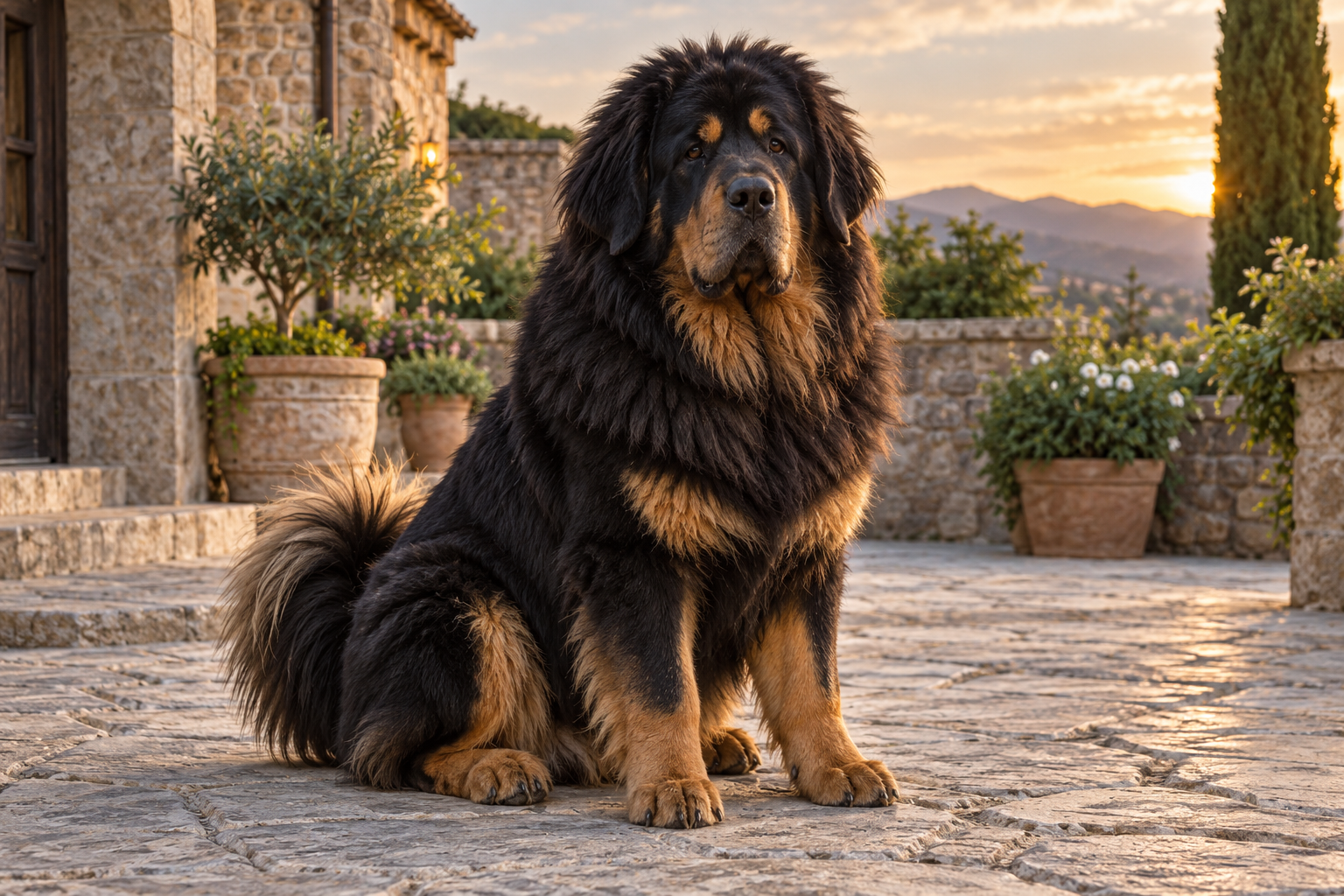
The coat is a thick double coat with a woolly undercoat. Colours include rich black, gold and black and tan, according to Dogs Victoria.
Distinctive Features
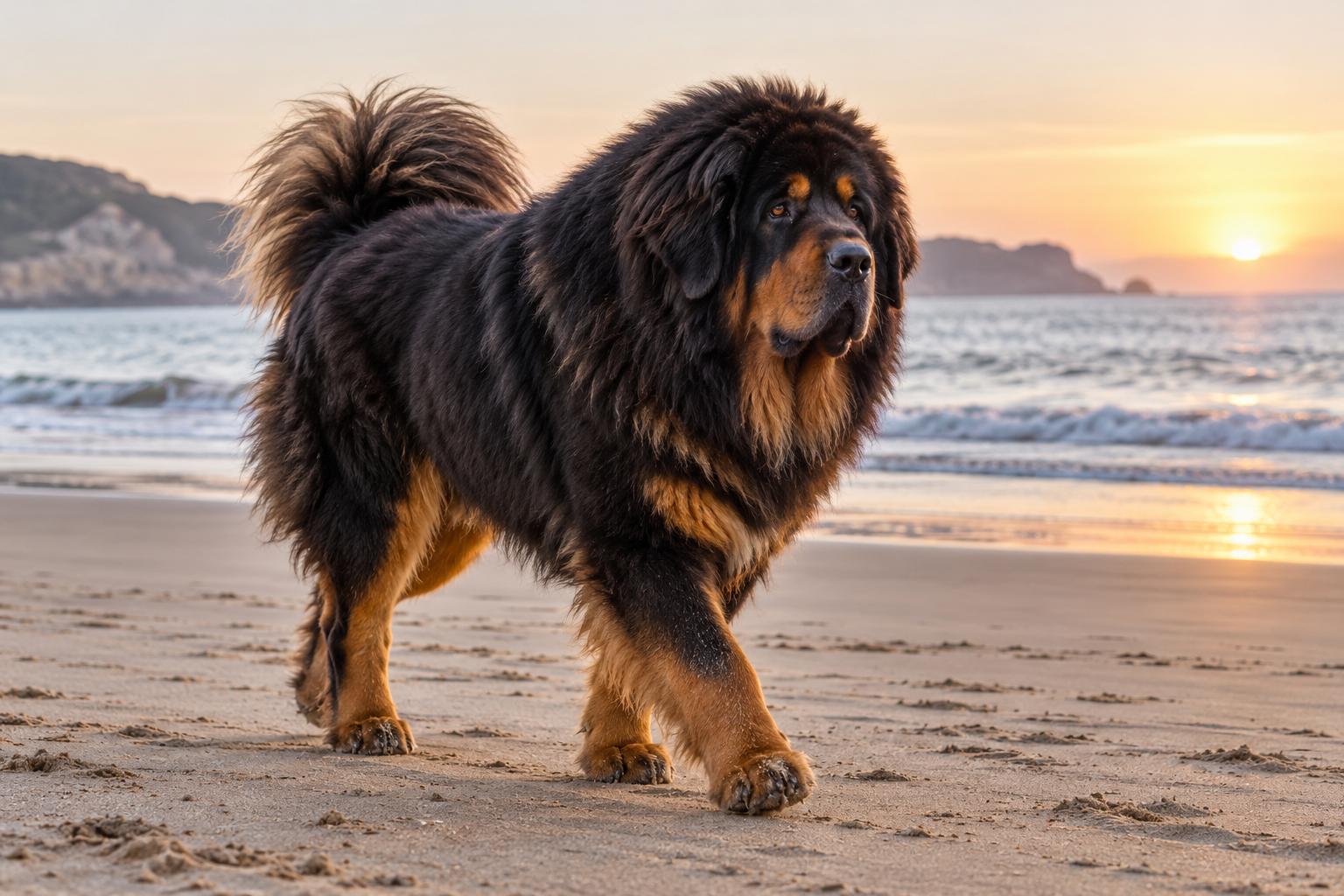
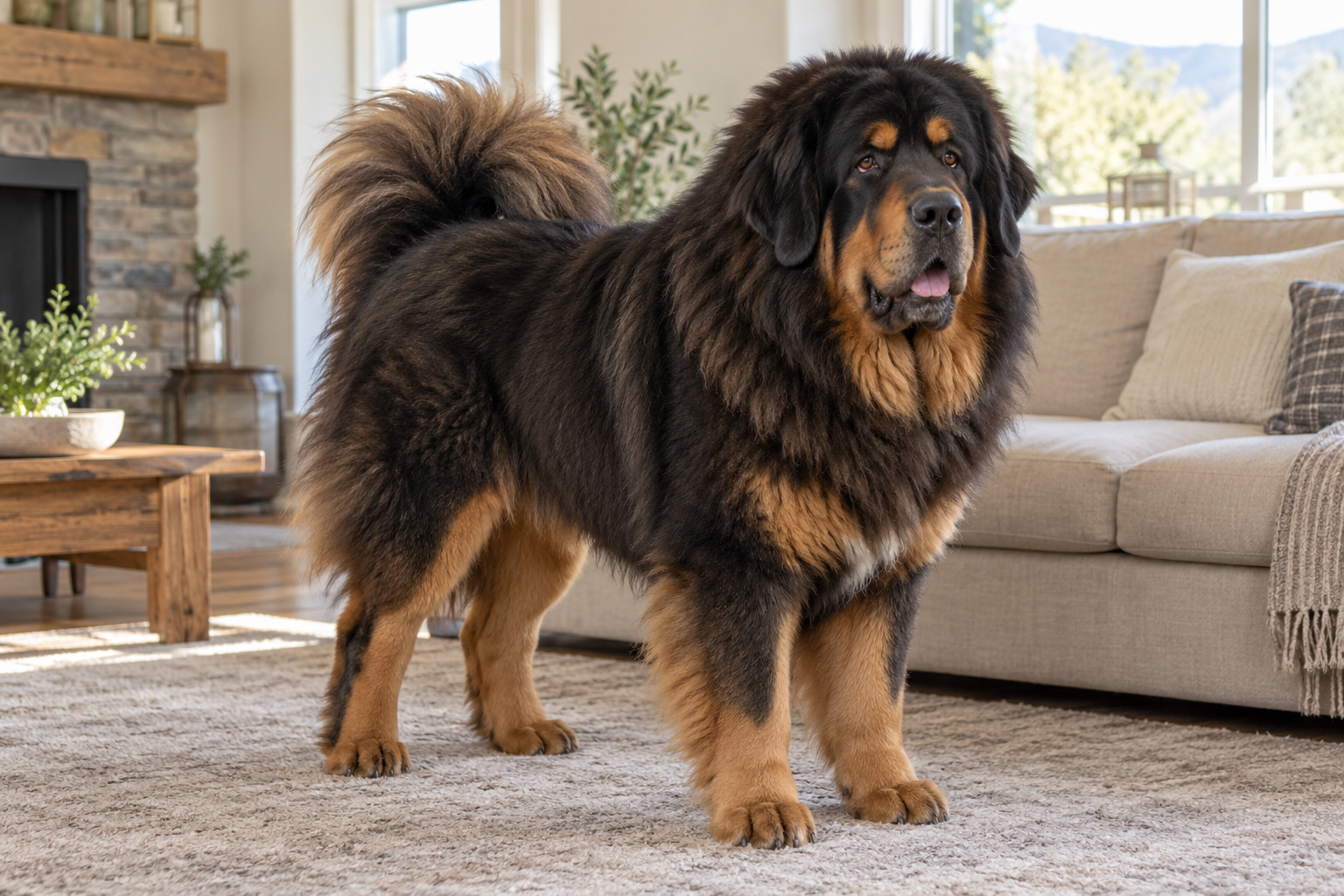
A lion-like mane frames the head and neck, and the tail curls over the back. The expression is serious and watchful.
Gender Differences
Males are larger, heavier and carry a far more pronounced mane than females.
Temperament of the Tibetan Mastiff: Calm, Aloof and Protective
Core Personality Traits
Tibetan Mastiffs are loyal, calm and patient with their family, but independent and slow to mature, often taking several years to settle.
Social Behaviour
The breed is naturally aloof and suspicious of strangers. Visitors need to be introduced carefully, and the dog should never be left to manage the front gate alone.
Guarding Instincts
It was bred to patrol at night, so many Tibetan Mastiffs are most alert after dark. Night barking is common and can cause problems with neighbours.
Common Behavioural Challenges
Territorial guarding, stubbornness, escape attempts and barking are the usual issues. Early socialisation and firm, fair boundaries are essential.
Intelligence and Trainability of the Tibetan Mastiff: Clever but Independent
Intelligence and Learning Ability
The breed is intelligent but was bred to make its own decisions, not to follow commands.
Training Approach
Use calm, consistent, reward-based training in short sessions. Force does not work with a dog of this size and temperament.
Early Socialisation
Dogs Victoria describes early socialisation as extremely important. Puppies need wide, positive exposure to people, dogs and places before adolescence.
Potential Training Challenges
Recall is unreliable, and an adult that decides not to move is very hard to shift. Lead training must start early.
Tibetan Mastiff Family Life: Children, Pets and Households
Living with Children
Many are gentle with children in their own family. Visiting children, rough play and shouting can trigger protective behaviour, so close supervision is essential.
Living with Other Pets
Most accept animals they are raised with, but same-sex dog aggression and intolerance of unfamiliar dogs are possible.
Household Environment
A large, securely fenced property suits the breed far better than a suburban block. Fencing should be high and solid.
Lifestyle Compatibility
The breed suits experienced guardian dog owners on acreage. It is a poor fit for apartments, busy suburbs or first-time owners.
Health of the Tibetan Mastiff: Joints, Thyroid and Heat
Lifespan and Healthy Living
Most Tibetan Mastiffs live around 10 to 12 years, according to Dogs Victoria.
Common Health Conditions
The breed is fairly robust, but owners should be aware of several conditions. It is best to discuss any concerns with a veterinarian.
- Hip and elbow dysplasia, abnormal joint development common in giant breeds.
- Hypothyroidism, an underactive thyroid that can affect coat, weight and energy.
- Canine inherited demyelinative neuropathy (CIDN), a rare inherited nerve disease reported in some lines.
- Heat stress, a real risk for a heavy-coated Himalayan breed in Australian summers.
Genetic Health Testing
The US breed health programme asks for hip and thyroid evaluations and an eye clearance, with elbows recommended. Ask Australian breeders for hip and elbow scores, thyroid results and any history of CIDN in the line.
Preventative Health Care
Keep vaccinations and parasite prevention current, including paralysis tick control, and check the dense coat carefully for ticks.
Caring for the Tibetan Mastiff: Heat, Space and Security
Daily Care Routine
A short walk in the cool of the morning or evening, time patrolling a secure yard and some training make a good day.
Living Environment Requirements
Provide high, solid fencing, deep shade, plenty of water and a cool indoor area.
Climate Sensitivity
This is a cold-climate guardian, and Australian heat is its biggest welfare risk. Air conditioning or a cool room in summer is close to essential in most of the country, and the temperature limits for dogs in Australia should guide every walk.
Caring for Senior Tibetan Mastiffs
Older dogs need softer bedding, lower impact exercise and regular joint and thyroid checks.
Grooming of the Tibetan Mastiff: Managing the Annual Moult
Coat Maintenance
Brush weekly with a slicker and undercoat rake. Dogs Victoria describes a coat with little of the typical big-dog odour.
The Annual Moult
The breed has one major moult in late winter or spring, when the undercoat comes out in clumps. Daily brushing for a few weeks keeps it under control, and understanding the difference between shedding and blowing coat helps owners prepare.
Ear, Nail and Dental Care
Check ears weekly, trim nails every three to four weeks and brush teeth several times a week.
Bathing and Professional Grooming
Bathe a few times a year and dry thoroughly. Never shave the double coat, which helps insulate against heat as well as cold.
Exercise Needs of the Tibetan Mastiff: Moderate and Cool
Daily Exercise Requirements
Around 45 to 60 minutes a day of walking and free movement suits most adults.
Activities Tibetan Mastiffs Enjoy
Steady walks, exploring a large yard and scent games suit the breed better than running or fetch.
Exercise in Australian Conditions
Walk only in the coolest part of the day in summer, and skip walks on hot days. Check for paralysis ticks after bush walks.
Importance of Mental Stimulation
Training and puzzle feeders help a bored guardian, which might otherwise bark or dig.
Feeding the Tibetan Mastiff: Nutrition for a Giant Breed
Nutritional Requirements
Feed a complete diet formulated for large or giant breeds. Many Tibetan Mastiffs eat less than their size suggests.
Feeding by Life Stage
Use a giant breed puppy food for slow, steady growth, and feed adults twice daily.
Portion Control and Weight Management
Keep the dog lean, since extra weight loads the joints and worsens heat stress.
Foods to Avoid
Avoid grapes, sultanas, chocolate, onion, garlic, macadamias, xylitol and cooked bones.
Tibetan Mastiff Price in Australia: The Million-Dollar Myth
The Million-Dollar Myth
The headlines about Tibetan Mastiffs selling for over a million dollars describe a brief Chinese status fad, not normal prices. A dog named Big Splash was reported to have sold for about USD 1.6 million, though even at the time the figure was widely thought to be inflated for marketing. When the market crashed, many dogs were abandoned on the streets of Lhasa.
Puppy Purchase Price
A registered Australian puppy is likely to cost around $3,000 to $8,000. No Australian litter showed a price in September 2026. Petsonline quotes $2,000 to $8,000, and US regional breeder prices run about USD 2,000 to USD 5,000, roughly AUD 3,000 to AUD 7,500.
Import Reality
The breed is legal to import and is not on the federal list of prohibited breeds. Imports must meet Australia's cat and dog import conditions, including an approved country of origin, rabies blood testing, an import permit and at least 10 days in quarantine at Mickleham. Quarantine fees alone run to around $1,900, before flights and vet work.
Ongoing Costs
| Cost | Typical figure (AUD) | Source |
|---|---|---|
| Food | Well above the $91 monthly dog average | Animal Medicines Australia, Pets in Australia 2025 |
| Parasite prevention | Well above the $122 annual average | Animal Medicines Australia, Pets in Australia 2025 |
| Pet insurance | From around $1,461 per year for a large dog | Canstar, prepared March 2026 |
| Annual vet check and booster | From $140 per year | RSPCA NSW |
| Professional grooming | $40 to $200 per visit if used | RSPCA NSW |
Dog-owning households spend about $2,520 a year on average, according to Animal Medicines Australia, and a giant breed costs considerably more. The lifetime cost of owning a large dog is a sensible baseline.
Buying Advice for a Tibetan Mastiff: Breeders, Imports and Patience
Choosing a Responsible Breeder
Buy only from an ANKC-registered breeder who health tests and lets you meet the parents. Working through the right questions for a breeder matters with so few to choose from.
Health Checks Before Purchase
Ask for hip and elbow scores and thyroid results for both parents, and check the temperament of both parents in person.
Questions to Ask the Breeder
- What are the parents' hip, elbow and thyroid results?
- Has CIDN ever appeared in your lines?
- How do the parents behave with visitors?
- How do you keep your dogs cool in summer?
- How long is your waiting list?
- Will you take the dog back at any age if needed?
Red Flags
Be cautious of listings promising "rare red" or "lion head" dogs at inflated prices, unregistered imports and sellers who cannot show health results.
Is the Tibetan Mastiff Right for You? A Rare Guardian for Experienced Owners
Lifestyle Compatibility
The Tibetan Mastiff suits experienced owners with land, high fencing and a way to keep the dog cool. It does not suit apartments, busy suburbs or hot homes without air conditioning.
Time and Care Commitment
Expect several years of patient training, a heavy annual moult and summer heat management, for 10 to 12 years.
Grooming and Health Awareness
Plan for weekly brushing, joint and thyroid checks, and careful heat management.
Ideal Owner Profile
The ideal owner has raised guardian breeds before. Those wanting a gentler, more available guardian may prefer the Great Pyrenees, a calm livestock guardian.
Find Tibetan Mastiff Puppies for Sale
Litters are very rare, so browse puppies for sale on Pups4Sale and contact registered breeders early.
Frequently Asked Questions
Related Breeds
Other working breeds on Pups4Sale.
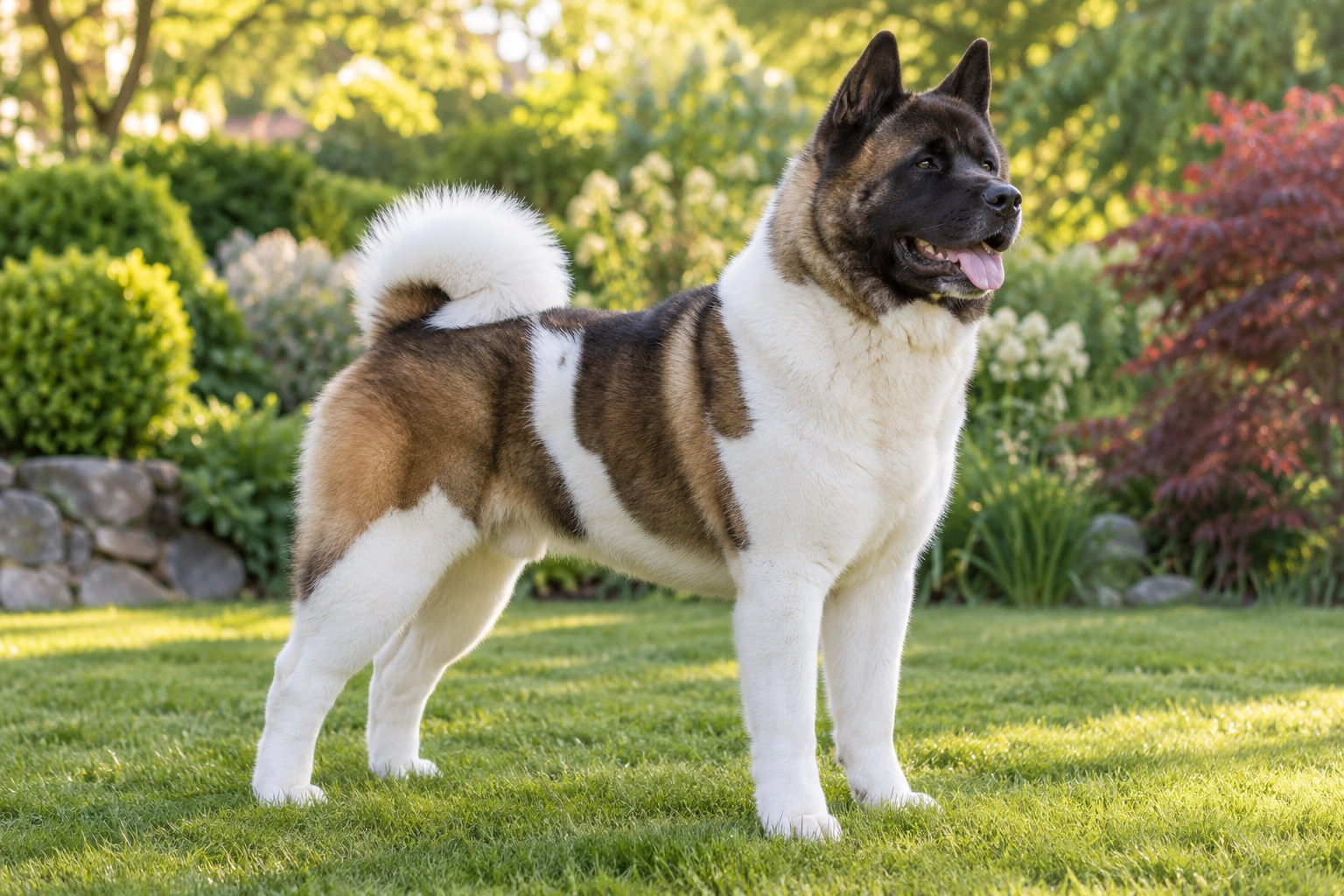 AkitaLarge • Utility (Group 6)
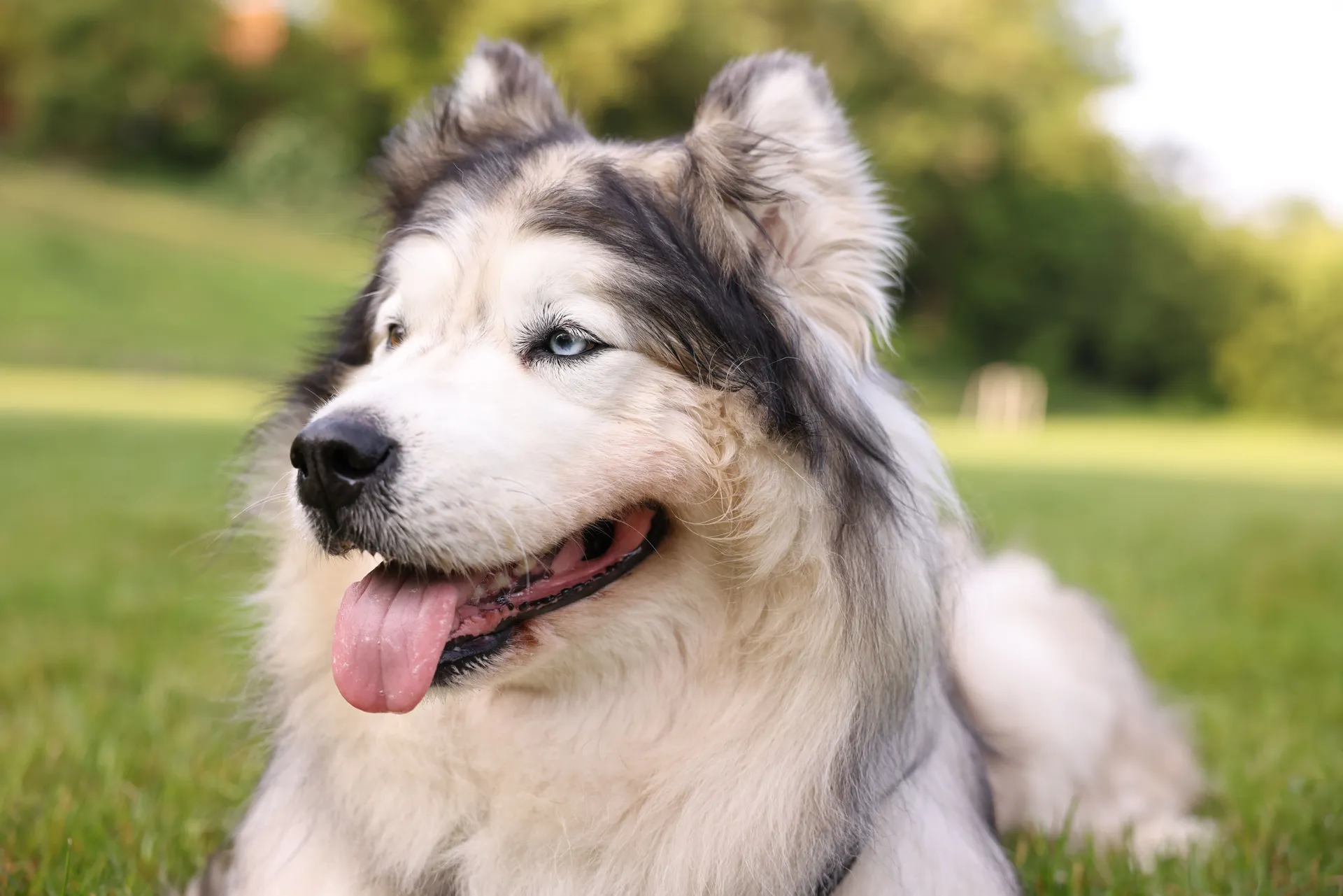 Alaskan MalamuteLarge • Working
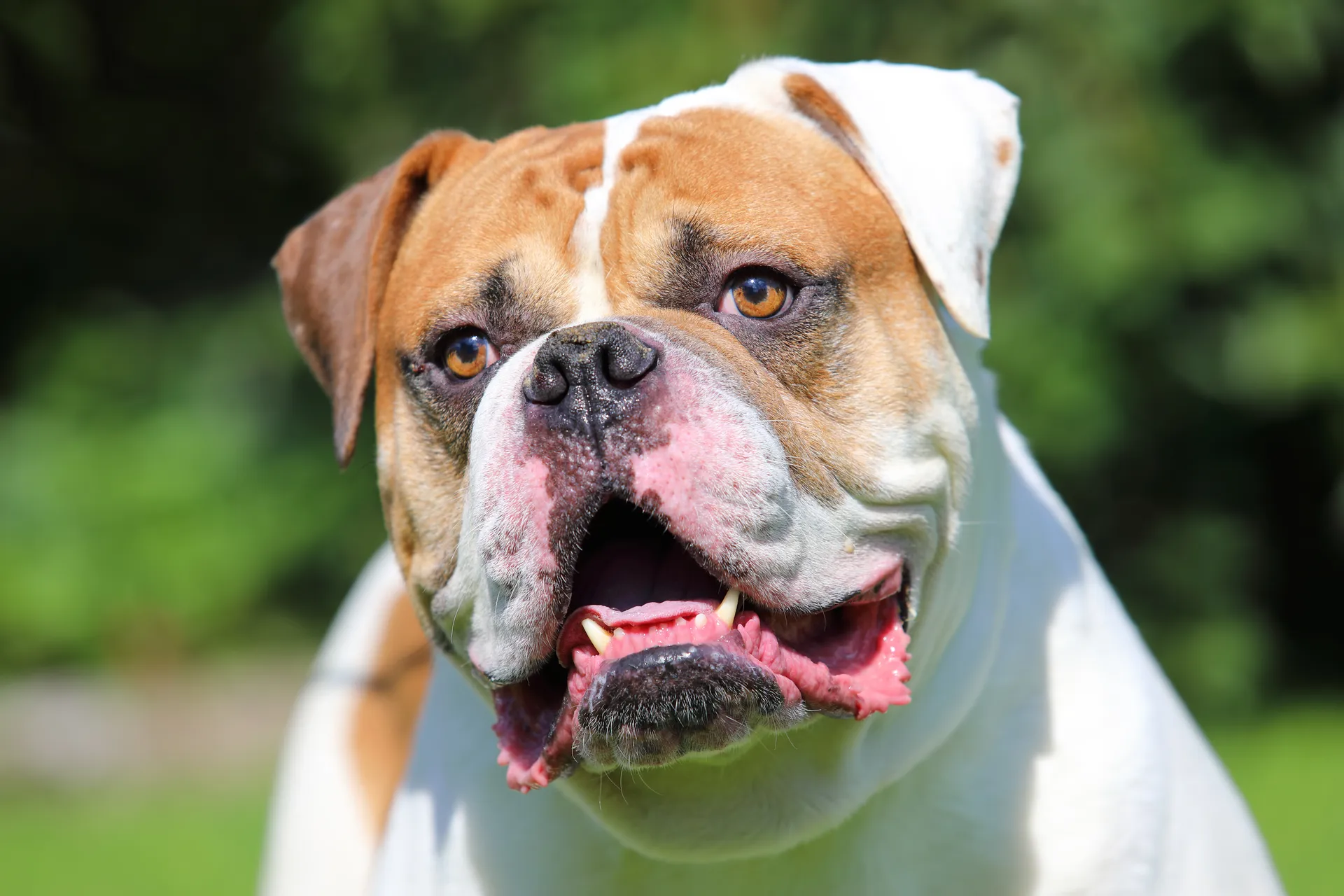 American BulldogLarge • Working
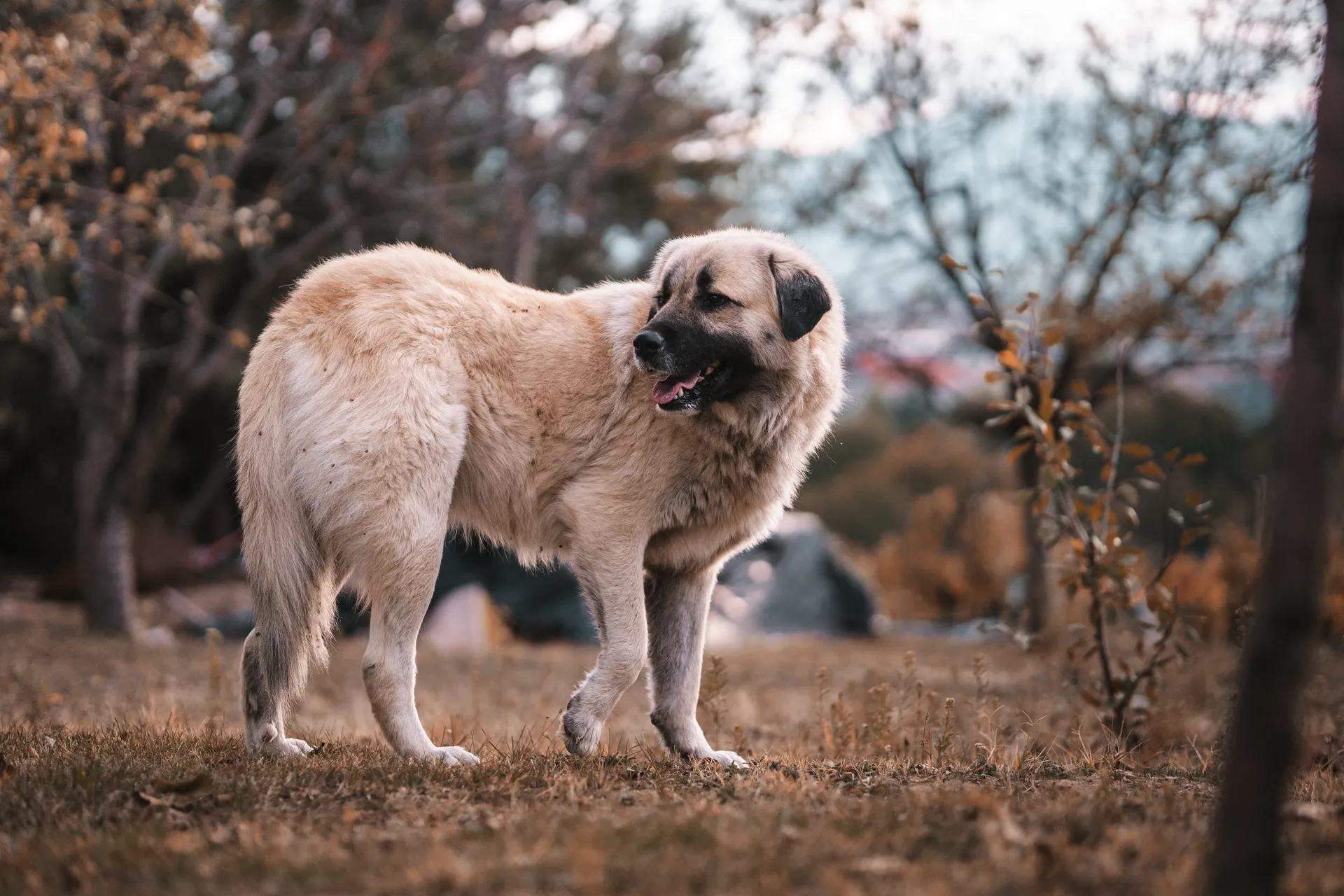 Anatolian Shepherd DogLarge • Working
- Australian ShepherdMedium • Working Dogs
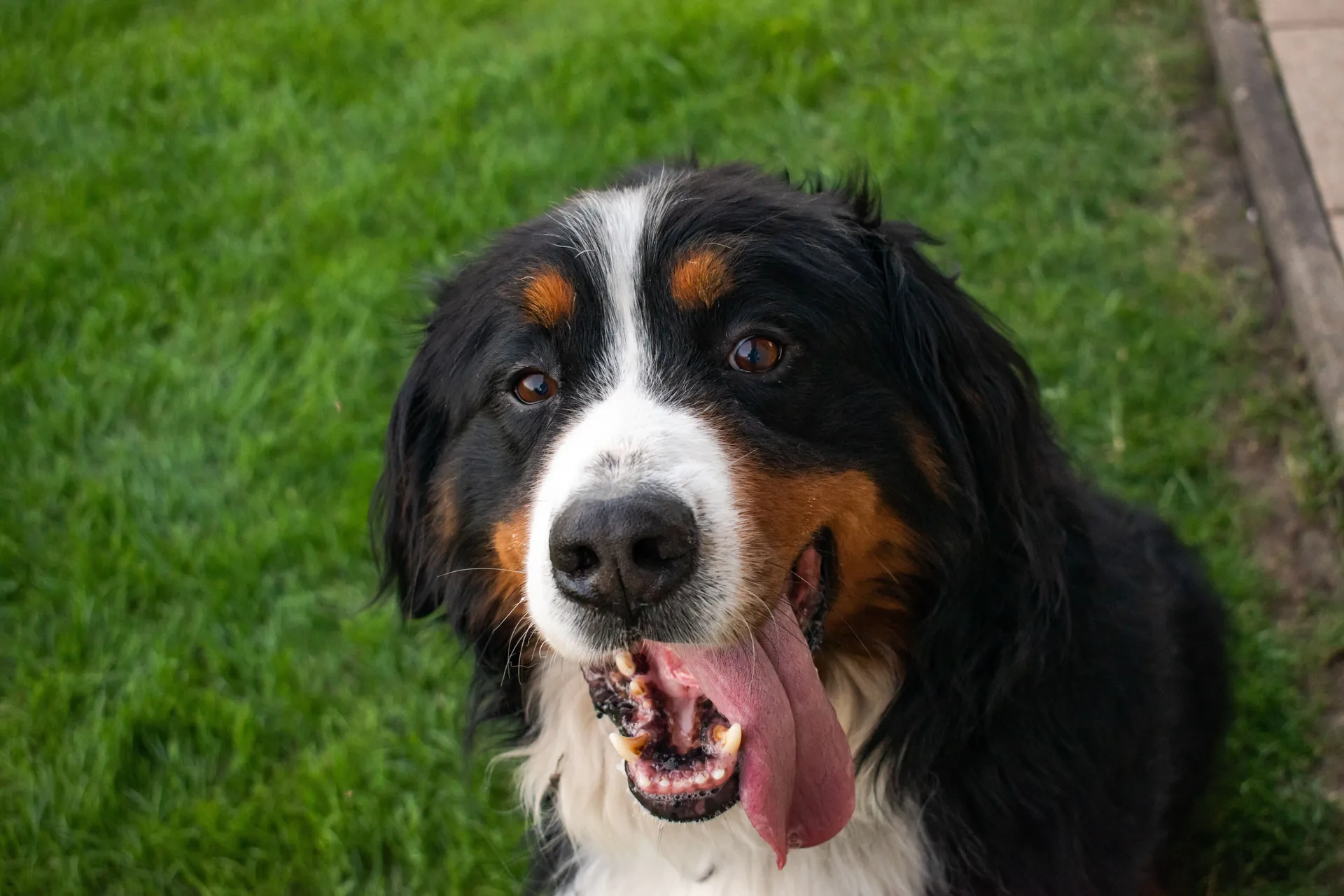 Bernese Mountain DogLarge • Working