Havanese
By James C. • Updated
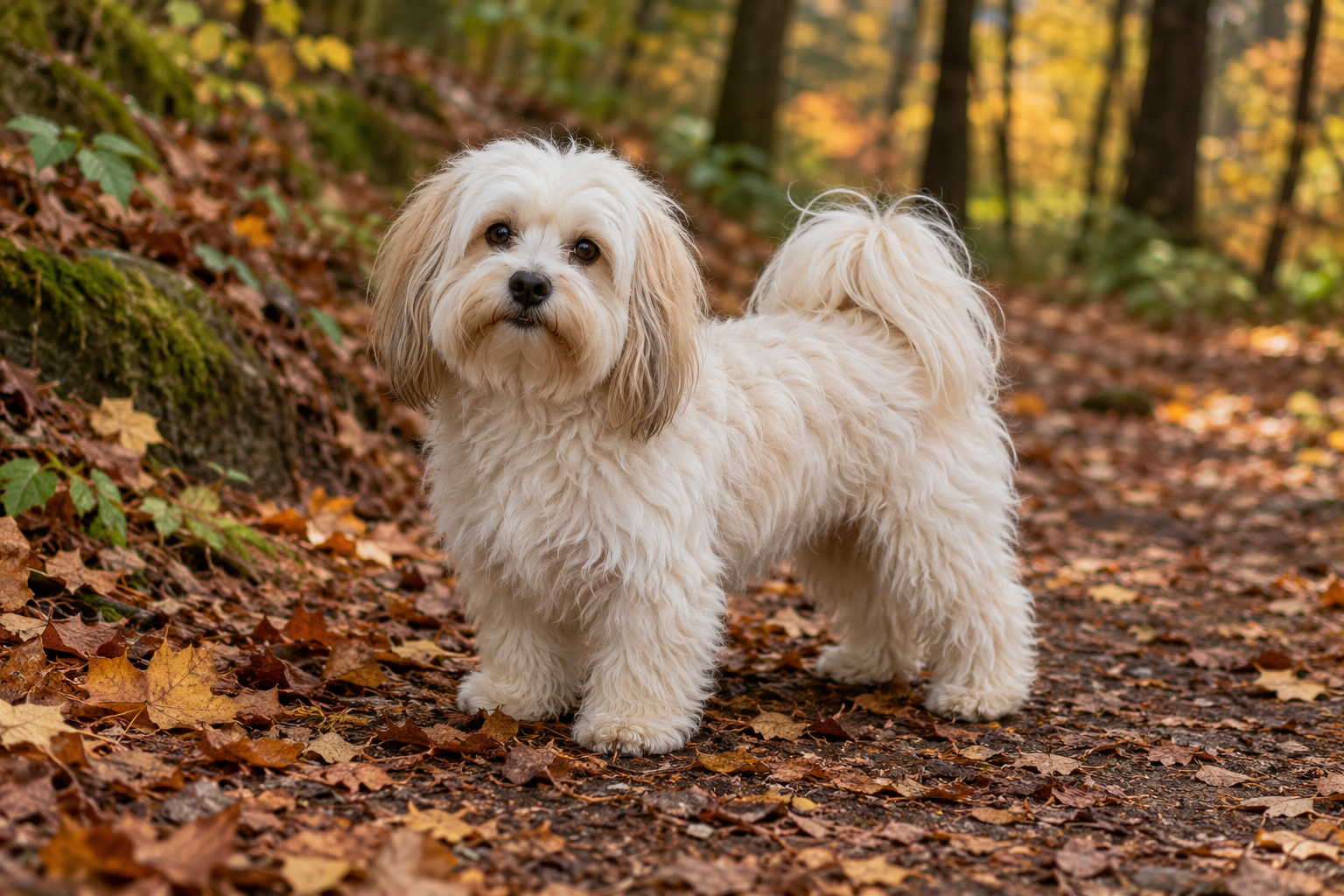
The Havanese is a small, sturdy companion dog of the Bichon family and the national dog of Cuba. It is cheerful, affectionate and playful, bonds closely with its people and is known for a long, soft, silky coat in a wide range of colours. Under the Dogs Australia standard it stands 23 to 27 cm at the withers, and most adults weigh about 3 to 6 kg. The coat sheds little but mats easily, so regular brushing or a short puppy clip is essential. A UK study recorded a median lifespan of 14.5 years, among the longest of any breed.
Breed Overview
Life Span
12 - 15 years
Average Price
AUD 2000 - AUD 3500
Weight
Male: 4 - 6 kg Female: 3 - 5 kg
Height
Male: 23 - 27 cm Female: 23 - 27 cm
Life Expectancy
Male/Female: 12 - 15 years
Breed Group
Toys (Group 1)
Nicknames
Havanese Cuban Bichon, Bichon Havanais, Havana Silk Dog, Havi
Breed Information
The Havanese is a small, sturdy, long-coated companion dog from the Bichon family, and it is the national dog of Cuba. Dogs Australia recognises it in the Toy group. It is a purebred in its own right, descended from Mediterranean Bichon-type dogs taken to Cuba, so it is not a cross of two modern breeds, although it is closely related to the Bichon Frise, Maltese, Bolognese and Löwchen.
Havanese are bright, cheerful and people-focused, with a playful, clownish streak that many owners love. They are small enough for apartments and laps, but sturdier and more athletic than many toy breeds. A full grown Havanese stands 23 to 27 cm and usually weighs 3 to 6 kg, so the fluffy puppy grows into a small, compact adult rather than a large dog.
The breed's two biggest commitments are company and coat. Havanese do not like being left alone for long, and their soft, low-shedding coat mats quickly without regular care. Buyers who plan for both usually find the Havanese one of the easiest and most rewarding small companions to live with.
Characteristics of the Havanese
The Havanese rates very highly for affection, adaptability and suitability with children, while its grooming needs and dislike of being alone are the traits most likely to catch new owners out.
| Trait | Rating | Star Rating | Meaning |
|---|---|---|---|
| Size | Small | ★ | 23 to 27 cm and about 3 to 6 kg, sturdy for a toy breed. |
| Adaptability | High | ★★★★★ | Suits apartments, houses and most family set-ups. |
| Exercise Needs | Low to Moderate | ★★ | Short daily walks and indoor play are usually enough. |
| Easy to Train | High | ★★★★ | Intelligent and eager, though toilet training can be slow. |
| Amount of Shedding | Low | ★ | Loose hair is caught in the coat rather than dropped. |
| Grooming Needs | High | ★★★★ | Brushing several times a week in full coat, or regular clips. |
| Good With Children | Excellent | ★★★★★ | Gentle and playful, but small enough to be hurt by rough play. |
| Health | Good | ★★★★ | Long-lived, with knees, eyes and legs to watch. |
| Cost to Keep | Moderate | ★★★ | Low food costs, but grooming adds up for a long coat. |
| Tolerates Being Alone | Low | ★★ | Bonds closely and can become anxious when left for long periods. |
| Intelligence | High | ★★★★ | Quick to learn tricks, routines and how to get attention. |
History of the Havanese: Cuba's National Dog
The Havanese belongs to the Bichon family of small companion dogs from the Mediterranean. The Dogs Australia breed standard traces the breed to the western Mediterranean coasts of Spain and Italy, and suggests Italian sea captains took these little dogs to Cuba. There they developed into the Havanese, kept as companions in Cuban households.
According to the standard, the common tobacco-brown colour gave rise to a legend that the breed came from Havana, which is not literally the case. The Dogs NSW Havanese profile links the breed to the now extinct Blanquito de la Habana and notes that it is Cuba's national dog.
Political upheaval in Cuba in the twentieth century saw the original bloodlines disappear there. A few dogs were taken to the United States, and their descendants rebuilt the breed, which later spread to Europe and Australia. The standard used in Australia took effect in 2000 and was last updated in 2009, and the breed has grown steadily in popularity here as a small family companion.
Appearance of the Havanese: Small, Sturdy and Silky
Size and Build
The breed standard calls for a height of 23 to 27 cm at the withers, with a tolerance of 21 to 29 cm. It sets no weight, but Hill's Australia gives typical weights of about 4 to 6 kg for males and 3 to 5 kg for females, and Dogs NSW classes the breed as under 11 kg. The body is a little longer than tall, with a springy, lively gait.
Coat and Colours
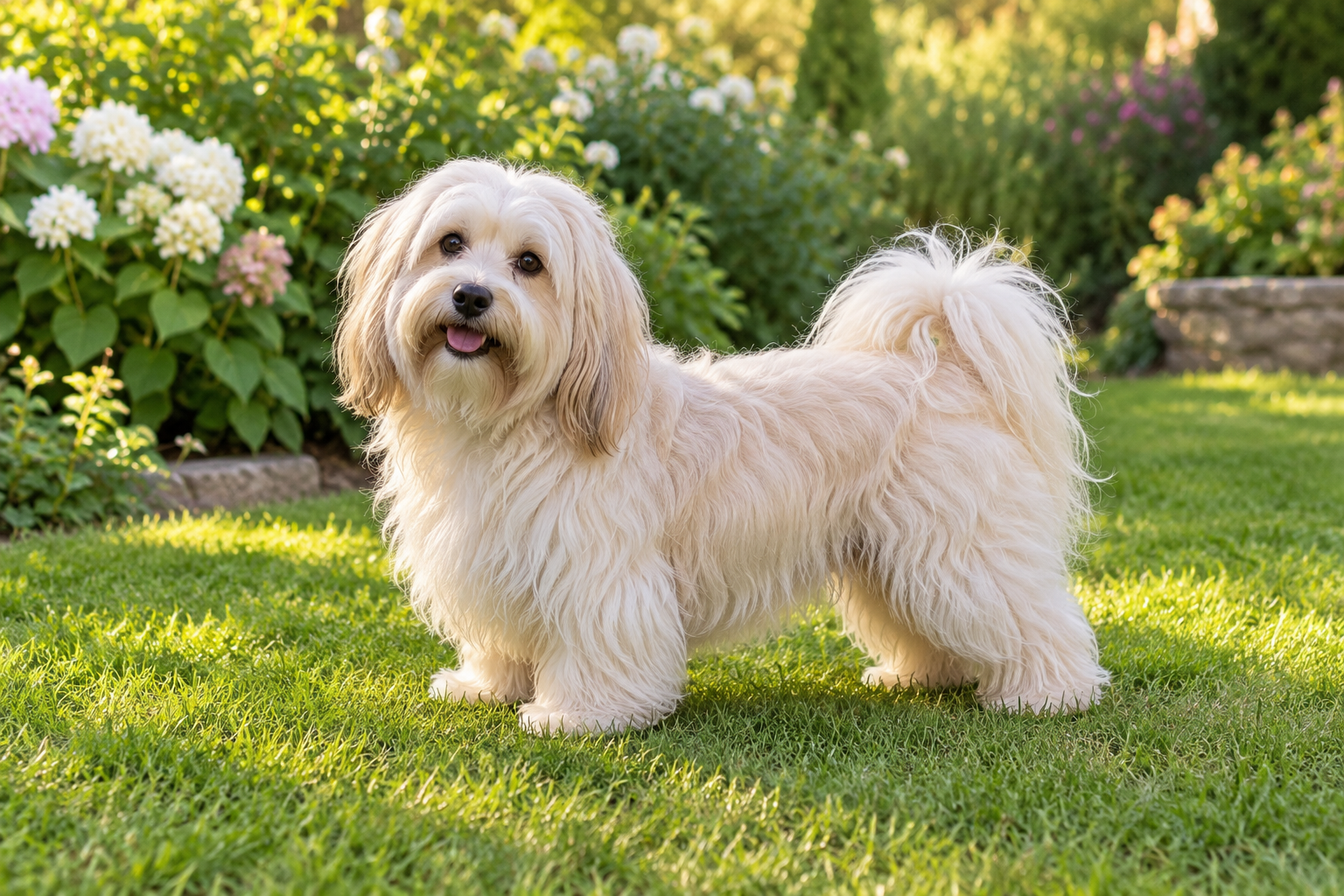
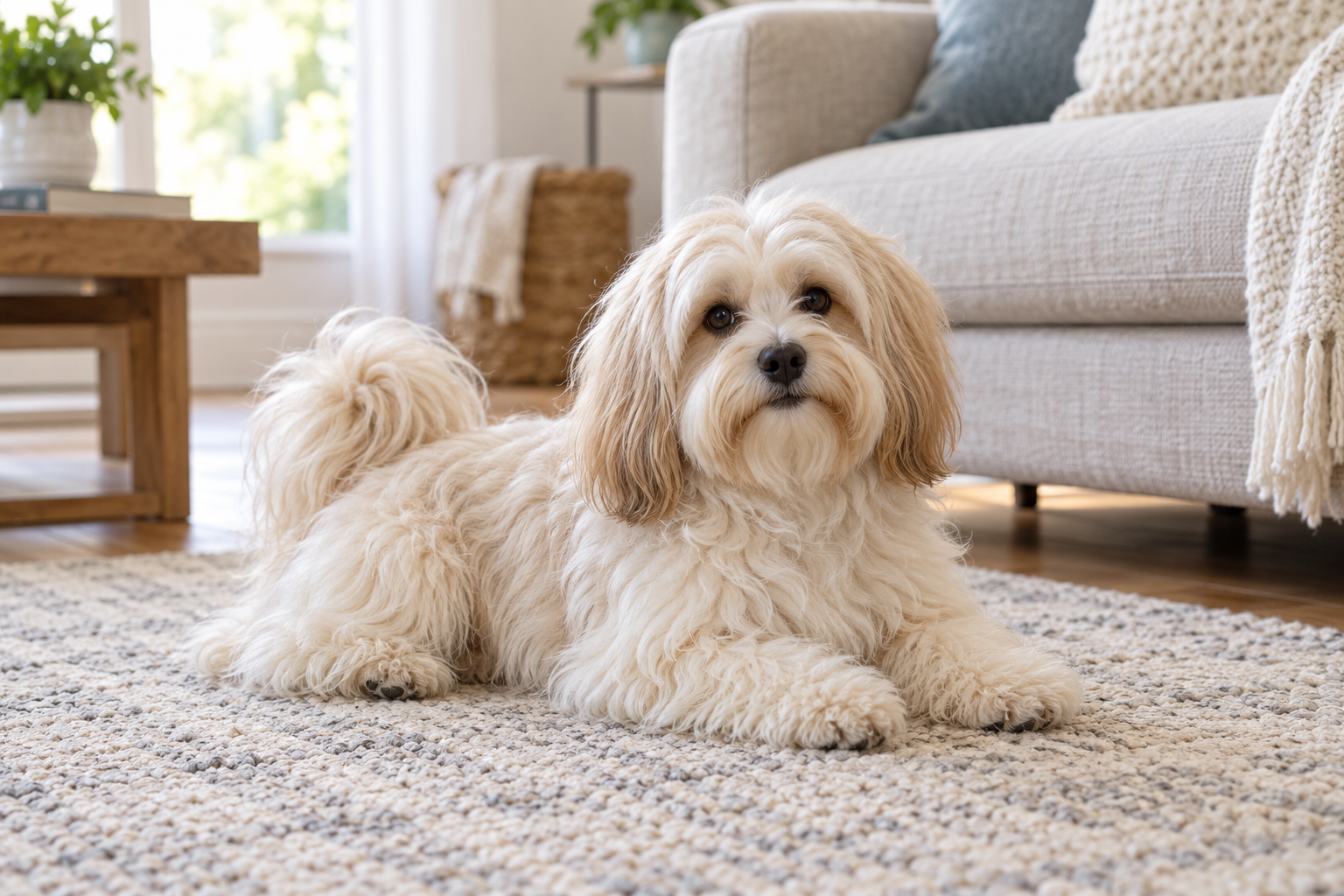
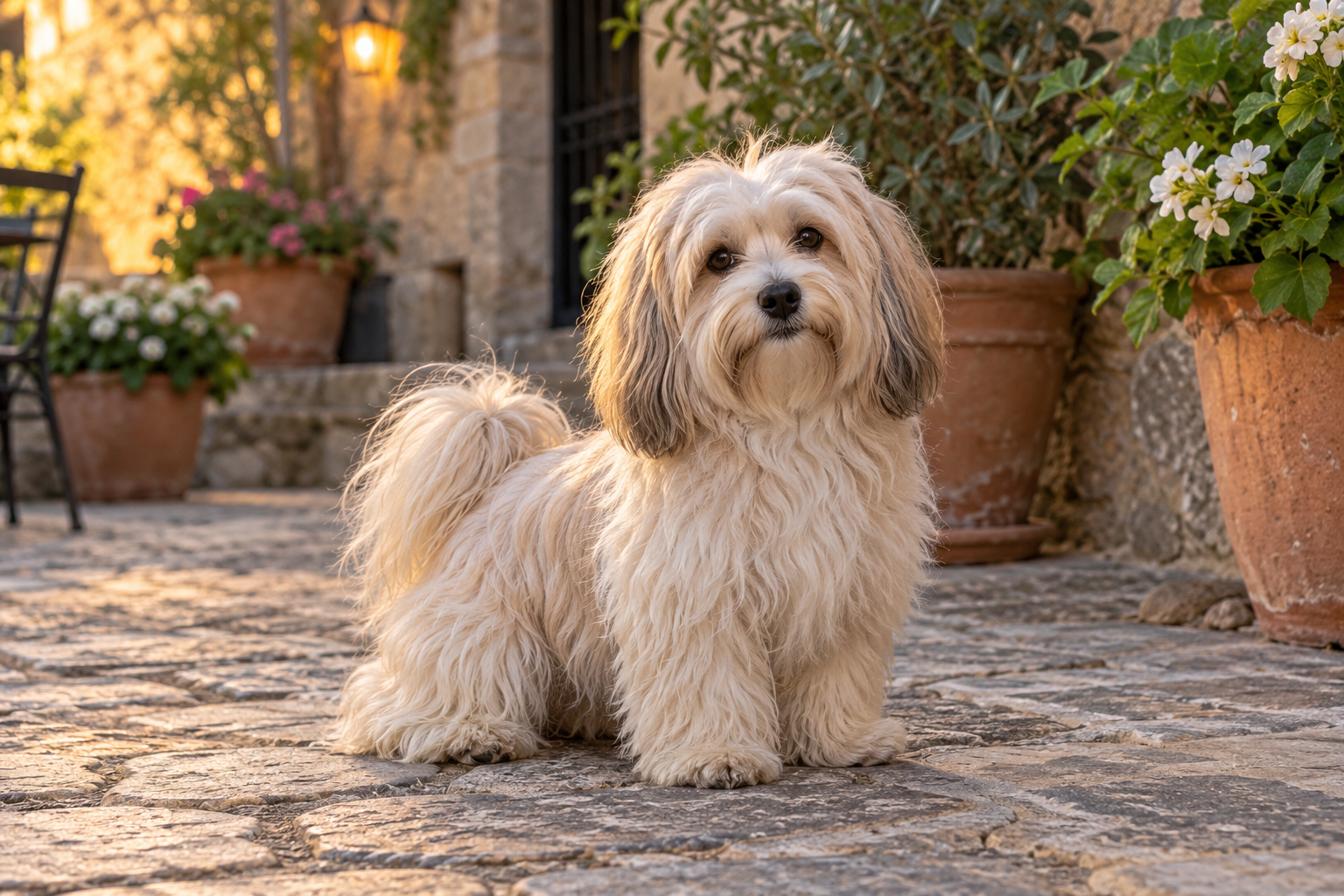
The adult topcoat is long, soft and flat or wavy, reaching 12 to 18 cm, and the undercoat is woolly and often absent. Colours include fawn in various shades, black, havana brown, tobacco and reddish brown, with patches and tan markings allowed and pure white rare. Some puppies are born with a short, smooth coat, often called a short-coated Havanese; these dogs are purebred but do not meet the standard's coat description and are usually sold as pets.
Distinctive Features
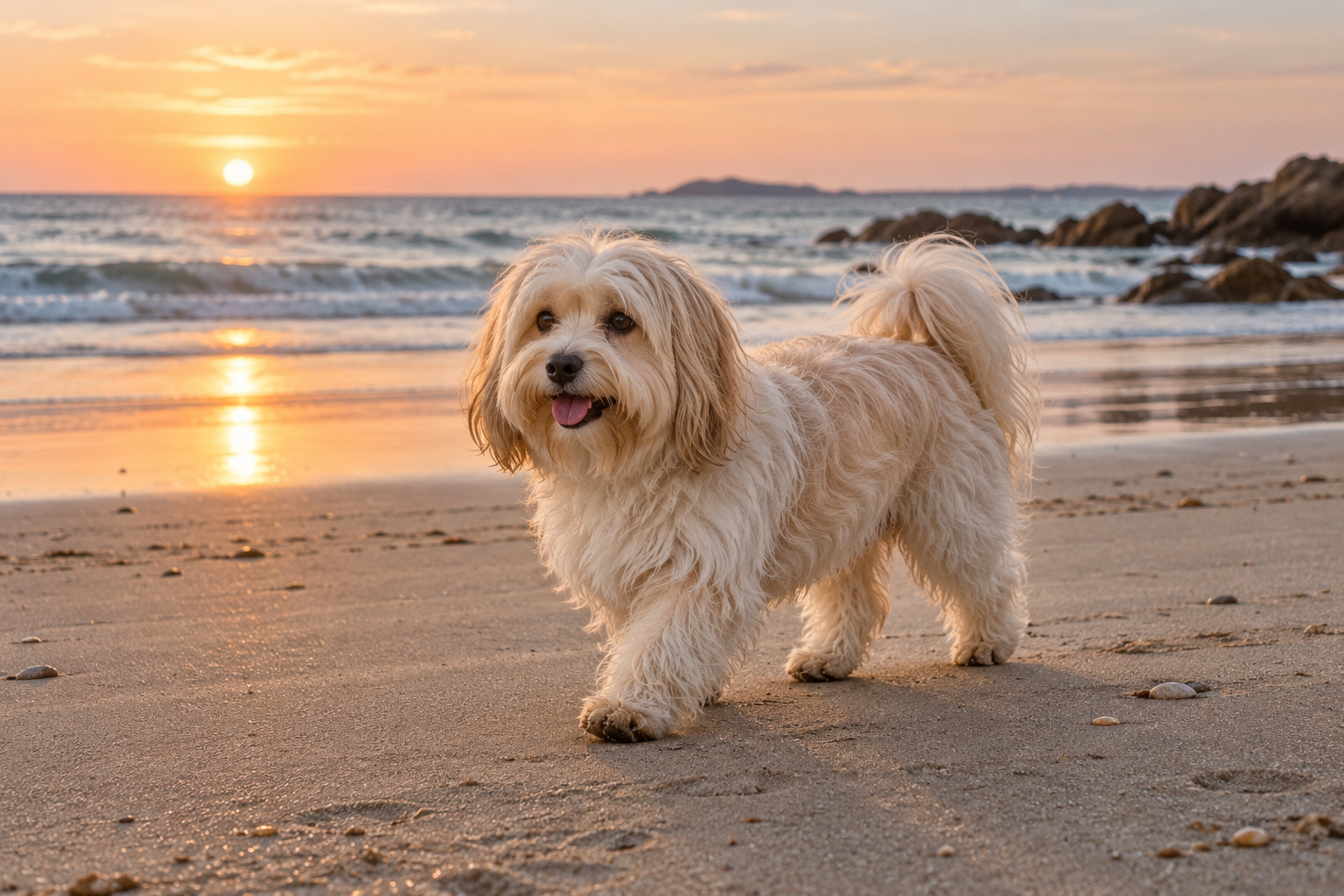
The tail curls over the back with a plume of long hair, and the eyes are large, dark and expressive. The breed's springy movement and slightly short legs give it a bouncy, cheerful look. The face is left natural in the show ring, with only the feet and muzzle lightly tidied.
Gender Differences
Males are often slightly heavier, but the size standard is the same for both sexes. Temperament differences are small, and both make affectionate companions. Choose on the individual puppy and its parents rather than on sex.
Temperament of the Havanese: Cheerful, Affectionate and Playful
Core Personality Traits
The breed standard describes the Havanese as very intelligent, affectionate, cheerful and playful, with a clownish streak and a special fondness for children. Owners describe a happy, sociable dog that wants to be in the middle of family life. Many Havanese greet visitors with a characteristic bouncy, spinning welcome.
Social Behaviour
Most Havanese are friendly with people, children and other pets. Some are a little reserved with strangers at first, but they rarely stay shy for long when well socialised. They are sensitive dogs, so Dogs NSW recommends positive training methods only.
Bonding and Attachment
Havanese bond closely and like to follow their people from room to room, which is why they are often called Velcro dogs. That attachment makes them delightful companions for people who are home a lot. For households that are empty all day, it can tip into distress.
Common Behavioural Challenges
Separation distress and alert barking are the two most common complaints. A Havanese left alone for long hours may bark, whine or chew, and recognising the early signs of separation anxiety in dogs helps you act before habits form. The standard notes the breed is easy to train as an alarm dog, so many bark at the door or at noises outside. Toilet training can also be slower than in larger breeds.
Intelligence and Trainability of the Havanese: Bright and Eager to Please
Intelligence and Learning Ability
Havanese are quick learners that enjoy tricks, games and attention. Historically they performed in circuses, and many still love to show off. They also learn quickly what gets a reaction, so reward the behaviours you want to see.
Training Approach
Short, positive sessions using food and play work best. Harsh corrections upset this sensitive breed and slow progress. Teach a "quiet" cue early, reward calm behaviour at the door and practise handling for grooming from the first week.
Early Socialisation
Expose your puppy to people, children, other dogs, traffic and household noises, and to brushing, bathing and the groomer's table. Include short, positive periods alone in a crate or pen from early on, so being alone becomes normal.
Potential Training Challenges
Toilet training is the most common challenge, as it is in many small breeds. Following a consistent puppy toilet training timeline with frequent trips outside and plenty of praise helps. Barking and attention-seeking can develop if a Havanese learns that noise brings company.
Havanese Family Life: Living with Children, Pets, and Households
Living with Children
Havanese are generally excellent with children and enjoy gentle play. Because they are small, young children must be taught to sit on the floor to hold the dog and never to pick it up and drop it. Supervise play with toddlers to keep both dog and child safe.
Living with Other Pets
Most Havanese live happily with cats and other dogs, especially when raised with them. Take care with large, boisterous dogs, which can injure a small dog in play. Pet birds and small animals usually cause few problems with this gentle breed.
Household Environment
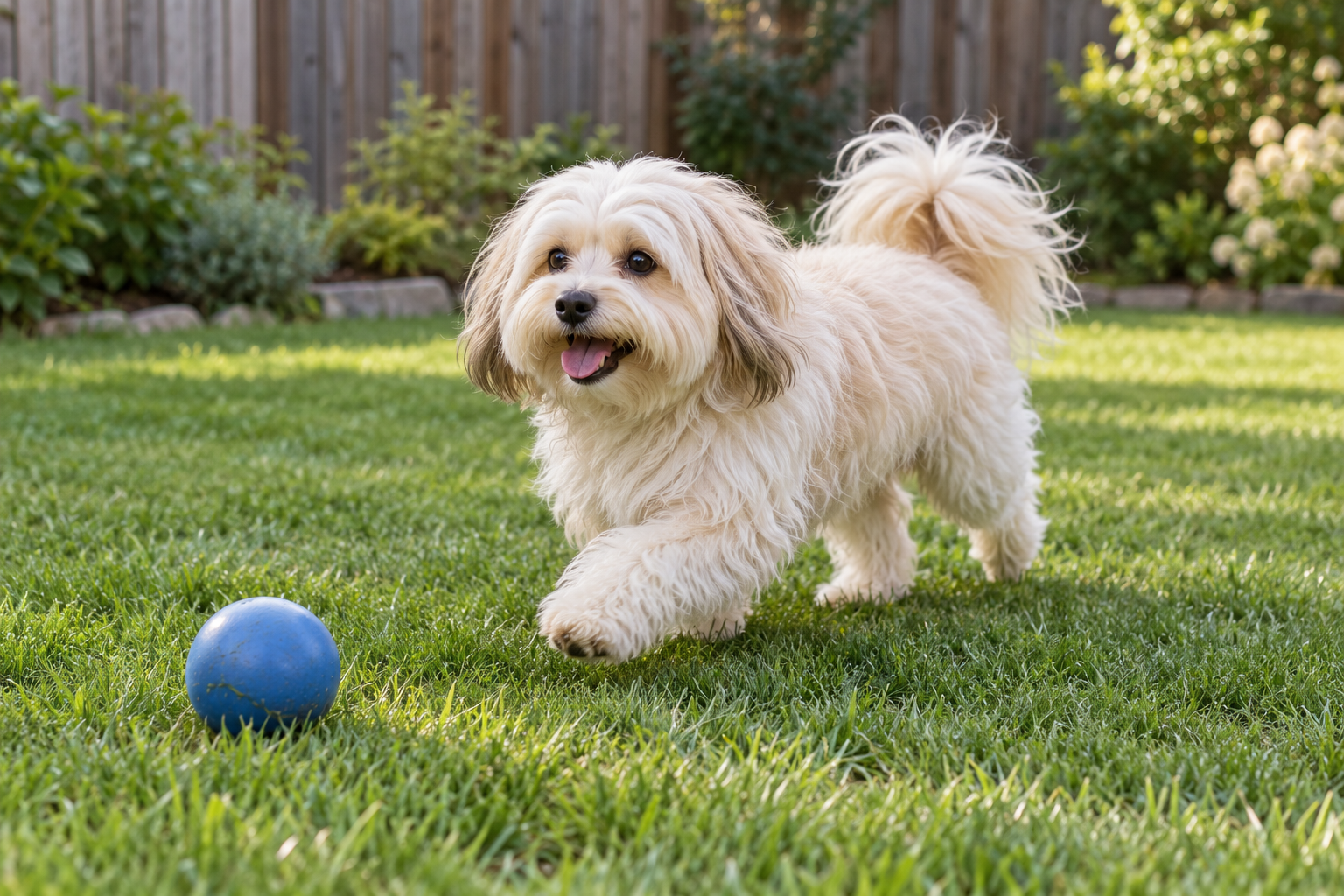
The Havanese suits apartments, townhouses and houses alike, as long as it lives indoors with the family. A small secure yard is useful for toileting and play. Its long coat collects leaves, burrs and grass seeds, so many owners keep outdoor areas tidy or choose a shorter clip.
Lifestyle Compatibility
The breed suits families, retirees, people who work from home and first-time owners willing to groom. It suits households that are empty all day, and owners who want a low-maintenance coat without clipping, poorly. Its moderate exercise needs make it a good fit for less active owners.
Health of the Havanese: Knees, Eyes, Legs and Lifespan
Lifespan and Healthy Living
The Havanese is one of the longest-lived breeds. Dogs NSW gives a life expectancy of approximately 12 to 15 years, and a 2024 UK study found a median lifespan of 14.5 years for the Havanese, based on 381 dogs. Keeping your dog lean, active and up to date with dental care helps it reach those years in good health.
Common Health Conditions
Owners should be aware of several conditions that can be associated with the breed. The International Partnership for Dogs Havanese breed health summary names luxating patella as the most important hereditary problem, alongside cruciate ligament rupture, heart disease, eye disease and portosystemic shunt. It is best to discuss any concerns with a veterinarian.
- Patellar luxation. A kneecap that slips out of place, causing skipping or lameness. Swedish insurance data in the same summary show patella problems almost twice as often as across all breeds.
- Cataracts and other eye disease. Cataracts, cherry eye and distichiasis are listed, and eye examinations are recommended for breeding dogs.
- Chondrodysplasia and disc disease. The breed's short legs come from chondrodysplasia, which can cause front-leg curvature and joint problems, and a second gene variant, CDDY, increases the risk of disc herniation.
- Heart disease. Cardiac screening is among the tests Dogs NSW lists for dedicated breeders.
- Portosystemic shunt. An abnormal blood vessel that bypasses the liver, which can cause poor growth or neurological signs in young dogs.
Genetic Health Testing
The Dogs NSW profile says dedicated breeders test hips and elbows, eyes, patellas and cardiac health. The breed health summary adds DNA tests for chondrodysplasia (CDPA), chondrodystrophy (CDDY) and factor VIII deficiency, a bleeding disorder. Ask to see results for both parents, and look for parents with straight front legs that are not exaggeratedly short.
Preventative Health Care
Keep vaccinations current and use year-round flea, worm, heartworm and tick prevention, including paralysis tick cover on the east coast, where ticks hide easily in a long coat. Brush teeth daily if you can, since small breeds are prone to dental disease. Annual vet checks, plus a knee and eye check, catch most problems early.
Caring for the Havanese: Daily Care and Living Environment
Daily Care Routine
A typical day includes a couple of short walks, indoor play, a quick brush or comb and a wipe around the eyes. Feed two or three small meals and keep fresh water available. Most of all, a Havanese needs company for much of the day.
Living Environment Requirements
Provide a warm, comfortable indoor bed, a crate or pen for rest and safety, and a secure yard or balcony area. Puppy-proof the home, since small dogs can squeeze through gaps and are easily stepped on. Non-slip surfaces help protect the knees.
Climate Sensitivity
A long, dark coat can make a Havanese uncomfortable in humid Queensland and New South Wales summers. Walk early or late on hot days, provide shade, cool surfaces and water, and consider a shorter puppy clip for summer. Never leave a Havanese in a parked car, and watch for heavy panting or lethargy as signs of heat stress.
Caring for Senior Havanese
Older Havanese often stay playful but may develop cloudy eyes, stiff knees or dental problems. Keep walks gentle, provide ramps or steps to furniture and book twice-yearly vet checks from around ten years. A shorter coat is often easier for older dogs and their owners.
Grooming of the Havanese: Full Coat or Puppy Clip
Coat Maintenance
The Havanese coat sheds little but mats quickly, and matting is the breed's most common grooming problem. Dogs NSW notes that matting is common and daily grooming is required for a long coat, and Hill's recommends brushing and combing three or more times a week. Work in sections down to the skin with a pin brush and a metal comb, and follow a grooming routine for silky-coated dogs to stay ahead of tangles.
Puppy Cut Versus Full Coat
Show dogs are kept in full, untrimmed coat, but most pet owners choose a puppy clip of a few centimetres all over every six to eight weeks. A clip cuts brushing time dramatically and is cooler in summer, while a full coat is beautiful but needs real dedication. Many owners grow the coat in winter and clip it shorter for summer.
Ear, Nail, and Dental Care
Check ears weekly for wax and debris, and keep the hair around the ear opening tidy. Trim nails every three to four weeks and the hair between the pads. Brush teeth daily or several times a week, since dental disease is common in small dogs.
Bathing and Professional Grooming
Bathe every three to four weeks with a gentle shampoo and conditioner, and always brush out tangles before bathing, since water tightens mats. Dry thoroughly. Clean the corners of the eyes daily, as Dogs NSW advises, and tips on preventing tear stains help keep light-coloured faces clean.
Exercise Needs of the Havanese: Short Walks and Lots of Play
Daily Exercise Requirements
Havanese need modest exercise. The Dogs NSW profile suggests about 20 minutes a day and warns never to over-exercise a Havanese of any age. Two short walks plus indoor play suit most adults, and many enjoy more if it is offered.
Activities Havanese Enjoy
Fetch, trick training, short sniffing walks, puppy classes, rally and agility all suit the breed. Many Havanese love learning tricks and performing for their family. Gentle games of chase in a secure yard burn off energy quickly.
Exercise by Life Stage
Puppies need short play sessions and plenty of rest, with no long walks or jumping from furniture while joints are developing. Adults enjoy steady daily walks. Seniors benefit from shorter, gentler outings on soft ground.
Importance of Mental Stimulation
Mental work matters as much as walks for this bright breed. Food puzzles, snuffle mats, short training sessions and new tricks keep a Havanese busy and reduce attention-seeking barking. On hot days, indoor games are the safest option.
Feeding the Havanese: Nutrition and Diet Needs
Nutritional Requirements
A complete, balanced diet formulated for small breeds suits most Havanese. Small kibble sizes are easier to chew, and a good diet supports the long, silky coat. Your vet can help choose a food and portion for your dog.
Feeding by Life Stage
Feed puppies three to four small meals a day until about four months, then three meals until six months, then two meals for life. Very small puppies should not go too long without food. Move to adult food around ten to twelve months, as advised by your vet.
Portion Control and Weight Management
Small dogs gain weight quickly from treats and table scraps. Weigh food, count treats and check the ribs under the coat, since a long coat hides weight gain. Extra weight adds strain to knees already at risk of patellar luxation.
Foods to Avoid
Never feed grapes, sultanas, chocolate, onions, garlic, macadamias or anything containing xylitol, and avoid cooked bones. Fatty scraps can upset a small dog's stomach. Dental chews sized for small dogs can help with tooth care.
Havanese Price in Australia: Purchase Cost and Ongoing Expenses
Puppy Purchase Price
Expect to pay about $2,000 to $3,500 for a Havanese puppy in Australia. On 18 October 2026, Dogz Online listed 42 breeders and eight current Havanese litters, all with price on request. That month, purebred puppies on Gumtree's Havanese listings in Queensland asked $2,000 to $3,000, and earlier Dogz Online litters in New South Wales, Queensland and Victoria asked $1,800 to $3,500.
The Dogz Online Havanese cost guide quotes $2,000 to $5,000 for puppies, $1,200 to $3,500 for young dogs, $700 to $2,000 for adults or retired show dogs and $250 to $900 for rescue adoption. In the UK, Pets4Homes estimates an average of about £1,053, roughly AUD 2,100, which supports the lower end of the Australian range.
A Havapoo or Havoodle is a cross, not a Havanese. Havanese crossed with Poodles were advertised on Gumtree at $1,600 to $3,200 in October 2026, often described as low shedding. They can be lovely dogs, but they are not purebred, and coat type, size and health testing vary more widely.
Initial Setup Costs
RSPCA NSW puts first-year setup costs for a dog at about $60 to $80 for microchipping, $280 to $420 for vaccinations, $350 to $650 for desexing, $40 to $100 for a collar, lead or harness, $100 to $200 for a bed and about $170 for puppy school. For a Havanese, add a pin brush, a metal comb, detangling spray and a small crate or pen.
Ongoing Monthly Costs
| Cost | Typical figure (AUD) | Source |
|---|---|---|
| Food | At the lower end of the $600 to $1,000 annual estimate, given a 3 to 6 kg dog | RSPCA NSW |
| Flea and worming | $200 to $250 per year | RSPCA NSW |
| Heartworm prevention | Up to $250 per year | RSPCA NSW |
| Professional grooming | $40 to $200 per visit, every six to eight weeks in a clip | RSPCA NSW |
| Pet insurance | Around $1,580 per year for a small dog, accident and illness | Canstar, 2026 |
| Annual vet check and booster | From $140 per year | RSPCA NSW |
Canstar's 2026 average for small dog accident and illness cover is around $1,580 a year. With patellar luxation and eye disease both possible, cover taken out while the puppy is young, before anything becomes pre-existing, is worth considering.
Long-Term Financial Commitment
Animal Medicines Australia's Pets in Australia 2025 survey puts average spending by dog-owning households at about $2,520 a year. A Havanese eats little, but regular professional grooming can bring it close to that average. Over a 12 to 15 year life, knee surgery, eye treatment and dental care are the costs most likely to push the total higher.
Buying Advice for a Havanese: Choosing a Healthy Puppy
Choosing a Responsible Breeder
Choose a breeder registered with their state Dogs Australia body who health tests, raises puppies in the home and answers questions openly. Good breeders keep puppies until at least eight weeks, start them on handling and grooming and ask about your routine and time at home. Be cautious of breeders who mostly sell Havanese crosses alongside purebreds.
Health Checks Before Purchase
Meet the mother and check that she is friendly and in good condition. Look for a bright, outgoing puppy with clear eyes, clean ears, straight front legs and sound movement without skipping on a back leg. Ask for vaccination, worming and microchip records, and check the microchip matches the paperwork.
Questions to Ask the Breeder
- Have both parents had patella, eye and cardiac checks?
- Can I see hip and elbow results for the parents?
- Have the parents been DNA tested for CDPA, CDDY and factor VIII deficiency?
- Do the parents have straight front legs?
- Has there been any liver shunt or early cataract in the line?
- Is the puppy on the main or limited register?
- What is your breeder identification number?
- Will you take the dog back at any stage if needed?
Considering Adoption
Adult Havanese occasionally come up through breed rescue, breeder rehoming or retired show dogs, and Dogz Online puts rescue adoption at around $250 to $900. An adult lets you see coat type, temperament and how the dog copes alone. Treat any advertisement asking for payment before you have met the dog with caution.
Is the Havanese Right for You? A Cheerful Companion That Wants Company
Lifestyle Compatibility
The Havanese suits families, retirees, apartment dwellers and people who work from home.
It suits households that are empty all day poorly.
Time and Care Commitment
Exercise needs are modest, but company and coat care are not.
That commitment runs for 12 to 15 years or more.
Grooming and Health Awareness
Brush several times a week in full coat, or book a puppy clip every six to eight weeks.
Ask for patella, eye and cardiac checks, and look after the teeth.
Ideal Owner Profile
The ideal owner is home a lot, enjoys a sociable dog and is happy to groom.
First-time owners often do well with this adaptable breed.
Find Havanese Puppies for Sale
If the breed suits your household, you can browse puppies for sale on Pups4Sale and contact breeders directly.
Ask about health testing and whether the puppy is purebred before paying a deposit.
Frequently Asked Questions
Related Breeds
Other toy breeds on Pups4Sale.
 Italian GreyhoundSmall • Toys
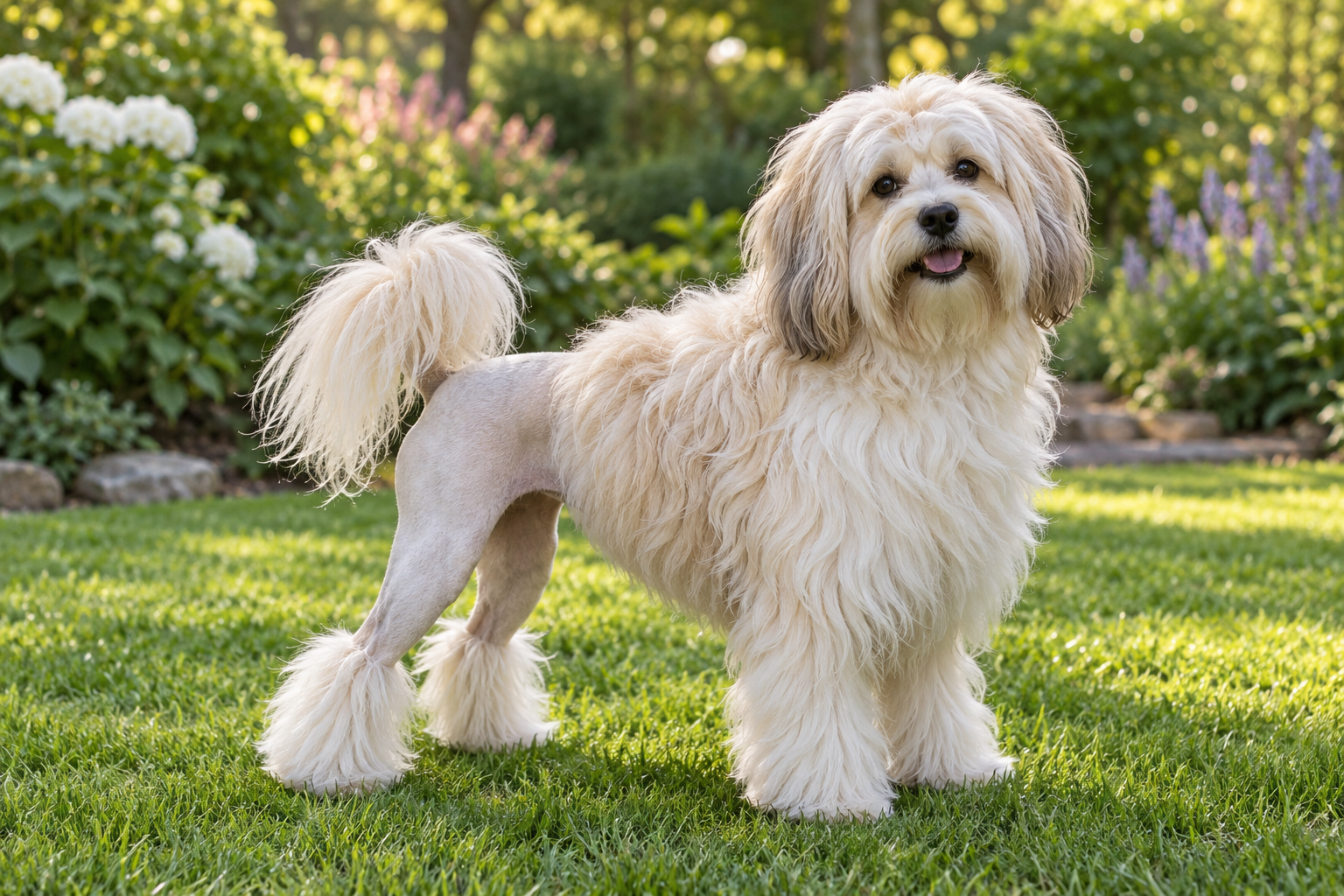 LowchenSmall • Toy (Group 1)
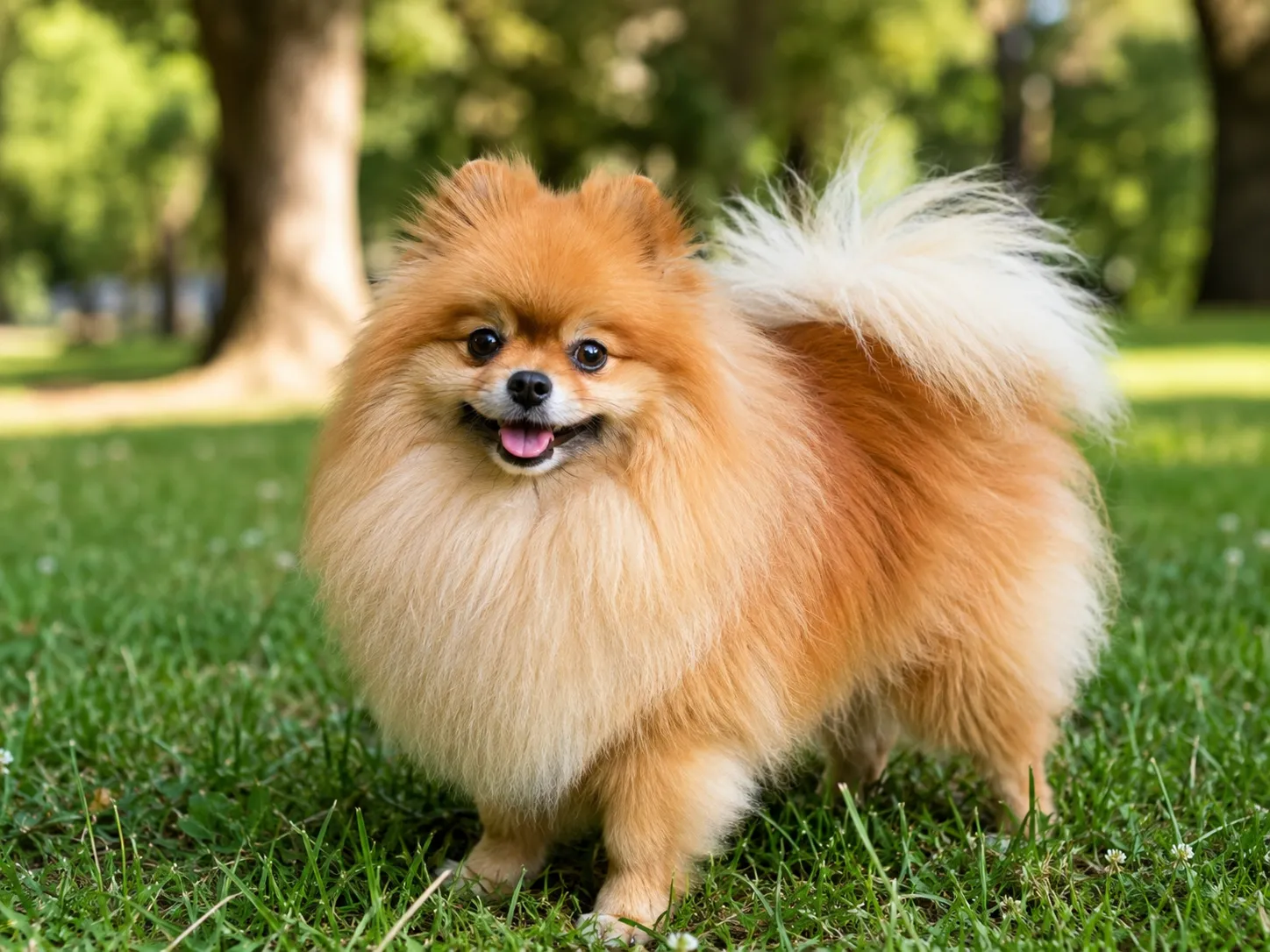 PomeranianSmall • Toy
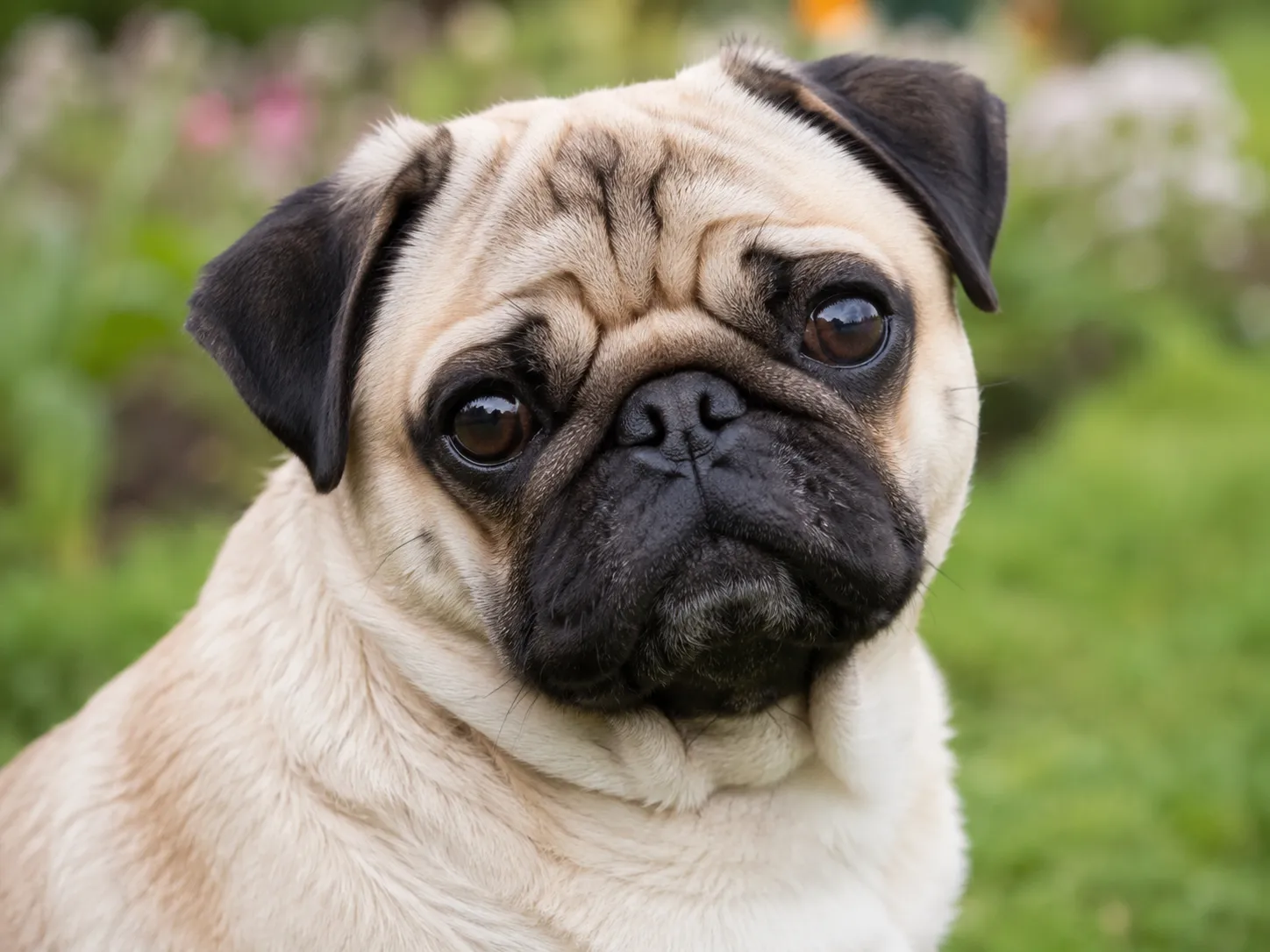 PugSmall • Companion
 Shih TzuSmall • Toy
 Yorkshire TerrierSmall • Toy (Group 1)