Boston Terrier
By James C. • Updated
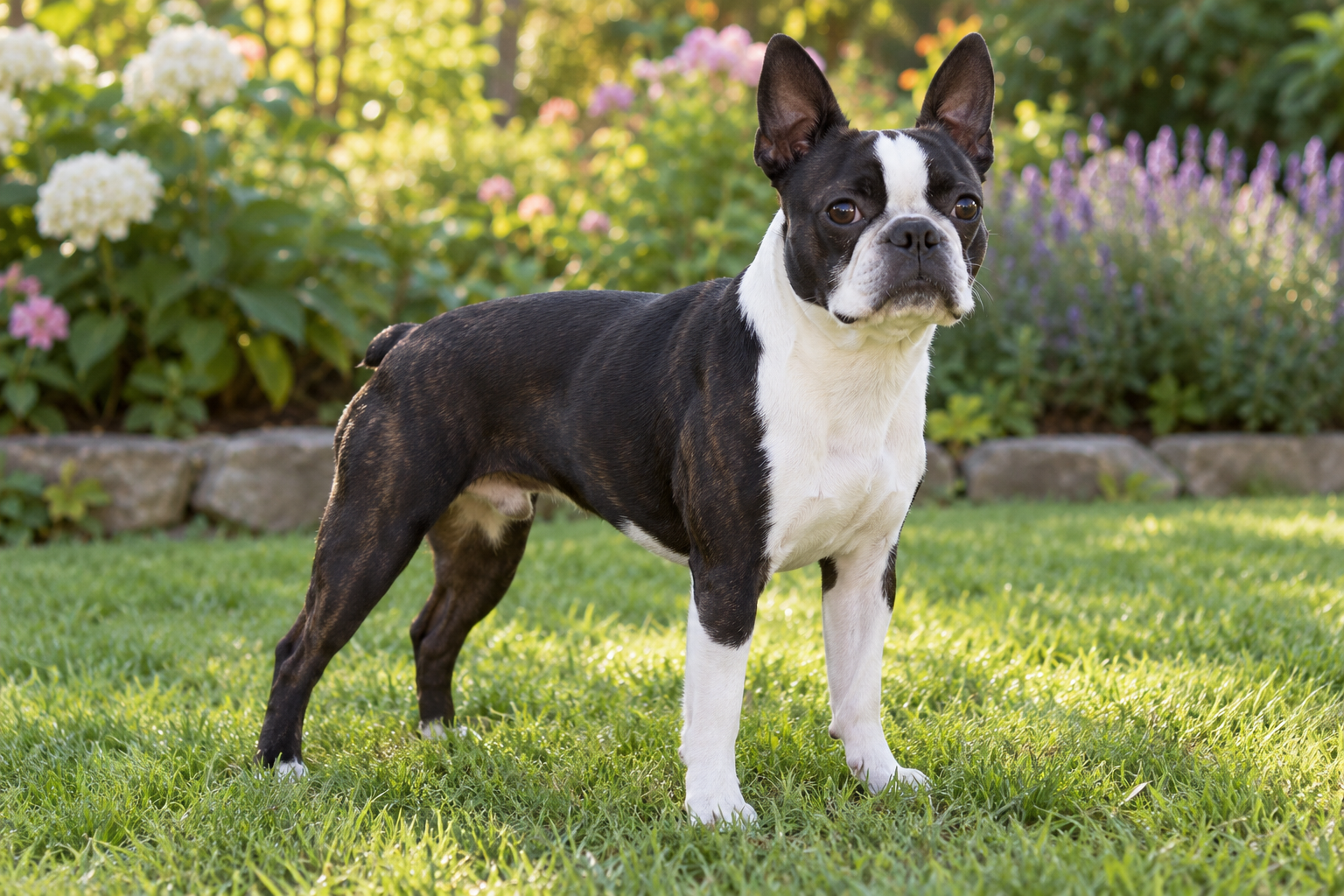
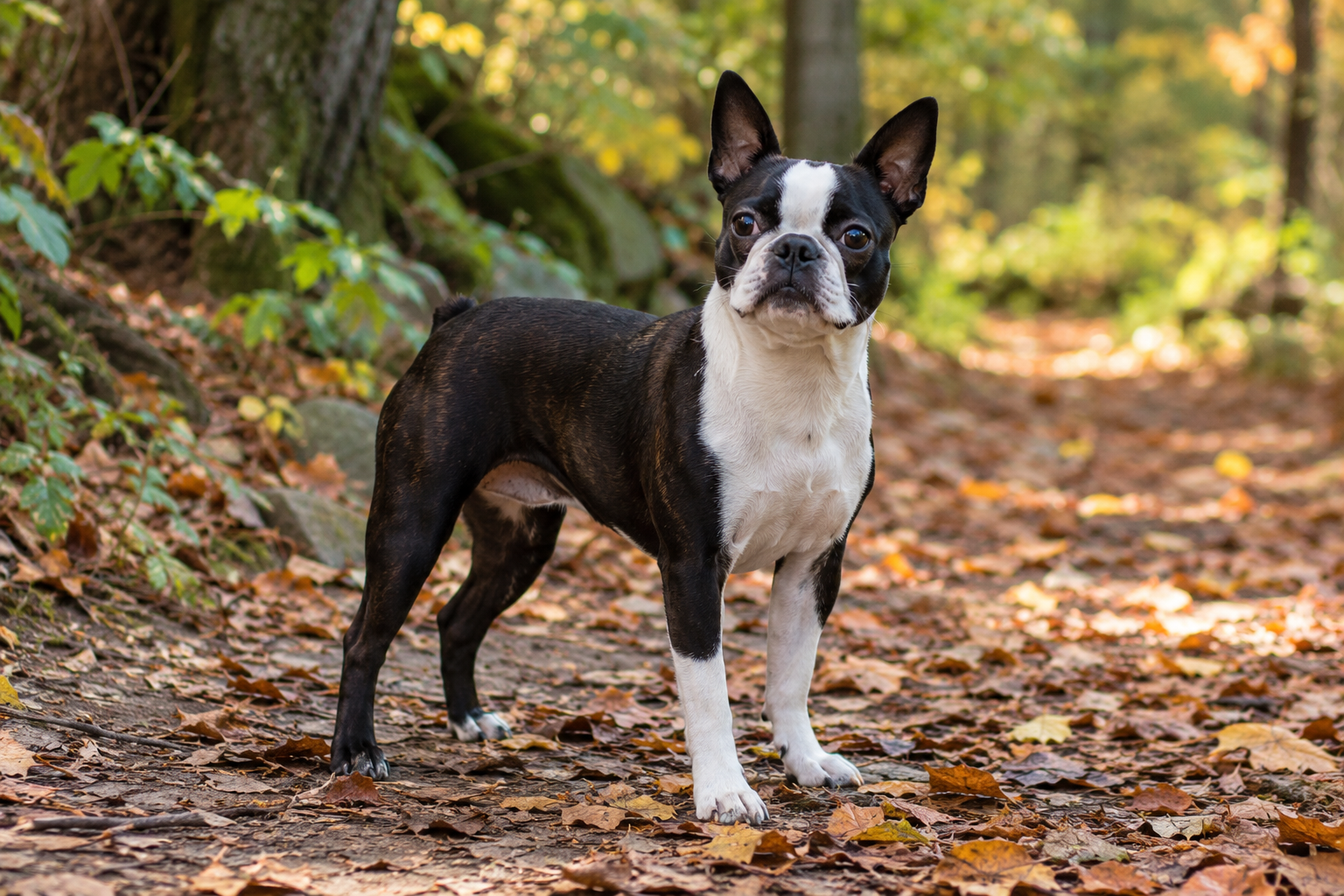
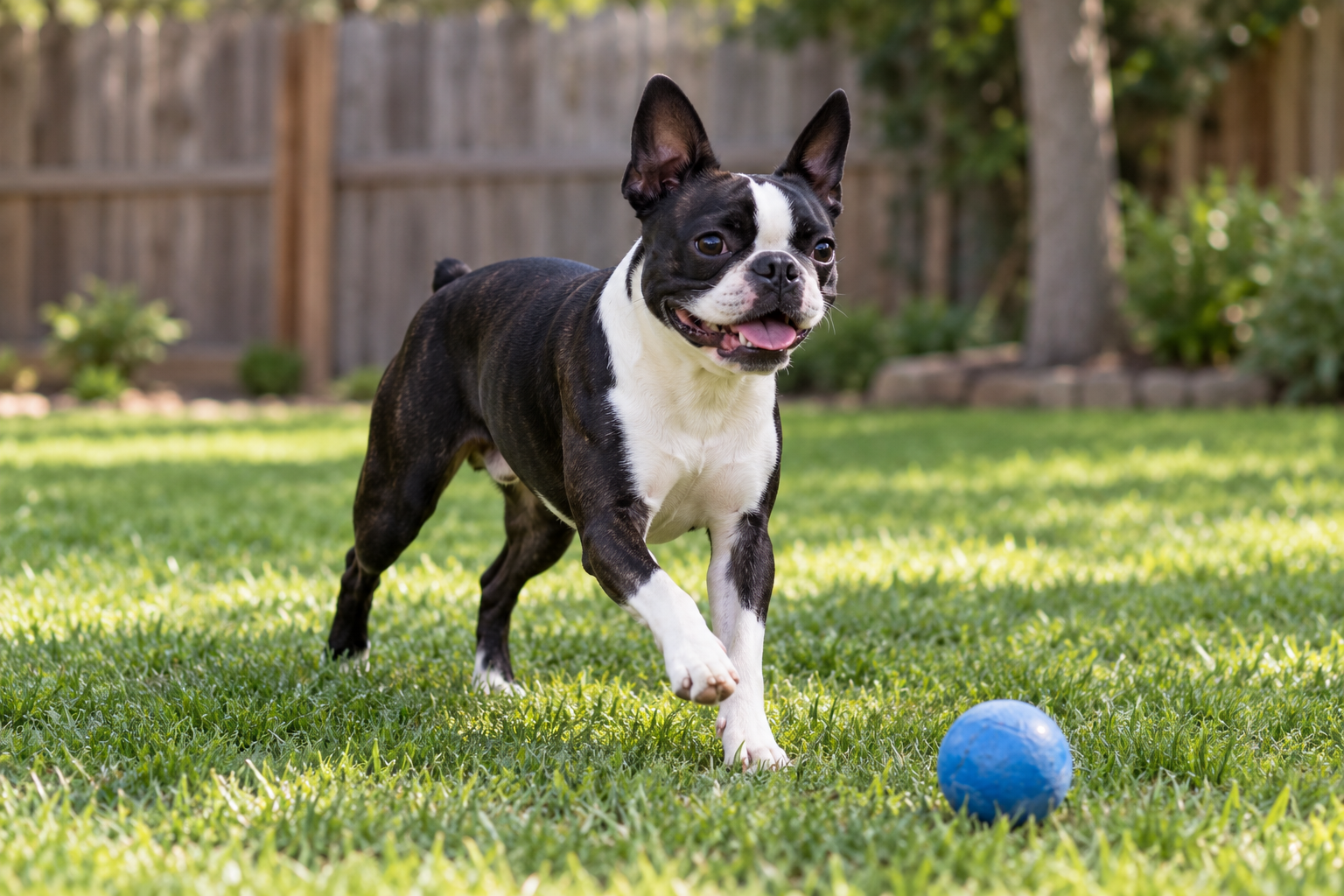
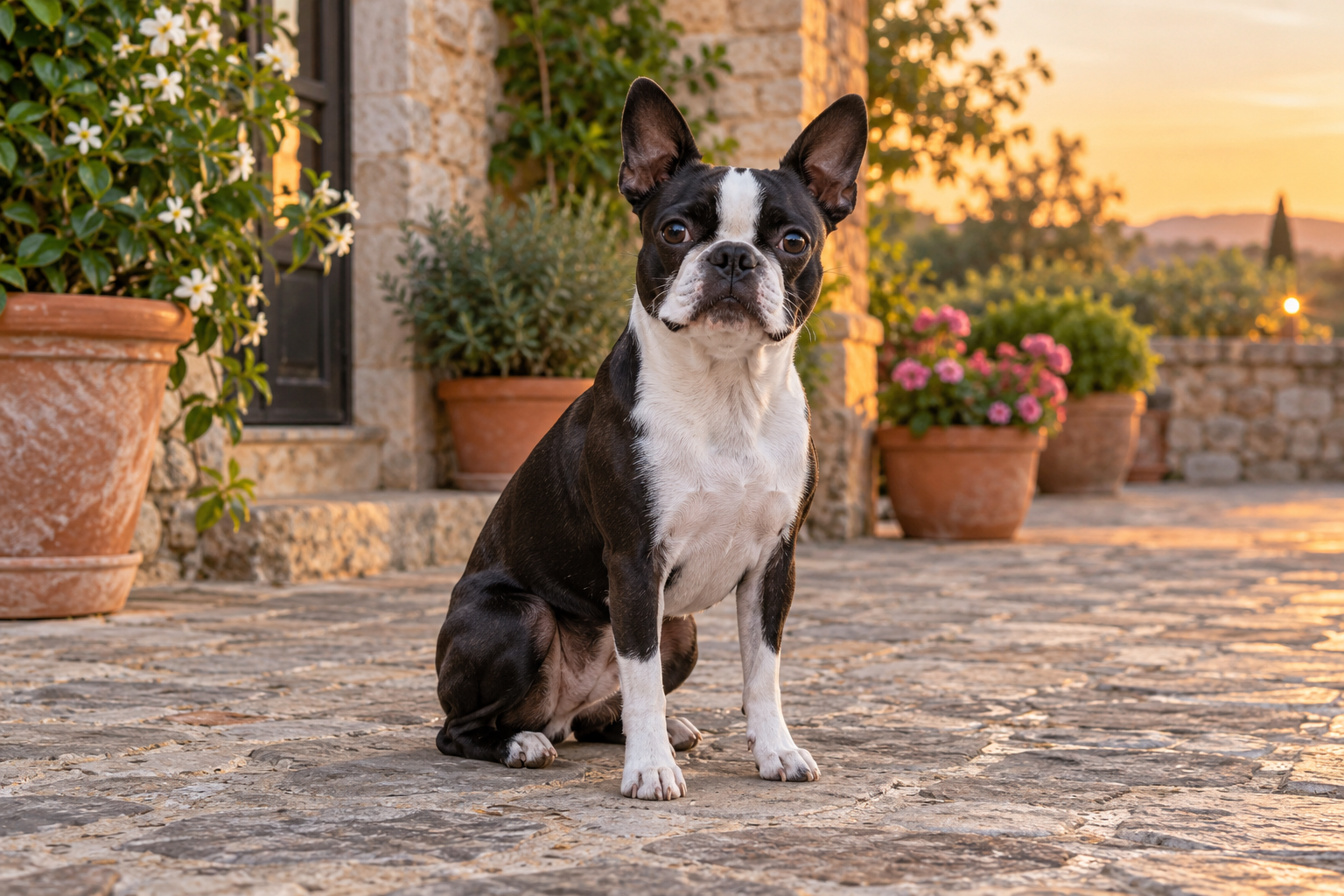
The Boston Terrier is a small American companion breed developed in Boston, Massachusetts in the late nineteenth century from Bulldog and terrier crosses. Despite the name it is not a working terrier, and Dogs Australia registers it in the Non Sporting group. It is lively, affectionate and adaptable, with a short, smooth coat in brindle, seal or black with white markings, and the breed standard sets a maximum weight of 11.4 kg. As a short-nosed breed it may be prone to breathing difficulty, heat stress and eye injuries, so careful breeder selection and summer management matter. Most live around 11 to 14 years.
Breed Overview
Life Span
11 - 14 years
Average Price
AUD 2000 - AUD 5000
Weight
Male: 5 - 11.4 kg Female: 5 - 11.4 kg
Height
Male: 38 - 43 cm Female: 38 - 43 cm
Life Expectancy
Male/Female: 11 - 14 years
Breed Group
Non Sporting (Group 7)
Nicknames
American Gentleman, Boston Bull, Boston
Breed Information
The Boston Terrier is a small, affectionate American companion dog with a short muzzle, upright ears and distinctive tuxedo markings, bred as a family pet rather than a working terrier. Dogs Australia registers it in the Non Sporting group, and its breed standard sets a maximum weight of 11.4 kg. It is lively and sociable, easy to keep in a smaller home and generally friendly with everyone it meets.
The breed's appeal is clear, but it comes with responsibilities. As a brachycephalic, or short-nosed, dog the Boston Terrier may be prone to breathing difficulty and copes poorly with heat, which matters a great deal in an Australian summer. Its large, prominent eyes are also vulnerable to injury. A Boston from a breeder who selects for open nostrils and moderate features is a very different prospect from one bred for an extreme look.
Demand is strong. Supply is steady but modest, with 47 Boston Terrier breeders on Dogz Online in October 2026, so patient buyers can find well-bred puppies from health-focused breeders.
Characteristics of the Boston Terrier
The Boston Terrier rates highly for adaptability, friendliness and low grooming needs, while heat tolerance and breathing are the areas owners must manage closely.
| Trait | Rating | Star Rating | Meaning |
|---|---|---|---|
| Size | Small | ★★ | Up to 11.4 kg, compact and easy to carry and transport. |
| Adaptability | High | ★★★★ | Suits apartments and small yards, but needs cool, indoor living in summer. |
| Exercise Needs | Moderate | ★★★ | Playful and energetic in short bursts, with walks kept to cool parts of the day. |
| Easy to Train | Good | ★★★★ | Bright and eager, with an occasional stubborn streak. |
| Amount of Shedding | Low | ★★ | A short coat that sheds lightly year round. |
| Grooming Needs | Low | ★ | A weekly brush and regular eye and face checks. |
| Good With Children | Very Good | ★★★★ | Friendly and playful, sturdy enough for sensible children. |
| Health | Moderate | ★★★ | Breathing, eye and heat issues need careful breeder choice and care. |
| Cost to Keep | Moderate | ★★★ | Low food and grooming costs, higher insurance for a short-nosed breed. |
| Tolerates Being Alone | Low | ★★ | A people-focused dog that prefers company most of the day. |
| Intelligence | Good | ★★★★ | Quick to learn routines and tricks, especially with food rewards. |
History of the Boston Terrier: The American Gentleman
The Boston Terrier is one of the few breeds developed in the United States. In the 1860s and 1870s, crosses between the old English Bulldog and the now-extinct white English Terrier were popular in Boston, Massachusetts. A dog called Judge, imported around 1870 and later owned by Robert C. Hooper, is regarded as the foundation sire of the breed.
Early dogs were heavier and more combative, but breeders quickly selected for a smaller, gentler companion. The breed was first shown as the Round-Headed Bull and Terrier before the name Boston Terrier was adopted, and the American Kennel Club recognised it in 1893, making it one of the earliest American breeds on the AKC register.
The Boston became one of America's most popular dogs in the early twentieth century and earned the nickname "the American Gentleman" for its dapper black and white coat and polite manners. It has since spread worldwide as a city companion. In Australia it remains a steady favourite among owners who want a small, sturdy, low-shedding dog with plenty of personality.
Appearance of the Boston Terrier: Compact, Smooth-Coated, and Tuxedo-Marked
Size and Build
The Boston Terrier is a compact, square, short-backed dog. The Dogs Australia standard sets a single maximum weight of 11.4 kg, and the FCI and AKC versions divide dogs into weight classes under 6.8 kg, 6.8 to 9 kg and 9 to 11.4 kg. Height is not set by the standard, but most stand around 38 to 43 cm at the shoulder.
Coat and Colours
The coat is short, smooth, bright and fine. Recognised colours are brindle, seal (a black that shows a red cast in sunlight) or black, each with white markings on the muzzle, between the eyes and on the chest. Red, blue, lilac, fawn and merle Bostons are outside the breed standard, and buyers searching for "red" or "blue" Bostons should understand that these colours cannot be shown and are sometimes marketed at a premium without any health advantage.
Distinctive Features
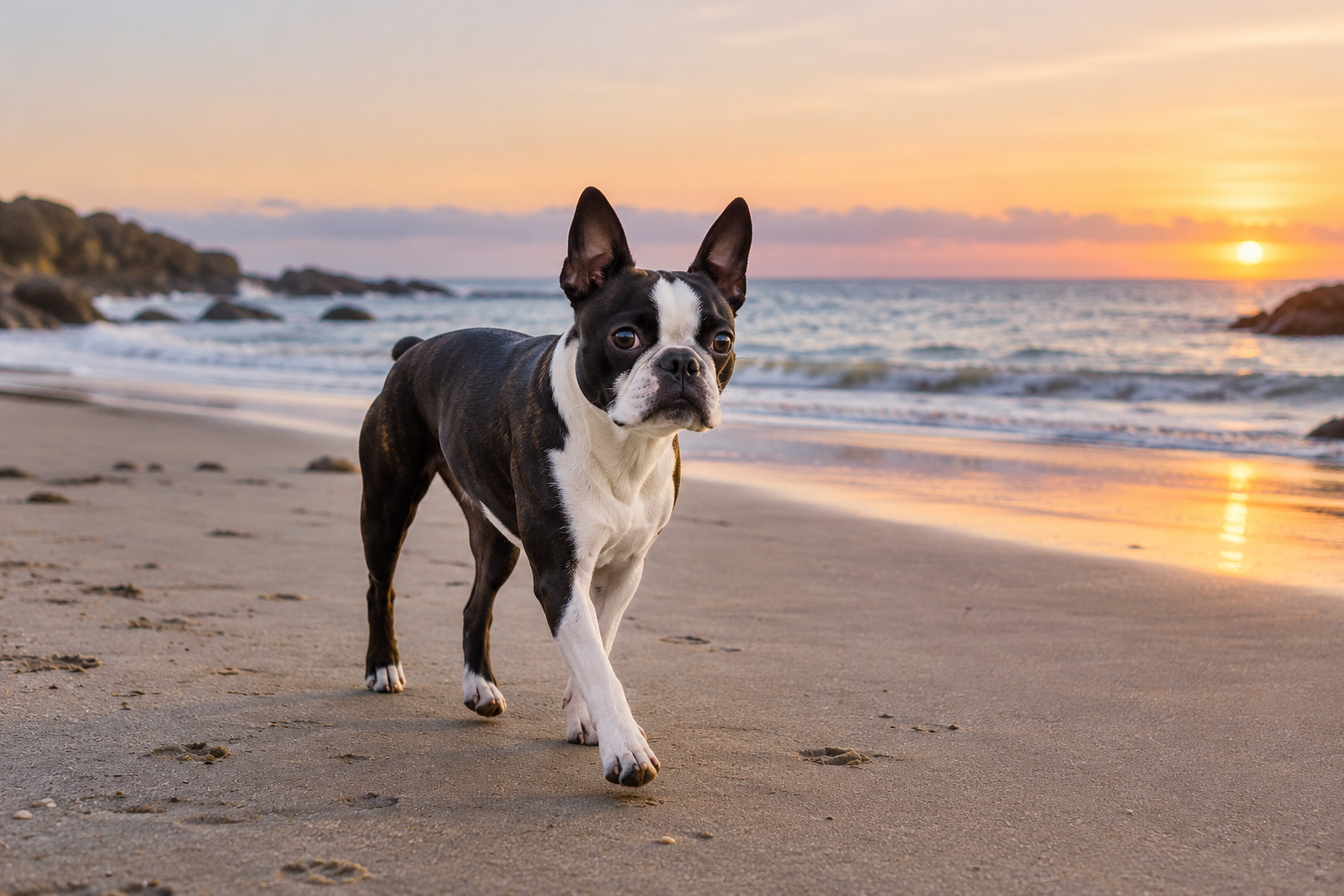
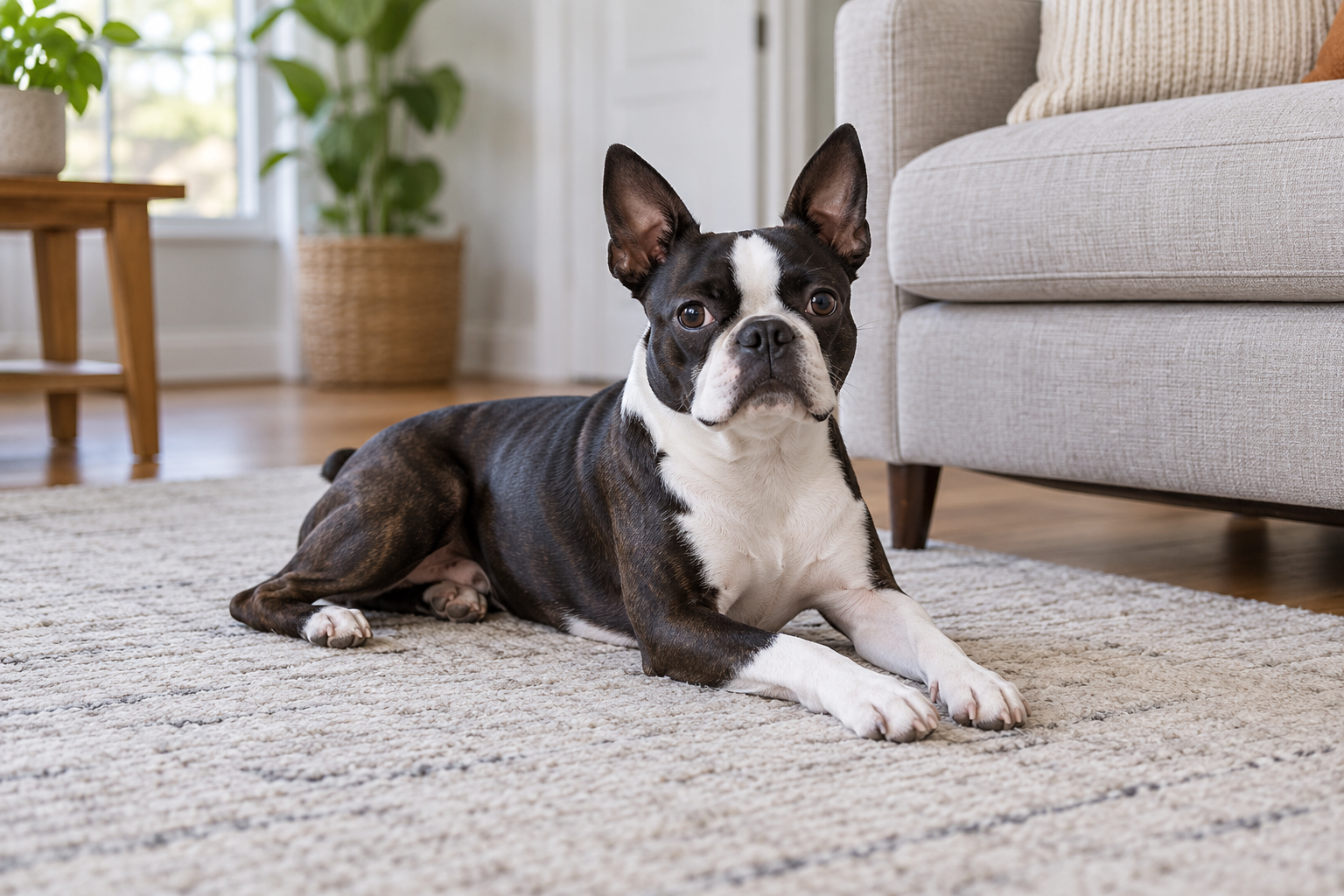
The head is square and flat on top, with a short, wide muzzle, large round eyes set wide apart and small, upright ears. The tail is naturally short, either straight or screw, and should never be docked. The overall look is alert, intelligent and friendly.
Gender Differences
Because the standard sets one weight limit for both sexes, males and females overlap substantially in size. Males are often slightly sturdier through the head and chest. Temperament differences are small, and individual personality matters more than sex.
Temperament of the Boston Terrier: Friendly, Playful, and People-Focused
Core Personality Traits
Boston Terriers are typically cheerful, affectionate and lively. They enjoy being involved in everything the household does, and many keep a playful, clownish streak well into adulthood. They are gentle by nature, which makes them easy companions for a wide range of owners.
Social Behaviour
Most Bostons are friendly towards visitors and get on well with other dogs. They will usually bark to announce arrivals but are not guard dogs. Some can be excitable and jumpy when greeting, which is easy to manage with early training.
Bonding and Attachment
The breed bonds closely with its people and prefers to be near them, often following family members from room to room. That makes the Boston a rewarding companion for people who are home often. It also means long days alone do not suit most individuals.
Common Behavioural Challenges
Separation distress, overexcitement and occasional stubbornness are the most common issues. Some Bostons guard food or toys if not taught otherwise. Early work on calm greetings instead of jumping up pays off quickly in a breed that greets everyone with enthusiasm.
Intelligence and Trainability of the Boston Terrier: Bright, Eager, and Food-Motivated
Intelligence and Learning Ability
Bostons are bright dogs that learn household routines and tricks readily. They are sensitive to their owner's tone and respond best to an upbeat, encouraging approach. Many enjoy trick training, which suits their playful nature.
Training Approach
Short, positive sessions with small food rewards work best. Keep treats tiny and count them in the daily food allowance, since the breed gains weight easily. Consistency with toilet training is important, as small breeds can take a little longer to become fully reliable.
Early Socialisation
Introduce puppies gently to people, other dogs, sounds and handling, including having their face, eyes and mouth checked. Regular handling makes vet visits and eye checks far less stressful later in life. Puppy school offers structured socialisation in a controlled setting.
Potential Training Challenges
Some Bostons have a stubborn streak and lose interest in repetitive sessions. Avoid training outdoors in heat, when a short-nosed dog can tire and overheat quickly. Use a harness rather than a collar for lead training, since pressure on the throat is best avoided in a brachycephalic breed.
Boston Terrier Family Life: Living with Children, Pets, and Households
Living with Children
Bostons are generally excellent with children, being sturdy, playful and tolerant. Teach children to avoid poking at the dog's prominent eyes and to let it rest when it is panting. Supervise play with toddlers, mainly to protect the dog from rough handling.
Living with Other Pets
Most Bostons live happily with other dogs and with cats they are raised alongside. Their prey drive is low. Rough play with much larger dogs can risk eye injuries, so introductions are best kept calm.
Household Environment
The Boston Terrier is well suited to apartments, townhouses and homes with small yards. It should live indoors, with climate control or good ventilation in summer. A secure yard is useful for play, but the breed should never be left outside on a hot day.
Lifestyle Compatibility
The breed suits first-time owners, families, retirees and city dwellers who want a small, sociable dog. It is less suited to people wanting a running or hiking companion in hot climates, or to homes where the dog will be alone all day.
Health of the Boston Terrier: Breathing, Eyes, and Lifespan
Lifespan and Healthy Living
Boston Terriers typically live around 11 to 14 years. The Dogs NSW breed profile gives 12 to 14 years, while the US breed club gives an average of 11 to 13. Keeping a Boston lean, cool and out of heavy exertion in hot weather supports a longer, healthier life.
Common Health Conditions
Owners should be aware of several conditions that can be associated with the breed. It is best to discuss any concerns with a veterinarian.
- Brachycephalic obstructive airway syndrome (BOAS). Narrow nostrils, a long soft palate and other airway changes can restrict breathing. A Cambridge study of 107 UK Boston Terriers found 37.5 per cent had no signs of BOAS at all, a much larger share than in French Bulldogs or Bulldogs, with risk rising as features became more extreme.
- Corneal ulcers and eye injuries. Prominent eyes are easily scratched. Research from the Royal Veterinary College found flat-faced breeds had over 11 times the risk of corneal ulcers compared with other dogs.
- Juvenile hereditary cataracts. An inherited form of early cataract linked to the HSF4 gene, with a DNA test available through UC Davis.
- Patellar luxation. A kneecap that slips out of place, common in small breeds.
- Deafness. Congenital deafness in one or both ears occurs in the breed, and BAER hearing tests can identify it in puppies.
- Spinal malformations. Screw-tailed breeds may be prone to hemivertebrae and other vertebral abnormalities, which are often silent but can occasionally cause problems.
Genetic Health Testing
Responsible breeders DNA test for juvenile cataracts, have breeding dogs eye examined, assess patellas and, increasingly, have breathing assessed through a respiratory function grading scheme. Ask for evidence of these results for both parents. A breeder should be able to show you parents that breathe quietly at rest and after light exercise.
Noisy breathing, snoring while awake and struggling after short walks are not normal or "cute", and they are worth discussing with a veterinarian. Some dogs benefit from surgery to widen the nostrils or shorten the soft palate.
Preventative Health Care
Keep vaccinations and parasite prevention current, including paralysis tick prevention on the east coast. Check the eyes daily for redness, squinting or discharge and see a vet promptly if any appear, since corneal injuries can worsen quickly. Annual checks are the baseline, and owners should know that short-nosed dogs can suffer heatstroke even indoors on a hot Australian day.
Caring for the Boston Terrier: Daily Care and Living Environment
Daily Care Routine
A typical day includes two short walks in cool parts of the day, indoor play, a quick check of the eyes and facial folds, and plenty of time with the family. Feed measured meals and keep treats small. Use a harness for every walk.
Living Environment Requirements
The Boston needs indoor living, a comfortable bed and a cool place to rest. Secure fencing is useful, though most Bostons are not escape artists. Stairs and high furniture can be a hazard for small dogs, so ramps or steps help protect backs and knees.
Climate Sensitivity
Heat is the single biggest everyday risk for a Boston Terrier in Australia. Short-nosed dogs cannot pant efficiently, so they lose heat poorly and can overheat on a warm day or in a hot car within minutes. On days above the high twenties, keep walks to early morning or evening, keep the dog indoors with air conditioning or fans, and avoid exertion altogether in extreme heat.
Know the signs of heat stress: heavy, noisy panting, a bright red tongue, drooling, weakness or collapse. Heatstroke is an emergency, so cool the dog with tepid, not icy, water and get to a vet immediately. Never leave a Boston in a parked car, even briefly.
Caring for Senior Boston Terriers
Older Bostons may develop cataracts, arthritis or worsening breathing. Shorter walks, a supportive bed and regular senior health checks help. Keeping weight down becomes even more important, since extra kilos strain both joints and airways.
Grooming of the Boston Terrier: Low-Maintenance Coat, High-Priority Eyes
Coat Maintenance
A weekly brush with a rubber mitt or soft bristle brush removes loose hair and keeps the coat shiny. The coat does not mat and needs no clipping. Shedding is light compared with double-coated breeds.
Eye and Face Care
Wipe around the eyes daily with a soft, damp cloth and check for redness, cloudiness or squinting. Clean any facial wrinkles gently and dry them well. Prominent eyes are the breed's most vulnerable feature, so prompt attention to any change is the most important grooming habit.
Ear, Nail, and Dental Care
Check the upright ears weekly and clean only when needed. Trim nails every three to four weeks, since small dogs rarely wear them down. Small, crowded mouths are prone to dental disease, so brushing several times a week is worthwhile.
Bathing and Professional Grooming
Bathe every four to eight weeks with a gentle dog shampoo. Some Bostons have sensitive skin, and sun protection may be needed on white areas. Professional grooming is not required, and a basic routine for short-haired dog grooming is all a Boston needs.
Exercise Needs of the Boston Terrier: Short, Cool, and Regular
Daily Exercise Requirements
Most adult Bostons need about 30 to 60 minutes of activity a day, broken into short walks and play sessions. They are energetic and playful, but intensity should be matched to temperature and the individual dog's breathing.
Activities Boston Terriers Enjoy
Fetch in the hallway, tug games, trick training, short sniff walks and puzzle toys all suit the breed. Some Bostons enjoy agility or rally at a gentle pace in cool weather. Swimming should be closely supervised, since short-nosed, heavy-fronted dogs can tire quickly in water.
Exercise Limitations
In summer, walk only in the early morning or evening and check pavement temperature with the back of your hand. Avoid long runs and strenuous hikes. In tick regions of eastern Australia, check the coat after any walk in long grass or bushland.
Importance of Mental Stimulation
Mental exercise is especially valuable for a breed whose physical exercise is limited by heat. Snuffle mats, food puzzles and short training games tire a Boston safely indoors and help prevent boredom-related barking and chewing.
Feeding the Boston Terrier: Nutrition and Diet Needs
Nutritional Requirements
There is no single best brand of food for a Boston Terrier. The best choice is a complete and balanced diet formulated for small breeds, with a kibble size the dog can manage comfortably. Many owners find that a consistent diet with good-quality protein helps keep wind and loose stools under control.
Feeding by Life Stage
Feed puppies three to four small meals a day until about four to six months, then two meals daily for life. A small-breed puppy formula supports steady growth. Seniors may need fewer calories and a diet that supports joints and dental health.
Portion Control and Weight Management
Keeping a Boston lean is one of the most effective things an owner can do for its breathing. Excess weight around the neck and chest makes airway problems worse and reduces heat tolerance. Weigh regularly and adjust portions, and use a slow feeder if your dog gulps its food.
Foods to Avoid
Grapes, sultanas, chocolate, onion, garlic, macadamia nuts and anything containing xylitol are toxic to dogs. Avoid cooked bones and fatty table scraps, which can trigger digestive upsets. Rich foods often make the breed's natural gassiness worse.
Boston Terrier Price in Australia: Purchase Cost and Ongoing Expenses
Puppy Purchase Price
A registered Boston Terrier puppy in Australia typically costs $2,000 to $5,000. That range comes from the Dogz Online Australian price guide, which also puts young dogs at $1,500 to $3,500, adult and retired show dogs at $1,000 to $3,000 and rescue adoption at $400 to $1,000. Litters advertised on Dogz Online in October 2026 were listed as price on request.
The range is consistent with UK prices, where recent Pets4Homes puppy listings were around £1,800 to £2,200, roughly AUD 3,500 to AUD 4,400. Many Bostons sit within the $2,000 to $3,500 price bracket, with health-tested and show-quality puppies at the higher end. Higher breeder costs, including caesarean deliveries that are common in short-nosed breeds, help explain the price.
Initial Setup Costs
RSPCA NSW cost guidance puts microchipping at $60 to $80, a puppy vaccination course at $280 to $420 and desexing at $350 to $650. Add council registration, a well-fitted harness, a crate, a bed, bowls and a cooling mat for summer.
Ongoing Monthly Costs
| Cost | Typical figure (AUD) | Source |
|---|---|---|
| Food | At the low end of $600 to $1,000 a year, given small size | RSPCA NSW |
| Flea and worm treatment | $200 to $250 a year, plus heartworm up to $250 | RSPCA NSW |
| Annual vet check and booster | From $140 a year | RSPCA NSW |
| Pet insurance | Above the $1,580 small dog average, as short-nosed breeds are priced higher | Canstar, 2026 |
| Professional grooming | Not required | Breed coat needs |
Insurance is where Bostons cost more than their size suggests. Canstar's 2026 data put the average small dog accident and illness premium at $1,580 a year, and insurers typically load premiums for brachycephalic breeds, which is a large part of why insurance costs vary so much by breed.
Long-Term Financial Commitment
Animal Medicines Australia's 2025 survey found dog-owning households spend about $2,520 a year. A Boston is cheap to feed and groom, but potential airway or eye surgery can add several thousand dollars over an 11 to 14 year life, which is why early insurance is worthwhile.
Buying Advice for a Boston Terrier: Choosing a Healthy Puppy
Choosing a Responsible Breeder
Choose a breeder registered with their state body under Dogs Australia, who health tests breeding dogs and selects for open nostrils and easy breathing over an extreme look. Good breeders welcome visits, answer questions openly and offer lifelong support. Be cautious of anyone advertising "rare" colours at a premium.
How to Tell a Purebred Boston Terrier
A purebred, registered Boston comes with papers from a state member body of Dogs Australia, such as Dogs NSW or Dogs Victoria, listing the breeder's prefix and the puppy's pedigree. Coat colour and appearance alone cannot confirm purity. The reality of buying a puppy without papers is that you have no verified pedigree or health history.
Health Checks Before Purchase
Meet the mother and watch her breathe at rest and after a short walk. Ask for juvenile cataract DNA results, eye examinations and patella checks for both parents, and BAER hearing results if available. Puppies should breathe quietly, have clear eyes and move freely.
Questions to Ask the Breeder
- Have the parents been assessed for breathing, and can I see them after light exercise?
- What are the parents' juvenile cataract DNA and eye examination results?
- Have the parents' patellas been checked?
- Has the litter been hearing tested?
- Were the puppies born naturally or by caesarean?
- Will the puppy be registered with Dogs Australia, on the main or limited register?
- What support do you offer if health problems appear?
Contracts and aftercare belong on your list of questions to ask a dog breeder too.
Considering Adoption
Bostons and Boston crosses come up through rescue groups, often as adults rehomed because of changing circumstances. Dogz Online's guide puts rescue fees at about $400 to $1,000, usually including desexing, vaccinations and microchipping. Popular breeds attract scams, so learn how to spot a puppy scam online before paying any deposit.
Is the Boston Terrier Right for You? A Small Companion That Needs Heat-Smart Care
Lifestyle Compatibility
The Boston suits apartments, suburban homes, families and first-time owners. It is a poor match for anyone wanting a hot-weather running partner.
Time and Care Commitment
Expect short daily walks, play and training, plus daily eye checks. Grooming takes only minutes a week.
Grooming and Health Awareness
Watch breathing, eyes and weight closely. Manage summer heat carefully and take out insurance early.
Ideal Owner Profile
The ideal owner is home often, enjoys a playful companion and is willing to plan around Australian heat. Careful breeder selection matters more for this breed than most.
Find Boston Terrier Puppies for Sale
If a Boston Terrier fits your household, you can browse puppies for sale on Pups4Sale and contact breeders directly.
Frequently Asked Questions
Related Breeds
Other companion breeds on Pups4Sale.
 British BulldogMedium • Utility / Companion (Non-sporting)
 BullmastiffGiant • Working
 Cavalier King Charles SpanielSmall • Toy
 CavoodleSmall • Companion
 ChihuahuaSmall • Toy
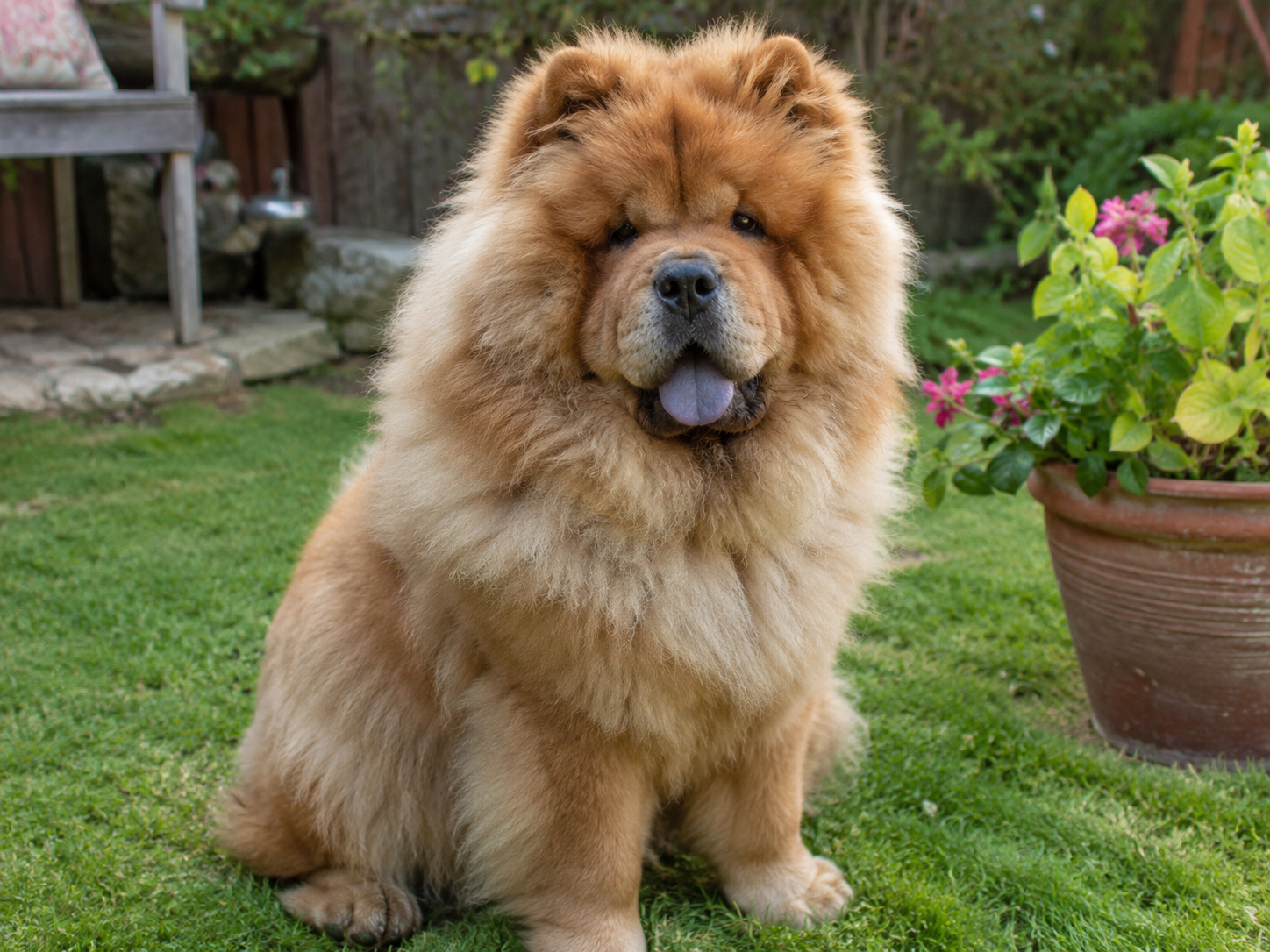 Chow ChowMedium • Non-Sporting